

LED Headlight Bulbs: How to Upgrade Halogen Headlights to Super Bright LED
Driving at night is safer when you can see everything clearly. Many drivers find their car’s lights don’t cut it, making it hard to spot things in the dark. We think using LED Headlight Bulbs is the best way to feel safe driving at night.
Today’s cars have new tech that lets you swap old parts for better ones. By learning how to upgrade halogen headlights, you get a brighter, wider beam that’s like daylight. This makes it easier to react to things when the road is dark.
Before you start, clean your car’s headlights to make sure they work well. After that, putting in a super bright LED kit will make your car look modern and drive better. We’re here to help you make your car safer to drive at night.
Key Takeaways
- Upgrading your lighting system makes driving safer at night.
- Modern diodes last longer than old factory lights.
- Clean lenses help your new lights work better.
- Installing new lights is something most car owners can do.
- Choosing good parts means your lights will always work well.
Understanding the Benefits of LED Headlight Bulbs
Switching from old halogen bulbs to LED bulbs is a big step up for your car. A headlight conversion is more than looks; it makes driving better every day.
Energy Efficiency of LEDs
LED bulbs use way less power than halogens. This means your car’s electrical system works better. It’s great for those who want to save fuel, as it keeps everything running smoothly.
Longevity Compared to Halogen
LEDs last a lot longer than halogens. While halogens might last a few hundred hours, LEDs can go for tens of thousands. This makes them a cost-effective long-term investment for car owners.
Improved Visibility and Safety
LEDs give off more light, making it safer to drive in bad weather. They help you see road dangers clearly, even in heavy rain or fog. This headlight conversion ensures you can see well when it counts.
| Feature | Halogen Bulbs | LED Bulbs |
|---|---|---|
| Lifespan | Short (500-1,000 hrs) | Long (30,000+ hrs) |
| Energy Use | High | Low |
| Light Quality | Warm/Yellow | Bright/White |
| Durability | Fragile | Shock Resistant |
Key Features to Look for in LED Headlights
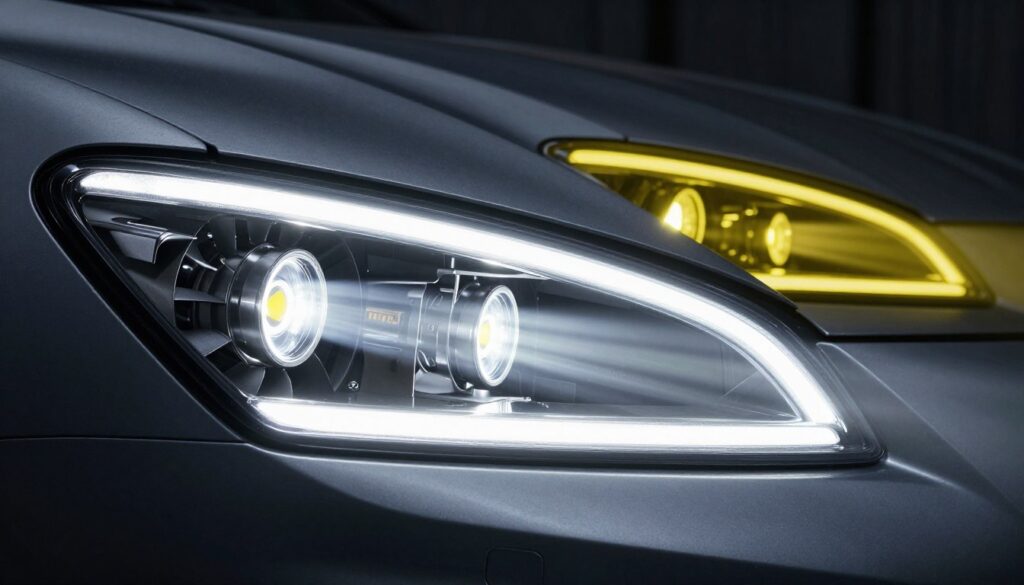
Finding the right lighting starts with three key factors. The right hardware is vital for high performance headlights to work well without causing glare. These factors help you get a clear beam for better night driving.
Brightness Ratings (Lumens)
Lumens show how much light a source emits. When picking best LED headlight bulbs, high numbers might seem appealing. But too much light can scatter and make seeing harder.
Look for a lumen output that fits your housing. A well-made bulb directs light where you need it. This gives you clear visibility without blinding others.
Color Temperature (Kelvin Scale)
The Kelvin scale shows the light’s color. Most like a white light, like daylight, between 5000K and 6000K. This range helps spot dangers early.
Stay away from bulbs that are too blue, as they can strain your eyes. High performance headlights should have a natural, white glow. This is the best for car lights today.
Compatibility with Vehicle Models
Make sure the bulbs fit your car’s electrical system before buying. Modern cars have computers that check power use. Some LED kits might cause warning lights if they don’t match the factory specs. It’s key for any car, including gas vs diesel trucks.
Check your owner’s manual or use an online tool to find the right bulb size. Picking the best LED headlight bulbs for your car ensures a good fit. This step prevents electrical issues and makes your lights last longer.
Tools You’ll Need for the Upgrade
Before starting your car headlight upgrade, make sure you have the right tools. This will save you time and prevent frustration. Organizing your workspace helps you focus on the installation without looking for missing items.
Just like when you replace windshield wiper blades at home, the right equipment is essential for success.
Basic Hand Tools
Most cars need just a few tools to get to the bulb housing. You’ll need screwdrivers, both Phillips and flat-head, to remove trim or access panels. A small socket wrench set is also good for loosening bolts that hold the headlight in place.
Safety Gear
Your safety is the most important thing during a car headlight upgrade. Always wear nitrile gloves to protect your hands from sharp edges and oils. Safety glasses are also a must to avoid eye injuries from debris.
Cleaning Supplies
Keeping your workspace clean is key for your new lights to last. Use a microfiber cloth and mild lens cleaner to clean the headlight housing. This prevents dust and grime from damaging the seals and ensures your lights work their best.
Step-by-Step Guide to Removing Halogen Headlights
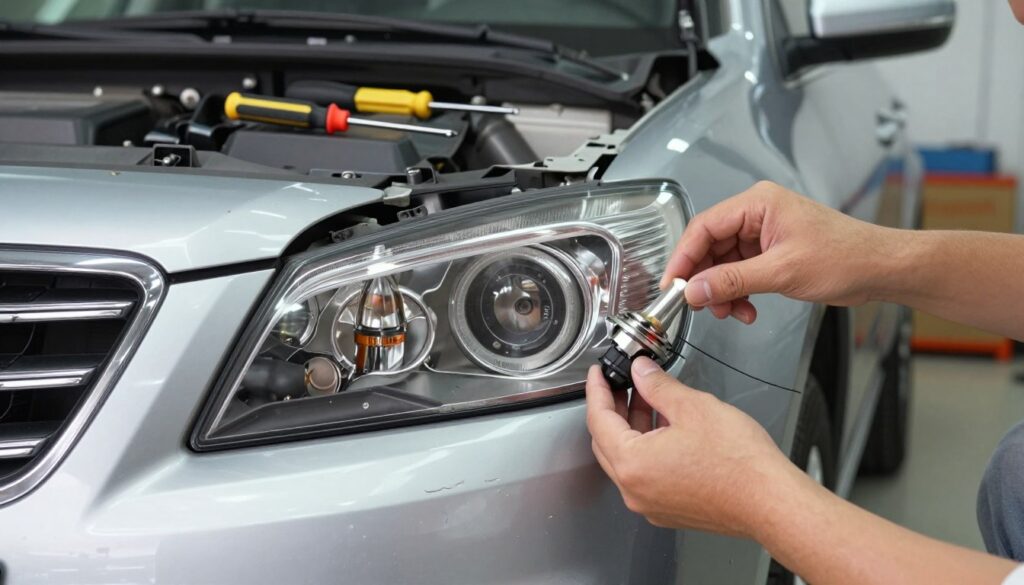
Learning how to upgrade halogen headlights begins with carefully removing your current lights. Take your time to avoid damaging your car’s plastic and electrical parts.
Preparing Your Vehicle
First, park your car on a flat surface with the engine off. It’s important to disconnect the negative terminal of your battery. This step prevents short circuits while you work.
“Preparation is the key to success in any automotive project, specially when dealing with sensitive electrical systems.”
Accessing the Headlight Housing
To get to the bulb socket, you might need to remove a dust cover or plastic housing. Use your tools carefully to unscrew fasteners. Keep them organized to avoid losing them during the halogen to LED upgrade.
If you find it hard to open, don’t force it. Gently wiggle the housing or look for hidden clips that might be holding it in place.
Disconnecting the Halogen Bulb
With access, find the electrical connector at the bulb’s base. Press the release tab and pull the connector straight back to avoid bending the pins.
After removing the plug, twist the halogen bulb counterclockwise to release it from the socket. Pull it out carefully. Make sure not to touch the new LED bulb’s glass, as skin oils can cause it to fail early.
Installing LED Headlight Bulbs: A Step-by-Step Guide
Upgrading to a super bright LED setup requires careful installation. Precision is key to ensure your lights are safe and effective. Take your time to avoid damaging your new lighting kit.
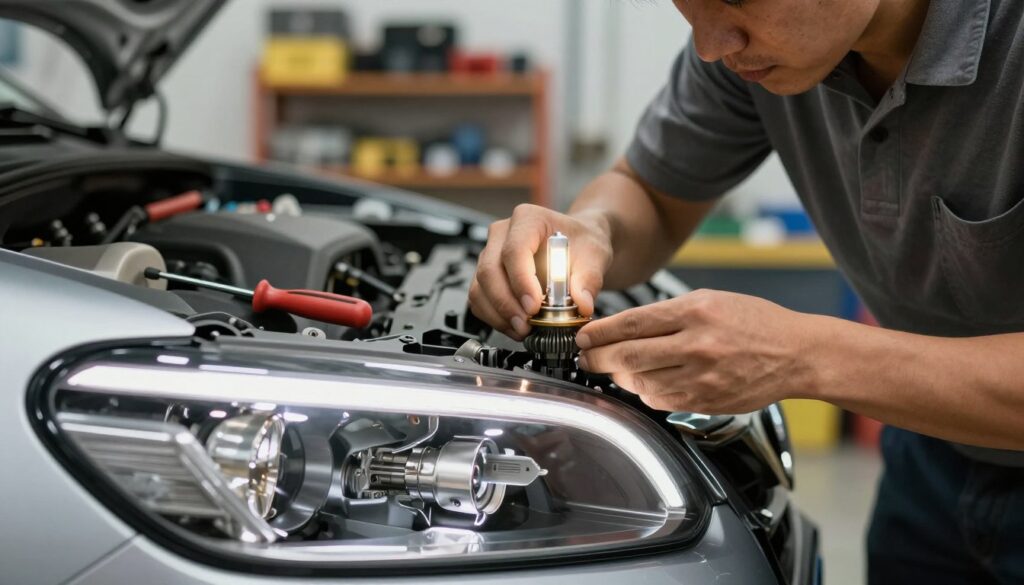
Inserting the LED Bulb
When putting in the new bulb, make sure it’s flush with the mounting surface. Proper alignment is critical to avoid glare for other drivers. Also, check that any cooling fans or heat sinks have enough room to work properly.
If the bulb feels loose, check the locking collar. A tight fit prevents vibration and keeps light output steady. Always use clean gloves to handle the bulb to prevent oil damage.
Securing Connections
The LED headlight installation needs careful attention to electrical wiring. Connect the bulb harness to the factory socket securely. If your kit has a resistor or anti-flicker module, place it safely away from moving parts.
Use zip ties to keep wires tidy and away from heat. Secure connections prevent flickering or power loss. Make sure wires aren’t pinched when you put back the dust cover.
Testing the Installation
Do a quick test before finishing the assembly. Turn on your low beams and check the light against a wall or garage door. You should see a sharp, clear cutoff line.
If you spot any problems, like error codes or flickering, check the electrical plugs right away. Once everything works well, replace any covers or clips to keep the housing dry. Here’s a table with key steps for a successful upgrade.
| Checklist Item | Action Required | Goal |
|---|---|---|
| Bulb Seating | Verify flush fit | Optimal beam pattern |
| Cooling Clearance | Check fan space | Prevent overheating |
| Wiring Integrity | Secure all plugs | Eliminate flickering |
| Final Test | Verify light output | Ensure safety compliance |
Adjusting Your Headlight Alignment after Installation
Getting your headlights aligned right is key for the best performance. Even top-notch LED lights won’t shine well if aimed wrong. It’s important to adjust them to ensure safety and get the most out of your upgrade.
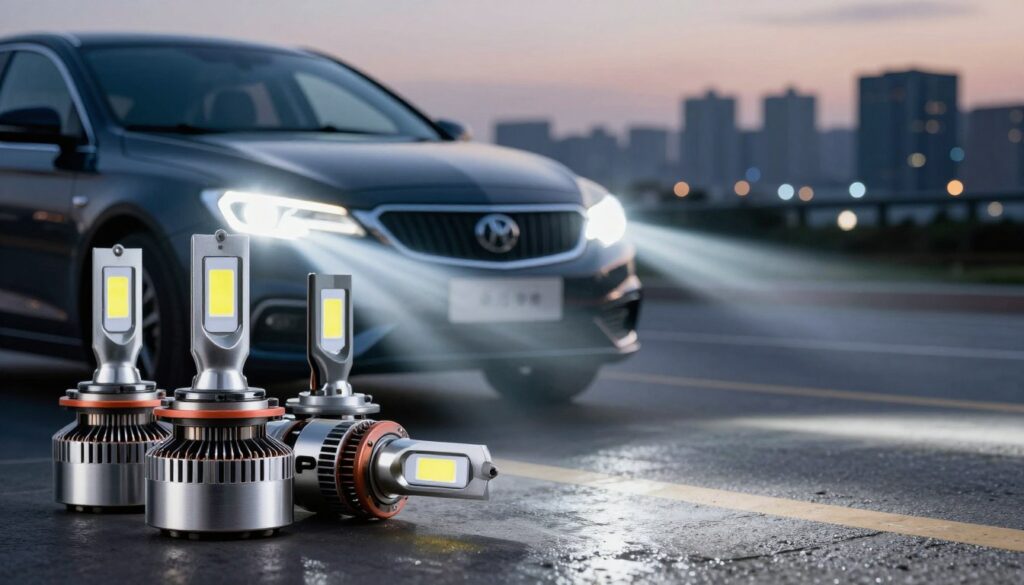
Why Alignment Matters
New bulbs might change how your lights shine. Correct alignment means you can see the road better and won’t blind others. Aim too high or too low, and it’s a safety risk.
Keeping your beam line right is vital. It helps you see better at night. This small tweak makes your lights work like a pro.
How to Check Alignment
Check your beam by parking near a wall. Look for a clear, straight line where the light stops. This line should be even and not scatter light up.
If your beam looks off, it’s time to adjust. For a detailed guide, check out this step-by-step guide to adjust headlights.
DIY Adjustment Tips
Most cars have screws near the headlights for adjustments. Use a screwdriver or wrench for small changes. Always make adjustments in small turns to avoid over-correcting.
It helps to cover one light while adjusting the other. This lets you focus on each light’s beam. After adjusting, drive a bit to see if the lights work well.
Common Issues When Upgrading to LEDs
Modern car electrical systems are very sensitive. This can cause problems when you switch to halogen to LED bulbs. LEDs use less power than old bulbs, and your car’s computer might think it’s a fault. Knowing these issues helps you fix problems and keep your lights working well.
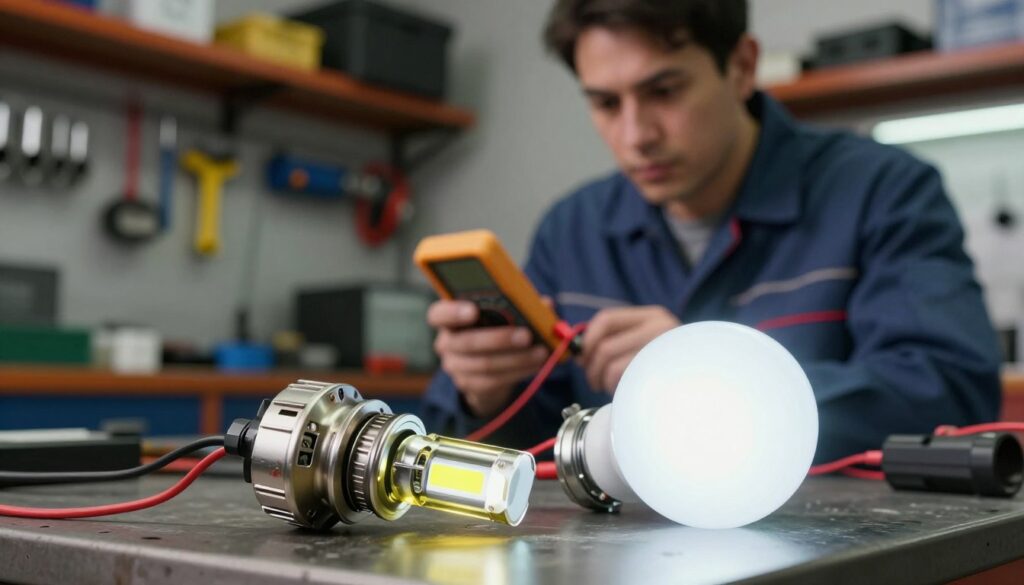
Flickering or Flashing Lights
Flashing lights often come from your car’s PWM system. This system checks bulb health with quick electrical pulses. This can make LEDs flicker. A CANBUS decoder can help by making the power flow steady.
Error Messages on Dashboard
Many cars have a “bulb out” warning system. It checks resistance levels, and LEDs have lower resistance. This can trigger error codes on your dashboard, even if the lights are fine. For more on this, check our guide on common LED headlight bulb problems and how to solve them.
Overheating Concerns
Keeping your lights cool is very important. LEDs are energy-efficient but can get hot. Make sure your bulbs have good heat sinks or fans to cool them down.
When installing, check that fans aren’t blocked by dust or wiring. By fixing these common issues, you’ll have safer and more reliable driving.
Maintenance Tips for Your New LED Headlights
To keep your LED headlight installation running smoothly, follow a few easy steps. These lights are tough, but they need some care to stay bright. Regular checks can prevent them from getting dim or losing their shine.
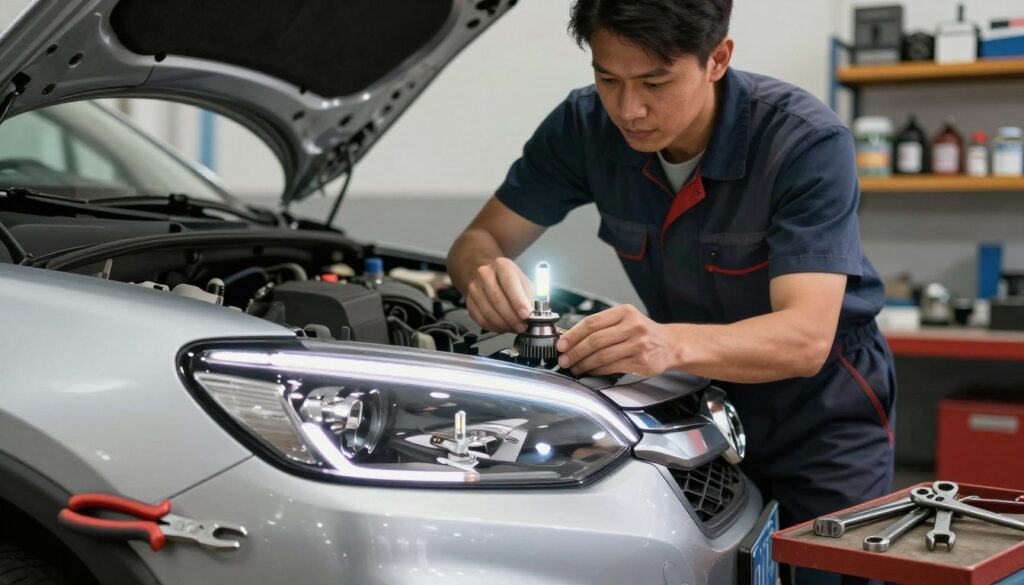
Routine Inspection
Check your headlights every few months. Look for cracks or debris that might block the light. Catching these minor issues early saves you from expensive fixes later.
- Check for moisture buildup inside the lens assembly.
- Inspect the housing for any signs of physical impact or road damage.
- Verify that the beam pattern remains consistent during night driving.
Cleaning the Headlight Lenses
Grime and UV rays can cloud your headlight lenses over time. This scatters light and weakens your LED headlight installation. Keeping them clean is key for a sharp beam.
Use a mild soap and water to clean the lenses. Stay away from harsh chemicals or rough scrubbers that could damage the plastic. A clean lens means better visibility on dark roads.
Keeping Connections Secure
Driving can shake loose electrical connections under the hood. Check the wiring and connectors during your car’s regular service. Tight connections prevent flickering and protect against moisture.
“Proper maintenance is the secret to getting the most out of your automotive lighting upgrades, ensuring safety and reliability for every mile you drive.”
Legal Considerations for Upgrading Headlights
Knowing the laws is key when you want to upgrade your headlights. Brighter lights are great for seeing better, but we must follow the law. This avoids fines and keeps everyone safe.
State Regulations on Headlight Modifications
Lighting laws differ across states. Some focus on bulb color and brightness, while others care more about the beam pattern.
Before buying new bulbs, check your local laws. Our guide on are LED headlights legal in 2025 can help you stay legal.
Safety Standards for Road Use
Your headlight conversion must meet safety standards. This prevents blinding other drivers. Proper beam alignment is a must for safe driving.
“The primary goal of any lighting modification should be to enhance driver visibility without compromising the safety of other road users.”
Choose bulbs that match your car’s original lights. This ensures the light goes on the road, not into other drivers’ eyes.
Understanding Warranty Implications
Many worry about headlight upgrades and warranties. Changing bulbs usually doesn’t void the warranty. But, damage to wiring or control modules can be a problem.
- Check your owner’s manual for specific lighting specifications.
- Keep your original halogen bulbs in case you need to revert to stock settings.
- Choose high-quality, plug-and-play kits to minimize the risk of electrical interference.
By being careful, you can enjoy better lighting without risking your car’s warranty or your peace of mind.
Cost of Upgrading to LED Headlight Bulbs
Getting a car headlight upgrade means weighing your immediate costs against long-term savings. LED bulbs might cost more upfront than halogen ones. But, their benefits make the investment worthwhile over time.
Price Range for Quality LED Kits
LED conversion kits come in various prices. Basic kits start at $30 to $50. Top-quality kits can cost between $100 to $200 or more.
Choosing quality and reliability over cheap prices is key. A good car headlight upgrade kit ensures better performance and safety on the road.
Installation Costs (DIY vs. Professional)
Whether you do it yourself or get a pro to install, it affects your total cost. DIY means just buying the kit. You won’t need to pay for labor.
Going to a mechanic adds to your bill. But, it’s worth it if you’re not handy with electrical systems.
Long-Term Savings Benefits
LED bulbs last a long time, up to 25,000 hours or more. This means you won’t need to replace them as often as halogen bulbs.
LEDs also use less energy, which is good for your car’s electrical system. Over time, these savings add up, making the initial cost a smart choice.
Frequently Asked Questions about LED Headlights
Upgrading your vehicle lighting often brings up several common inquiries. We provide these answers to help you navigate the transition to modern illumination with ease.
Are these upgrades street legal?
Most regions require headlights to meet specific beam pattern standards. High-quality LED Headlight Bulbs from reputable brands like Philips or Sylvania often comply with these regulations when installed correctly. Always check your local Department of Transportation guidelines to ensure your new setup remains road-ready.
How do I know if my vehicle is compatible?
Many manufacturers offer online bulb finder tools to simplify your search. You simply enter your vehicle make, model, and year to see which LED Headlight Bulbs fit your housing. This step prevents issues with fitment or electrical errors during the installation process.
Can I replace just one bulb?
We strongly suggest replacing your lights in pairs. Using two matching LED Headlight Bulbs ensures that your light output and color temperature remain consistent across the front of your car. This practice provides balanced visibility and keeps your vehicle looking uniform on the road.
Investing in your vehicle lighting improves your nighttime driving experience significantly. We hope this guide empowers you to make a smart choice for your safety and style. Reach out to local automotive experts if you need further assistance with your specific model.
Are LED headlights street legal?
Legal status depends on your area and the specific LEDs. Many LEDs meet DOT standards. Always check your local laws before upgrading.
How do I know if my vehicle is compatible?
Check your owner’s manual or a fitment guide from a trusted brand like Sylvania. Most cars can be upgraded, but some might need special adapters.
Can I replace just one bulb?
While possible, it’s not recommended. Replacing bulbs in pairs ensures even light distribution and color temperature.
Do LED bulbs require a special cooling system?
Yes, LEDs need cooling. They come with fans or heat sinks. Make sure they have enough space to work.
Will upgrading to LEDs improve visibility in fog?
Absolutely. LEDs provide better contrast, helping you see through fog or rain better than halogens.

Hi! I’m Moheen Iftikhar, the person behind «CarCruisei». I’m deeply interested in the automotive world, from new car trends and advanced vehicle technology to useful driving advice. On this platform, I publish informative car reviews, expert insights, and practical tips to keep every car enthusiast informed and inspired.