

Wheel Alignment Symptoms: How to Tell If Your Car Needs a Wheel Alignment
Keeping your vehicle’s geometry right is essential for safety and performance. If tires hit the road at the wrong angles, it affects how your car handles. It also makes parts wear out faster. Spotting Wheel Alignment Symptoms early can save you from big repair bills and early tire wear.
We often miss small changes in how our car steers until they turn into big problems. For example, if your car shakes when you speed, it might mean your suspension needs a check. Knowing How to Tell if Car Needs Wheel Alignment helps keep your steering smooth and steady on the road.
Looking after these systems keeps your car running well and keeps everyone safe. By being careful, you make sure every trip is smooth and efficient.
Key Takeaways
- Proper geometry prevents uneven tire wear and extends the lifespan of your rubber.
- Vehicle pulling to one side is a classic sign of suspension issues.
- Steering wheel position should remain centered while driving on flat, straight roads.
- Vibrations at high speeds often signal that your vehicle requires a professional inspection.
- Routine checks help avoid costly mechanical failures down the road.
What is Wheel Alignment?
Many people don’t know much about wheel alignment. They think it’s about changing the tires. But it’s really about adjusting your car’s suspension geometry. This ensures your car goes straight and handles well.
Definition and Importance
Wheel alignment means adjusting your car’s wheels to match the manufacturer’s specs. It helps reduce tire wear and keeps your car on track. If your car has warning lights, you might need to reset your tire pressure. This ensures your tires are at the right pressure for best performance.
The main adjustments are camber, caster, and toe. These settings affect how your tires touch the road. Proper alignment is essential for stable handling and longer tire life.
| Alignment Angle | Primary Function | Impact on Driving |
|---|---|---|
| Camber | Inward/outward tilt | Cornering stability |
| Caster | Steering axis angle | Straight-line tracking |
| Toe | Inward/outward direction | Tire wear patterns |
Common Misconceptions
Many think alignment is about the wheels or tires. But it’s really about adjusting the suspension system. You can’t fix alignment by just changing tires or balancing them.
Another myth is that you only need an alignment if your car pulls to one side. Subtle misalignment can happen without obvious signs. Regular checks are key to keeping your car safe and efficient.
Symptoms of Poor Wheel Alignment
Knowing the signs of bad wheel alignment is key for car owners. A well-aligned vehicle drives smoothly and stays straight. But ignoring Wheel Alignment Symptoms can cause parts to wear out faster and risk your safety.
Just like checking transmission fluid level keeps your car running well, watching your tires and steering is important. Catching these problems early can save you from costly repairs.
Uneven Tire Wear
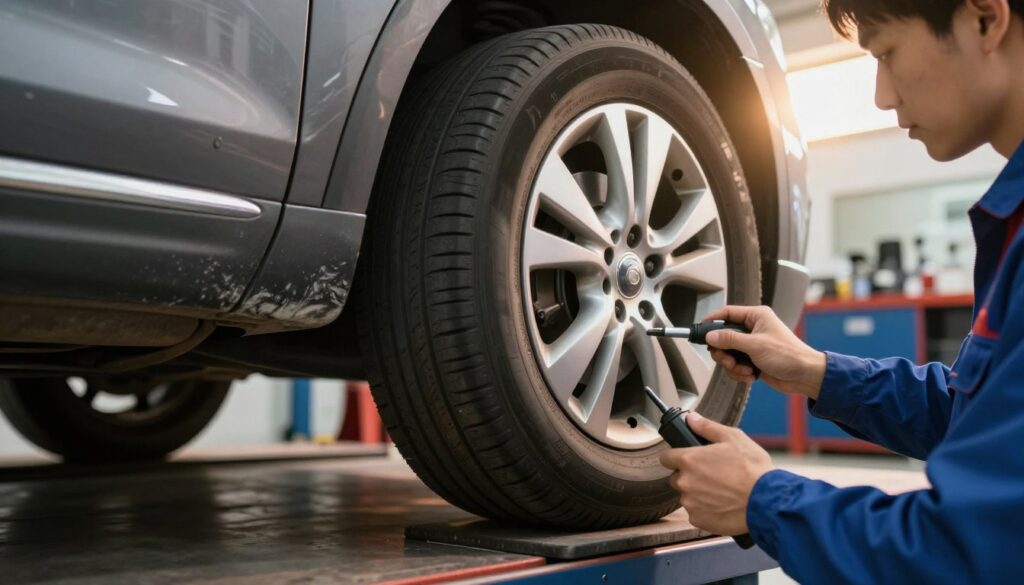
Uneven tread wear is a big Wheel Alignment Sign. If your tires wear down more on the edges than the middle, your wheels are misaligned. This is because the tires don’t make good contact with the road.
Vehicle Pulling to One Side
If your car pulls to one side on a straight road, it’s a sign of misalignment. This makes you steer constantly to stay straight. It’s not just annoying; it also means your suspension is out of balance.
Steering Wheel Vibration
Feeling a vibration through the steering wheel can mean bad alignment. It might seem like a tire issue, but it’s often alignment. Ignoring this vibration can damage your steering parts over time.
Crooked Steering Wheel
A crooked steering wheel when driving straight is a clear sign. If your wheels are straight but your steering wheel is off, your alignment is off. This usually happens after hitting a pothole or curb, which can shift the steering linkage.
| Symptom | Primary Cause | Severity Level |
|---|---|---|
| Uneven Tire Wear | Improper Camber/Toe | High |
| Vehicle Pulling | Caster Imbalance | Medium |
| Steering Vibration | Suspension Stress | Medium |
| Crooked Wheel | Linkage Shift | Low to Medium |
Factors That Contribute to Misalignment
Even careful drivers can face car alignment issues from daily driving. Many think their cars stay perfectly aligned, but many forces can change that. These forces can move your car’s settings away from what the maker intended.

Driving Conditions
The place you drive can affect how long your alignment lasts. Driving on rough roads or in bad weather can wear down your car’s parts. This wear can cause your car to handle poorly.
Impact from Potholes or Curbs
Hitting a pothole or curb can quickly misalign your car. If you hear strange noises when this happens, your suspension might need a check. It’s like needing a brake pad replacement.
Regular Wear and Tear
Even without hitting potholes, your car’s age can cause car alignment issues. Parts like rubber bushings and springs lose their shape over time. This means your car’s alignment will change, needing adjustments to stay safe and efficient.
How to Check for Wheel Alignment Issues
You can do a basic Car Wheel Alignment Check from your driveway. Just be observant to catch small problems early. Regular checks keep your tires and suspension in great shape.
Visual Inspections
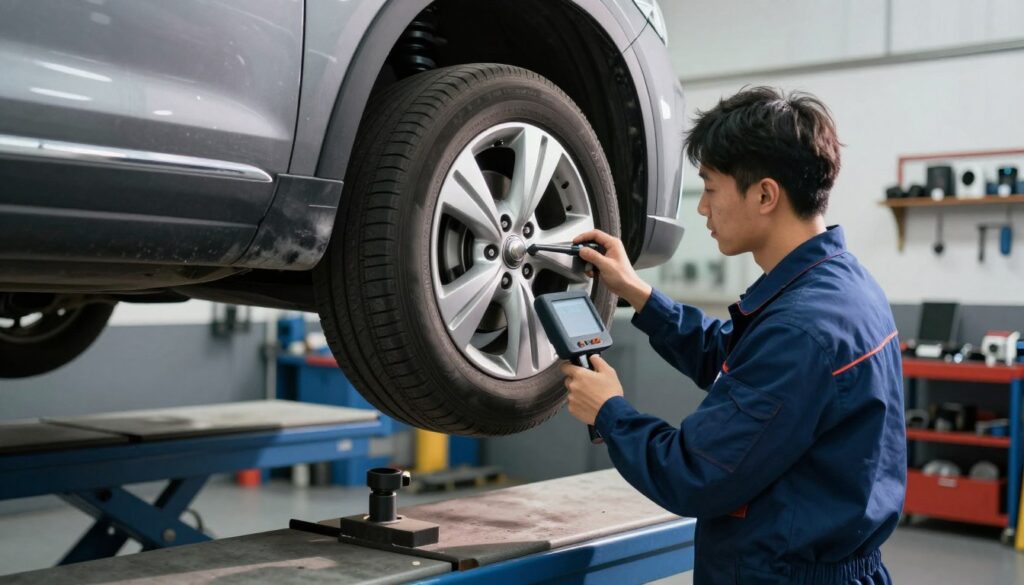
Walk around your car to check the tires. Look at the tread patterns. If the edges wear down faster, it means your car is misaligned.
Also, check for damage to the rims or sidewalls from hitting a curb. Look under the car for bent or loose suspension parts. A quick look can show problems you might miss later.
Test Drive Observations
The best Wheel Alignment Test is while driving on a straight road. Find a quiet spot to see how your car tracks. Hold the steering wheel lightly and see if it pulls to one side.
Check the steering wheel’s position when driving straight. If it’s tilted, your alignment is off. Also, listen for vibrations or pulling at high speeds.
| Observation Method | What to Look For | Potential Issue |
|---|---|---|
| Tire Tread Check | Uneven wear on edges | Camber misalignment |
| Straight Road Test | Vehicle pulling to one side | Tracking error |
| Steering Wheel Check | Off-center position | Steering linkage issue |
| Vibration Analysis | Shaking at high speeds | Balance or alignment |
If you see any signs during your Car Wheel Alignment Check, get a pro’s help. Regular Wheel Alignment Tests keep you safe and save tires. Being proactive keeps your car running well.
The Danger of Ignoring Wheel Alignment
Ignoring the signs of bad wheel alignment puts your vehicle and passengers at risk. Many drivers think a slight pull to the side is just a minor issue. But, it often hides deeper mechanical problems. Ignoring these warnings can lead to unpredictable handling during critical moments on the road.
Safety Risks
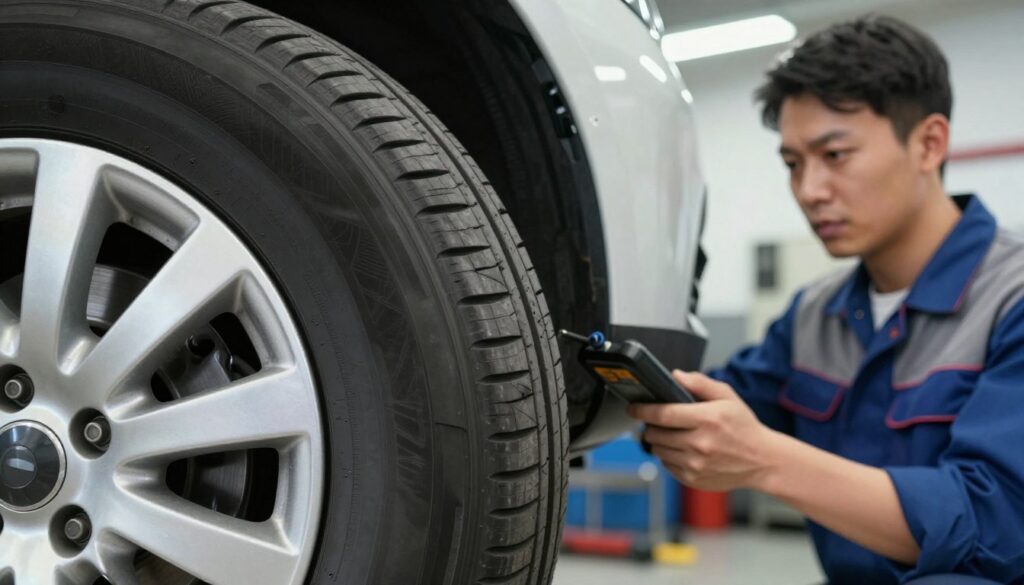
Ignoring wheel alignment makes it hard to control your vehicle in emergencies. Your car may not steer as expected, which is very dangerous at high speeds. Reduced traction and uneven tire contact make it more likely to lose control on wet or slick roads.
Also, ignoring misalignment can cause your tires to wear out faster. A sudden tire blowout is a scary experience that can be prevented with regular checks. Keeping your vehicle in good shape means you stay in control, no matter the road conditions.
Long-term Vehicle Damage
Ignoring signs of bad wheel alignment can also cause long-term damage. Your suspension system is designed to work within certain limits. When these limits are exceeded, parts like ball joints and struts wear out faster. This can lead to expensive repairs that are much more than a simple alignment service.
The table below shows the financial and mechanical damage from neglecting alignment:
| Component | Neglected Alignment | Maintained Alignment |
|---|---|---|
| Tire Lifespan | Reduced by 30-50% | Maximum longevity |
| Suspension Parts | Accelerated wear | Optimal performance |
| Fuel Efficiency | Decreased due to drag | Improved economy |
| Repair Costs | High (Major replacements) | Low (Routine service) |
In the end, ignoring these issues can cost a lot. By being proactive, you protect your investment and keep your vehicle reliable for your daily commute.
Recommended Maintenance Schedule for Wheel Alignment
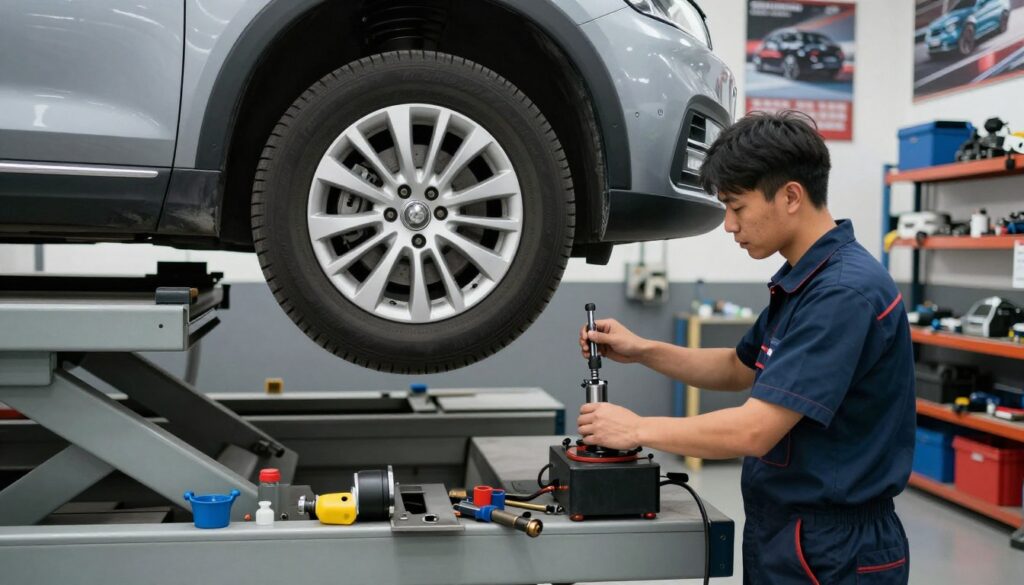
Keeping your vehicle straight and true is key. While many focus on the engine, don’t forget the suspension and steering. A regular vehicle wheel alignment check protects your investment and boosts fuel efficiency.
Frequency Guidelines
Experts say check your alignment every 6,000 to 10,000 miles. If you hit lots of potholes, check it more often. It’s smart to do this with your oil change or tire rotation.
“Proper wheel alignment is not just about comfort; it is a fundamental aspect of vehicle safety that ensures predictable handling in emergency situations.”
Here’s a table to guide you on when to check your alignment based on how you drive and use your vehicle.
| Driving Condition | Recommended Interval | Priority Level |
|---|---|---|
| Standard Highway Driving | Every 10,000 Miles | Moderate |
| Frequent City/Rough Roads | Every 6,000 Miles | High |
| After Major Suspension Repair | Immediately | Critical |
Signs You Need an Alignment Check
Your car will tell you when it needs service. Knowing Wheel Alignment Signs can prevent tire and suspension damage. If your car pulls to one side on a straight road, it’s time to see a pro.
Look out for a steering wheel that’s off-center or uneven tread wear on your tires. Hitting a pothole or curb? Get it checked right away. Early detection keeps your vehicle safe and reliable for all your trips.
The Wheel Alignment Process Explained
We’re going to show you how your car stays straight and true. Many people think a Wheel Alignment Test is mysterious. But it’s a detailed process to make your car like new again.
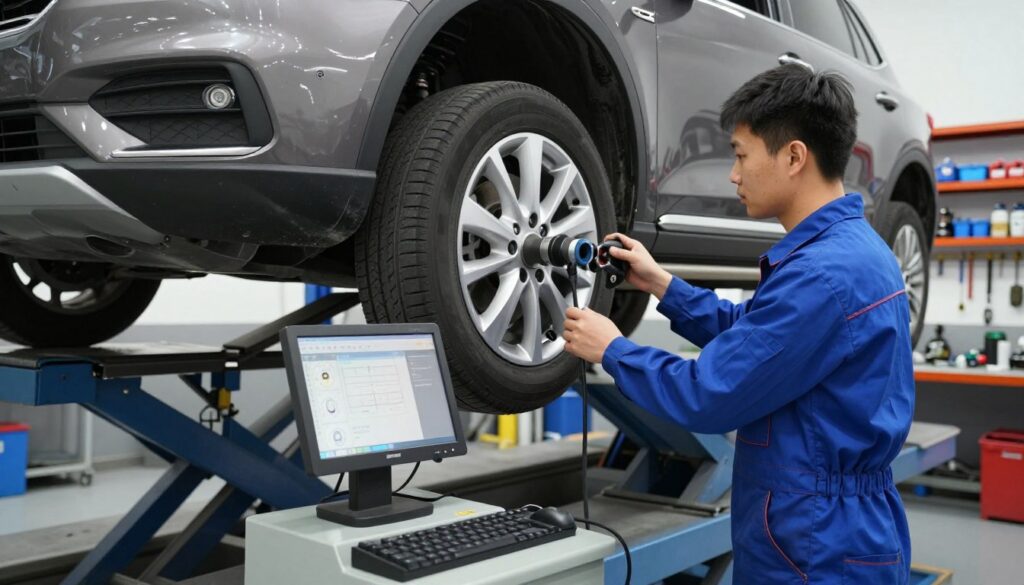
Certified technicians use advanced tech to check your suspension angles. This is essential for your safety and tire life.
Diagnostic Equipment Used
Today’s shops use computer systems for accurate Wheel Alignment Tests. These systems have high-resolution cameras and infrared sensors on each wheel.
The tech talks to a central computer that shows real-time data. Technicians compare this data to the exact manufacturer requirements for your car. This digital method is more accurate than manual tools.
What to Expect During Alignment
When you arrive, the technician checks your suspension and steering. If parts are worn, they must be replaced first. This ensures a successful alignment.
Then, the technician attaches sensors to the wheels. They adjust the suspension parts to get the angles right. This includes camber, caster, and toe.
After adjusting, the technician does a final Wheel Alignment Test. They check if everything is within the right range. You’ll get a printout showing the changes, giving you complete peace of mind.
Cost of Wheel Alignment Services
Knowing the cost of car maintenance is important for car owners. Fixing Car Alignment Issues early can save money on fuel and tires later.
Average Pricing Across the U.S.
In the U.S., a standard alignment costs between $65 and $150. For more details, check with local service centers. Prices vary by location and vehicle type.
Some places offer lifetime alignment packages. These are good if you keep your car for a long time. They let you get adjustments for small handling changes, keeping your car in top shape.
Factors Influencing Cost
Several things affect the final price. The complexity of your car’s suspension is a big factor. Some modern cars need more time and special tools to align right.
If your car hit a curb or a pothole, extra repairs might be needed. These Car Alignment Issues can include replacing parts like tie rods or ball joints. This will make the service cost more.
Seeing this service as a preventative measure is wise. Proper wheel alignment protects your tires and saves fuel. It’s a smart way to handle Car Alignment Issues over your car’s life.
DIY Wheel Alignment: Is It Possible?
Some car repairs are okay for DIY fans, but wheel alignment is not one of them. It needs special tools and skills that are hard to get without professional help. Modern cars have complex suspension systems. A small mistake can cause big problems with how the car handles.
We don’t think it’s a good idea to try to fix this at home. You might make things worse. This could lead to more symptoms of misaligned wheels because you didn’t do it right.
Tools and Techniques
Pro shops use special laser systems to check angles very precisely. These tools give exact data that’s hard to get with simple tools at home. Trying to do it yourself means you’re stuck with basic methods.
These methods include:
- Using string lines to measure toe-in or toe-out.
- Relying on bubble levels to check camber.
- Manually adjusting tie rods without precise torque specifications.
These ways are not accurate enough for today’s cars. Without the right tools, you’re just guessing. Guessing usually doesn’t work well.
Risks Involved
Trying to fix it yourself can damage your tires and suspension. If you mess up, you might make the symptoms of misaligned wheels worse. This can cause uneven wear on your tires and make your car use more gas.
Driving a car that’s not aligned right is also very dangerous. It’s not safe for you or others on the road.
If your car is not handling right, it’s important to know what to do. Check out bad alignment symptoms and next steps to keep your car safe. Trying to fix it yourself can cost a lot more than getting a pro to do it. It’s best to let a certified technician fix it right.
Professional vs. DIY Alignment
Getting your wheels aligned right needs precision that’s hard to do at home. Saving money is tempting, but modern cars need special care. Knowing the difference between pro help and DIY is key for your car’s health.
Benefits of Professional Service
Pros use laser-guided diagnostic technology for exact settings. They’re trained to read complex data that DIY tools can’t. Choosing a pro means you get precision engineering and peace of mind.
“The bitterness of poor quality remains long after the sweetness of low price is forgotten.”
Pro shops give you a detailed report before and after work. This shows how your car’s handling improves. Plus, their work comes with a warranty, protecting your investment.
Common DIY Mistakes
DIY alignment often leads to inaccurate measurements because of missing special tools. People use strings or basic levels, missing the tiny adjustments needed. These mistakes cause uneven tire wear and bad handling, costing more than a pro visit.
| Feature | Professional Service | DIY Attempt |
|---|---|---|
| Equipment | Laser Diagnostic Systems | String and Basic Tools |
| Accuracy | Factory Specifications | Subjective Estimation |
| Safety | High Reliability | Significant Risk |
Another mistake is ignoring suspension load or tire pressure. Without the right factory data, small errors can mess up the whole balance. It’s best to leave these tasks to experts to avoid damage.
When to Seek Professional Help
Knowing when to get expert help is key for car owners. While small fixes might seem easy, some problems need a pro’s touch. Ignoring signs can lead to bigger issues down the road.
Signs That Indicate It’s Time
Get a Car Wheel Alignment Check if your car pulls to one side on a straight road. Also, watch for uneven or fast tire wear. This means your car’s suspension is off.
Feeling vibrations in the steering wheel or an off-center steering wheel is a sign. These problems can be serious. Learn more about them at alignment symptoms and causes. Don’t wait for these issues to get worse.
How to Choose a Quality Service Provider
Finding the right shop for a Vehicle Wheel Alignment Check is critical. Look for ASE-certified technicians. This means they’re very skilled. A good shop will also use the latest tools for accurate checks.
Check customer reviews and ask about service warranties. A top shop will explain their process and give you a detailed report. Use the table below to compare service centers for your next Vehicle Wheel Alignment Check.
| Feature | Professional Shop | General Repair | DIY Approach |
|---|---|---|---|
| Equipment | Laser/Computerized | Basic Tools | Manual/String |
| Expertise | Certified Techs | General Mechanic | None/Amateur |
| Accuracy | High Precision | Moderate | Low/Variable |
| Warranty | Included | Limited | None |
Choosing a pro for your Car Wheel Alignment Check is a smart move. It keeps your tires and car safe. Trusting the experts means your car stays reliable for miles to come.
Conclusion: Keeping Your Car Safe and Efficient
Your car is a key part of your daily life. Keeping it in good shape is important. By noticing small changes in how it drives, you can keep it safe and running well.
Recognizing Warning Signs
Knowing when your car needs a wheel alignment is key. Look for uneven tire wear or a steering wheel that’s not straight. These signs help you catch problems early.
Commitment to Routine Care
Make sure to check your car’s alignment regularly. Take it to places like Firestone or Pep Boys. This helps avoid expensive repairs and saves fuel over time.
Learning to spot when your car needs an alignment is easy. It’s a simple step to keep you safe and your car running smoothly. Make these checks a part of your routine for a better driving experience.
FAQ
How do I recognize common Wheel Alignment Symptoms?
Look for signs like your car pulling to one side, the steering wheel not being straight, or vibrations in the wheel. These are signs your car’s alignment might be off.
What are the most obvious Wheel Alignment Signs to look for on my tires?
Check your tires for uneven wear. Look for one edge being more worn than the other. Also, check for “feathered” edges where the tread feels smooth in one direction but sharp in the other.
How often should we schedule a Car Wheel Alignment Check?
Get a Car Wheel Alignment Check at least once a year or every 6,000 miles. If you hit a pothole, strike a curb, or notice handling changes, get it checked right away.
What is involved in a professional Wheel Alignment Test?
Technicians use computerized sensors and cameras to measure angles. They compare these to your car’s original specs to ensure proper alignment.
Why is a regular Vehicle Wheel Alignment Check necessary for safety?
Regular checks prevent poor traction and unpredictable handling. This is critical in emergency situations, as it can help avoid accidents.
What are the primary Signs of Bad Wheel Alignment that affect driving comfort?
Signs include your car pulling, a “loose” steering feel, or a steering wheel that doesn’t center after turns. These make driving tiring and uncomfortable.
Can unresolved Car Alignment Issues affect my fuel economy?
Yes, bad alignment can lower your gas mileage. Misaligned wheels drag on the road, making your engine work harder and use more fuel.
Do you have tips on How to Tell if Car Needs Wheel Alignment without professional tools?
Find a straight road and check if your car tracks straight. Run your hand over the tire tread for jagged edges or “sawtooth” patterns. These are signs of bad alignment.
What are the long-term Symptoms of Misaligned Wheels if they are ignored?
Ignoring misalignment can destroy your tires early and strain your suspension. This can lead to expensive repairs, much more than an alignment service.
What are the three main adjustments made during an alignment?
We adjust camber, caster, and toe angles. These angles affect how the tire leans, the steering axis tilt, and whether tires point toward or away from each other.

Hi! I’m Moheen Iftikhar, the person behind «CarCruisei». I’m deeply interested in the automotive world, from new car trends and advanced vehicle technology to useful driving advice. On this platform, I publish informative car reviews, expert insights, and practical tips to keep every car enthusiast informed and inspired.