


Gas vs Diesel Trucks: Which Pickup Truck Has Better Towing and Durability?
Choosing the right powertrain for your next vehicle is a big decision. It matters whether you drive to work or haul heavy loads. We’ll help you understand the differences between gas and diesel engines.
We’ll look at performance, cost, and real-world use. If you want the best trucks 2026 top pickups for towing, we’ll show you how different setups affect your life. Making an informed choice means your truck will meet your needs for years.
Key Takeaways
- Gas engines often provide lower upfront costs and simpler maintenance schedules for average users.
- Diesel powertrains excel in high-torque applications, making them ideal for consistent heavy hauling.
- Modern turbocharging technology has significantly narrowed the performance gap between these two fuel types.
- Long-term durability depends heavily on your specific driving habits and routine service intervals.
- Selecting the right configuration requires balancing your professional requirements with your personal budget.
Understanding Gas and Diesel Engines
Choosing between gas and diesel engines is key to a pickup’s true power. Knowing the differences between these engines helps you pick the right one for your needs. It’s like comparing SUVs and crossovers, where understanding the engine is just as important.
Basic Differences Between Gasoline and Diesel Engines
Gasoline engines use spark plugs to ignite fuel, with a compression ratio of about 10:1. Diesel engines, on the other hand, have much higher ratios, between 15:1 and 25:1. They ignite fuel through heat and pressure alone.
This high-compression design means diesel engines need stronger parts to handle the pressure. This is why they’re often used for heavy-duty tasks.
Efficiency and Performance Factors
In a Gas vs Diesel truck performance comparison, we see different strengths. Diesel engines have superior torque output, perfect for pulling heavy loads. They’re the top choice for towing and hauling.
Gasoline engines, though, have higher horsepower, leading to better acceleration and responsiveness. They’re smoother and more agile for daily driving. So, it’s a matter of whether you need sustained pulling power or quick speed for your commute.
Towing Capacity Comparison
When you’re ready to tow a heavy trailer, the engine is key. It’s important to know how different engines handle heavy loads. This is true for various terrains.

How Gas and Diesel Engines Handle Towing
Diesel engines make a lot of torque at low RPMs. This is great for starting heavy loads from a stand.
Gas engines, on the other hand, need to rev higher to reach their peak power. Modern gas engines are better, but they can’t match diesel’s power on long climbs.
Thinking about cost? Check out a hybrid vs plug-in hybrid total cost comparison. It shows how different techs affect long-term costs. Knowing this helps pick the right truck for your needs.
Real-World Towing Scenarios
Diesel trucks excel in towing heavy loads up steep mountains. They keep speed steady, making driving easier.
But, if you only tow sometimes, a gas engine might be enough. Gas trucks are lighter and simpler to keep up for casual users. They’re good for pulling small trailers on flat ground.
Your choice should match your towing needs. Think about your usual route and load to pick a reliable truck.
Durability: Gas vs Diesel Trucks
Knowing the difference between gas and diesel engines is key for truck owners. We look at how these engines perform under stress. The design affects how well a truck lasts over time.

Engine Lifespan and Maintenance
Diesel engines are built tough, with heavy parts for high compression. They have fewer parts than gas engines, making them last longer. A well-kept diesel engine can go over 300,000 miles.
But, gas engines have improved a lot. They now match diesel engines in Gas vs Diesel truck engine durability. While diesel engines are best for heavy use, gas engines are good for most drivers.
Gas engines are cheaper to maintain. Parts are less expensive, and service is easier to find. Learn more about engine types in our guide on turbo vs naturally aspirated engine reliability and performance.
Common Issues with Each Engine Type
Diesel engines face challenges like emissions systems. These systems can get clogged if the truck is used for short trips. This affects Gas vs Diesel truck reliability.
Gas engines have problems with ignition and fuel delivery. These repairs are usually cheaper but can cause downtime. The Gas vs Diesel truck maintenance cost is a big factor for owners who want to avoid repairs.
Think about your driving habits before choosing. Diesel engines are better for heavy loads and long trips. But, for daily driving and light tasks, a gas engine might be the best choice.
Fuel Economy: Gas & Diesel Trucks
Choosing between a gas or diesel engine affects your wallet long after buying. Fuel efficiency is key for heavy-duty pickup trucks, mainly for those who drive a lot.
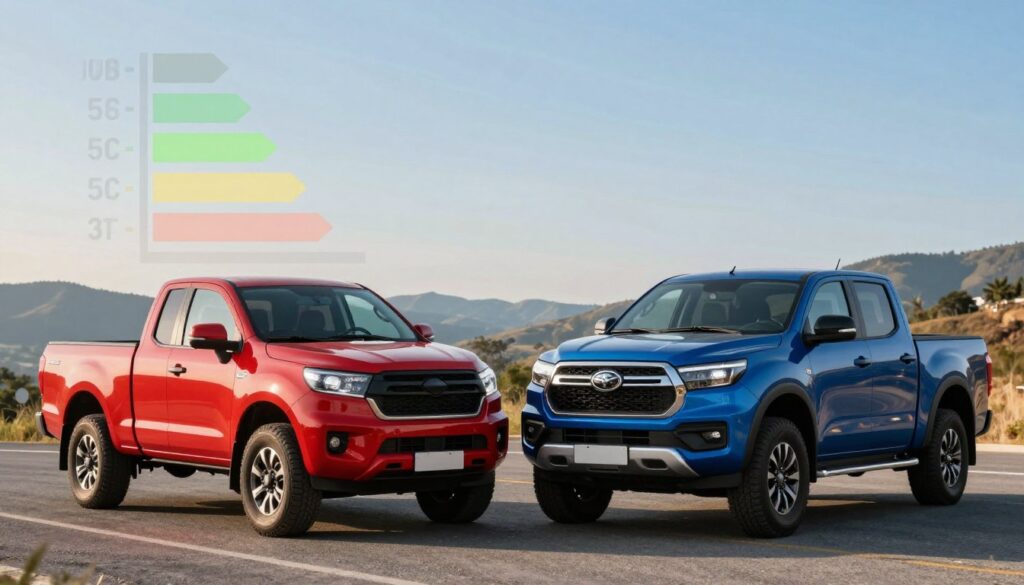
Cost-Effectiveness of Fuel Choices
Diesel engines use less fuel than gas engines. This is a big plus for those who drive a lot for work.
Diesel fuel might cost more per gallon, but better mileage can make up for it. The choice between gas vs diesel truck fuel efficiency is critical for saving money over time.
Long-Term Financial Implications
Diesel trucks cost more upfront than gas models. But, we need to look at the whole picture, not just the initial price.
The gas vs diesel truck resale value is another important factor. Diesel engines last longer, keeping their value better.
When you sell or trade in your truck, its strong resale performance can help offset the higher initial cost. This balance helps protect your financial interests.
Payload Capacity: An Important Factor
Many truck owners focus on towing, but payload capacity is just as important. It tells you the max weight your vehicle can carry, including people, cargo, and trailer tongue weight. Ignoring these limits can cause your truck to handle poorly and wear out faster.
When choosing a truck, it helps to know the differences between diesel and gasoline trucks. This knowledge ensures you stay safe and use your truck to its fullest.

How Payload Affects Towing Performance
Your truck’s towing performance depends on how you distribute weight. Loading the bed changes the truck’s balance, affecting cornering and braking. A heavy load needs strong suspension to stay stable.
“The true measure of a truck’s capability isn’t just what it can pull, but how well it manages the total weight of its cargo and trailer combined.”
Going over your payload limit can damage your suspension and reduce steering control. Proper weight distribution keeps your trailer level, which is key for safe driving. Always check your door jamb sticker for your truck’s max cargo limit.
Differences in Payload Between Gas and Diesel
Diesel engines are heavier because they’re built for high compression. This extra weight takes up part of the truck’s GVWR.
So, gas trucks usually have more payload capacity because their engines are lighter. If you need to haul heavy stuff in the bed, a gas truck might be better. The table below shows how these differences play out in a heavy-duty truck.
| Feature | Gas Engine Truck | Diesel Engine Truck |
|---|---|---|
| Engine Weight | Lighter | Heavier |
| Payload Capacity | Higher | Lower |
| Towing Torque | Moderate | Superior |
| Best Use Case | Bed-heavy hauling | Long-distance towing |
Best Pickup Trucks for Towing
Finding the right truck for your ranch or work site is key. It’s about finding a balance between power and reliability. Whether you’re moving equipment or livestock, there are many great options out there. You can read more about gas vs diesel trucks to see which fits your needs best.
Top Gas Trucks for Towing Heavy Loads
Gas trucks have come a long way, with great torque and handling for towing. The Chevrolet Silverado 1500 is a top pick, thanks to its 6.2L V8 engine. It has the power you need for everyday tasks without the hassle of a diesel.
The Ford F-150 with its EcoBoost engine also shines in towing. These trucks are great for their versatility and lower cost. They’re perfect for lighter-duty hauling and short trips.
Leading Diesel Trucks for Optimal Towing
If you need to move big loads over long distances, diesel is the way to go. The Chevrolet Silverado HD series is built for tough jobs. They offer the sustained torque needed for heavy trailers on steep hills.
Diesel trucks are made for constant heavy-duty use. Choosing a diesel means you’re getting a truck built for long life and efficiency. Below is a table showing the main differences in performance between these popular trucks.
| Truck Model | Engine Type | Primary Strength | Best Use Case |
|---|---|---|---|
| Chevy Silverado 1500 | Gas | Agility & Value | General Ranch Work |
| Ford F-150 | Gas | Towing Versatility | Daily Hauling |
| Chevy Silverado 2500HD | Diesel | High Torque | Heavy Equipment |
| Ram 3500 | Diesel | Max Towing Capacity | Commercial Transport |
Factors Influencing Your Choice
Choosing between gas and diesel power depends on where you live and how you use your truck. The right truck for you depends on your environment and daily needs. Looking into the diesel vs gas truck debate can help you decide.

Intended Use: Work vs Play
If your truck is for work, like on a ranch or construction site, diesel is better. Diesel engines have more torque and can handle heavy loads all day. They are great for those who need raw pulling power and durability.
But, if your truck is for fun, like weekend adventures or light towing, gas might be better. Gas trucks are lighter and easier to drive for daily use. They’re perfect for occasional trips or hauling gear without the hassle of diesel maintenance.
Climate and Terrain Considerations
Your local climate affects your engine’s performance. In extreme cold, diesel engines need special care, like fuel additives or block heaters. If you live in a cold area, you’ll need to take extra steps to keep your diesel engine running well.
The terrain you drive on also matters, like in mountainous areas. Diesel engines perform better at high altitudes than gas engines. If you drive through mountains, a diesel’s consistent torque makes towing safer and more stable.
Environmental Considerations
Modern engineering is working hard to balance the power of pickup trucks with environmental care. As rules get stricter, the gap between strong performance and green responsibility is shrinking fast.

Emissions from Gas and Diesel Engines
Modern diesel engines have changed a lot to meet air quality standards. They use diesel particulate filters to catch soot before it goes out.
EGR systems—or Exhaust Gas Recirculation—also play a big role. They help lower combustion temperatures. This cuts down on nitrogen oxides, a big problem in heavy-duty vehicle emissions.
Gasoline engines have also improved. They use advanced catalytic converters and precise fuel injection. These help trucks perform well while keeping their carbon footprint low.
Eco-Friendly Options Available
For those who care about the planet, there are more choices than before. Trucks that run on renewable diesel and biodiesel blends are becoming more common. They burn cleaner than regular diesel.
Hybrid technology is also coming to heavy-duty trucks. It captures energy when braking to help the engine when needed. This improves fuel efficiency and cuts emissions during daily use.
Choosing a truck doesn’t mean you have to give up on caring for the environment. By keeping up with the latest emissions control technology, we can find vehicles that are strong and eco-friendly.
Conclusion: Making the Right Choice
Choosing between a gas or diesel engine depends on your daily needs and long-term goals. The best choice matches how you use your truck for work or personal use.
Balancing Performance and Investment
For heavy towing and long drives, diesel engines are often the better choice. They cost more upfront but offer more power and better resale value. This makes them a good investment for those who keep their trucks for a long time.
Learn more about the impact on your budget by reading this guide on gas vs diesel for contractors. It helps you understand which pickup is more cost-effective in the long run.
Practical Daily Applications
Gas engines are great for lighter tasks and local driving. They have lower maintenance costs and are cheaper to buy. This makes them a good option for those who change their trucks often.
Your driving habits are key in deciding which engine is best for you. Take the time to consider these factors to make sure your next truck meets your needs for years.
FAQ
Gas vs Diesel Trucks: Which pickup truck has better towing and durability?
Diesel trucks, like the Ram 3500 with the Cummins engine, usually have better towing and last longer. But, gas trucks are getting better and can handle most towing needs. They are also cheaper to buy and maintain.
How does the compression ratio affect gas vs diesel truck performance comparison?
Diesel engines have higher compression ratios, between 15:1 and 25:1. Gas engines have around 10:1. This is why diesel engines are great for heavy hauling. Gas engines are better for quick starts and highway driving.
What should we expect regarding gas vs diesel truck engine durability and lifespan?
Diesel engines are known for their long life, often over 300,000 miles. They are built strong for heavy use. Gas engines are getting more reliable but need more service as they get older.
Is gas vs diesel truck fuel efficiency a deciding factor for long-term ownership?
Yes, it is. Diesel engines use less fuel, which saves money, even with their higher cost. This is good for long trips or big fleets.
Why do gas trucks often have a higher payload capacity than diesel trucks?
Gas trucks have a lighter engine, leaving more room for cargo. This makes them better for carrying heavy loads.
How does gas vs diesel truck resale value impact the total investment?
Diesel trucks hold their value better, which can save money over time. This is great if you plan to sell your truck often.
What are the primary differences in gas vs diesel truck maintenance cost?
Gas trucks cost less to maintain. They need cheaper oil and parts, and mechanics are easier to find. Diesel trucks need special care and more expensive parts, but they last longer.
Which offers better towing capacity for extreme loads, a gas or diesel truck?
Diesel trucks are best for heavy towing. They have the power to start heavy loads easily. If you need to tow very heavy, diesel is the better choice.
How do we determine gas vs diesel truck reliability for cold-weather climates?
In cold weather, gas engines start faster and warm up quicker. This is important in very cold places. Diesel engines need special care to start well in cold.

Hi! I’m Moheen Iftikhar, the person behind «CarCruisei». I’m deeply interested in the automotive world, from new car trends and advanced vehicle technology to useful driving advice. On this platform, I publish informative car reviews, expert insights, and practical tips to keep every car enthusiast informed and inspired.