


DIY Auto Repair: How to Replace Windshield Wiper Blades at Home
Keeping our view clear is key to driving safely. Rain or snow makes it hard to see. Learning to replace windshield wiper blades is a great DIY project.
By doing it yourself, you save time and money. It’s easy, even if you’re new to DIY car repairs. Just like learning to change oil, it helps you care for your car better.
This guide will show you how to do it safely. We’ll cover all the steps to keep your car ready for any weather.
Key Takeaways
- Clear visibility is a critical component of safe driving during inclement weather.
- Performing basic maintenance tasks builds confidence in vehicle ownership.
- You can save money by handling simple component swaps without professional help.
- Properly functioning equipment extends the life of your vehicle’s glass.
- Regular checks ensure you are never caught off guard by sudden storms.
Understanding Windshield Wiper Blades
Proper Home Auto Maintenance means knowing how wiper parts work. Learning about our car’s wiper system helps keep our view clear in storms. This knowledge helps us choose the right parts for our cars.
Types of Wiper Blades
There are three main types of wiper blades available today. Each type has its own benefits based on our local weather and driving habits.
- Conventional Blades: These have a metal frame with many pressure points to keep the rubber on the glass.
- Beam Blades: They have a curved, frameless design for even pressure along the blade.
- Hybrid Blades: These mix the aerodynamic shape of beam blades with the strong frame of conventional ones.
Picking the right style is as important as choosing the right all-season tires for our car. The table below compares these options to help us decide.
| Blade Type | Best For | Durability |
|---|---|---|
| Conventional | Budget-conscious drivers | Moderate |
| Beam | Heavy rain and snow | High |
| Hybrid | All-weather performance | High |
Benefits of Replacing Wiper Blades
Regularly replacing our blades is very safe. New rubber removes streaks that block our view. This lets us react faster to dangers, which is key for Home Auto Maintenance.
New blades also are much quieter than old ones. This quietness makes driving more peaceful for everyone in the car.
When to Replace Wiper Blades
We should check our blades twice a year for wear. If the rubber is cracked, split, or missing pieces, it’s time for new ones.
Other signs include wipers skipping or leaving dirty spots. If wipers can’t clear water well, it’s a safety risk and we need to replace them fast.
Tools and Materials Needed
Starting a Windshield Wiper Blade Replacement means getting our workspace ready and choosing the right materials. This preparation helps us work efficiently and avoid damaging our vehicle.
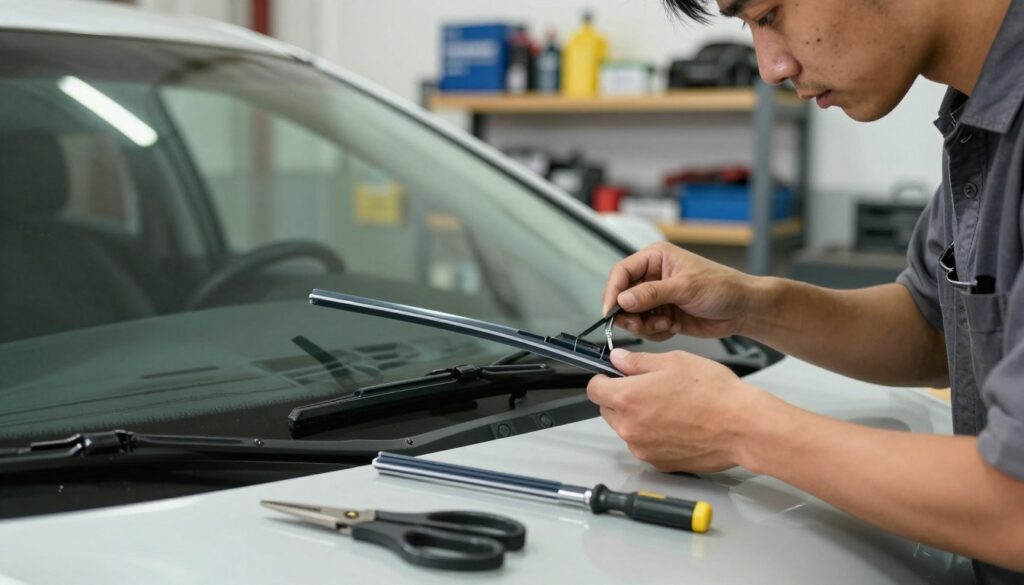
Essential Tools for the Job
Most cars have simple attachments for wiper blades, so we don’t need much. But, having a few basic tools makes the job easier. It’s important to have a thick, folded towel to cover the windshield. This prevents the wiper arm from breaking the glass if it snaps back.
Recommended Wiper Blade Brands
Choosing the right wiper blades is key for clear vision in bad weather. Look for brands known for their durable rubber and aerodynamic design. These brands offer reliable performance and are easy to find at auto stores.
| Brand | Key Feature | Best Use Case |
|---|---|---|
| Bosch | Precision Tension | All-Weather Performance |
| Rain-X | Water Repellency | Heavy Rain Conditions |
| Trico | Durability | High-Mileage Driving |
Safety Gear We Should Use
Even though Windshield Wiper Blade Replacement is generally safe, we should protect ourselves. Wearing sturdy work gloves helps us grip the wiper arms better. Safety glasses are also a good idea to keep our eyes safe from any flying debris.
Preparing for the Replacement
Getting a clear view of the road starts with planning and the right tools for Windshield Wiper Blade Replacement. Before we start, we need to check our current equipment. This ensures a smooth process and keeps our windshield clean in bad weather.

Checking the Current Wiper Blades
First, we should look at the rubber edges of our blades for wear. We need to measure the length of both driver-side and passenger-side blades. Precision is key to avoid poor performance or damage.
Gathering Our Tools and Materials
Having the right tools ready saves a lot of time. We need a clean microfiber cloth, a small towel, and our new blades. If we need specific adapters, keep them in a secure place to avoid losing them.
Choosing the Right Replacement Wiper Blades
Choosing the right product is important for reliability. We should check the owner’s manual or use online guides to find the exact fit. For those looking to upgrade, checking the best SUVs 2026 can help maintain quality across all systems.
| Blade Type | Best Use Case | Durability | Price Range |
|---|---|---|---|
| Conventional | Standard Rain | Moderate | Budget |
| Beam Style | All-Weather | High | Mid-Range |
| Hybrid | Heavy Snow/Ice | Very High | Premium |
Step-by-Step Guide to Replacing Wiper Blades
Replacing wiper blades is a rewarding task for car owners. It keeps our view clear in bad weather. Whether for a road trip or routine care, learning to Replace Windshield Wiper Blades is essential.

Removing Old Wiper Blades
First, park on a flat surface with the engine off. Lift the wiper arm up until it stops. Use a towel to protect the glass.
- Find the small tab or release button on the wiper blade connector.
- Press the tab and slide the old blade down, away from the hook.
- Remove the blade from the arm carefully, avoiding the windshield.
Installing the New Wiper Blades
With the old blades off, we can start our Step-by-Step Windshield Wiper Replacement. Place the new blade on the arm, matching the mount type. Push it up until you hear a click, showing it’s locked.
Lower the arms back onto the windshield. Test the wipers with washer fluid to check for streaks. For extra safety, consider the best dash cams. Learning to do this DIY Windshield Wiper Installation boosts our confidence in car maintenance.
Tips for Ensuring a Proper Fit
Getting the right fit is key for a successful Step-by-Step Windshield Wiper Replacement. Blades that are too long or too short can damage our windshield. They can also leave spots that block our view during storms.
Guessing the size is a dangerous mistake that car owners should avoid. Taking a few minutes to check the specs keeps our vehicle safe and ready for the road.

Measuring Wiper Blade Size
If we’re not sure about our blade size, a tape measure can help. We pull the wiper arm away and measure the rubber strip from end to end.
- Always measure both the driver and passenger sides, as they are often different lengths.
- Check the connection type, such as J-hook or bayonet, to ensure compatibility.
- Record these numbers before heading to the auto parts store.
Consulting the Vehicle Manual
The owner’s manual is the best source for our vehicle’s needs. It lists the exact dimensions and part numbers for our make and model.
“Proper maintenance is not just about fixing what is broken; it is about using the right tools and parts to prevent future failures.”
By following these DIY Automotive Tips, we can avoid the hassle of buying the wrong parts. We should keep our manual in the glove box for easy access during maintenance.
Utilizing Online Resources
Today’s technology makes finding the right parts easy from home. Many websites have digital tools where we can enter our vehicle’s details to find guaranteed-fit products.
For those who want to learn more, check out this Step-by-Step Windshield Wiper Replacement guide. Using these DIY Automotive Tips ensures our new blades work perfectly, giving us clear vision in any weather.
Testing the New Wiper Blades
After installing the new blades, we need to check if they work well in different weather. This is key to staying safe on the road. By following these DIY Automotive Tips, we make sure our car is ready for rainy days. Testing them is a must, as most accidents happen in the rain.

“Safety is not just a destination; it is a continuous process of ensuring our vehicle is prepared for the unpredictable nature of the road.”
Checking for Proper Operation
We start by checking the washer fluid system. We want to see that the pump and nozzles work well with the new blades. It’s important to watch how the blades move to avoid any problems.
If we see any issues, we might need to go back to the wiper replacement steps. This ensures the arm tension is right.
Assessing Performance in Different Conditions
Next, we test the blades at high speeds. We need to make sure they stay in touch with the windshield. At fast speeds, wind can lift the blade, causing streaks or missed spots.
Consistent pressure is key for a good installation. It gives us the confidence to drive safely, even in heavy rain or light mist.
By following these DIY Automotive Tips, we keep our car ready for the road. Taking a few minutes to watch the blades in action helps us stay prepared for any weather. Having reliable equipment is our best defense against bad visibility.
Maintenance Tips for Longevity
After you’ve replaced your Windshield Wiper Replacement, keeping them in top shape is key. Regular care helps your wipers work well for a long time. By following these simple steps, you’ll get the most out of your new wipers.
Regular Cleaning of Wiper Blades
Grime, sap, and films can damage your wiper blades. They cause them to chatter and leave streaks. Clean the rubber edges with a cloth and mild glass cleaner every few weeks.
If your wipers skip, clean the windshield with vinegar. This removes dirt that can stop the blades from working right. Keeping everything clean helps your wipers last longer.
Avoiding Common Mistakes
Don’t use your wipers to clear ice or snow. It can damage the motor and the rubber. Clear the windshield with an ice scraper first.
Also, don’t run your wipers on a dry windshield. The friction can wear out the rubber fast. Use washer fluid to clear dust and keep things lubricated.
When to Schedule Professional Help
Some problems need a pro. If your wiper arms are stuck or you have electrical issues, get help. You can learn more about when to replace windshield wipers if you’re not sure.
Strange noises or wipers that don’t park right mean there’s a bigger problem. A professional can fix it without causing more damage to your car.
Troubleshooting Common Issues
Even with a perfect DIY Windshield Wiper Installation, you might face annoying issues. Minor snags can block your view during heavy rain. These problems are often not the blade’s fault but external factors or small mechanical tweaks.
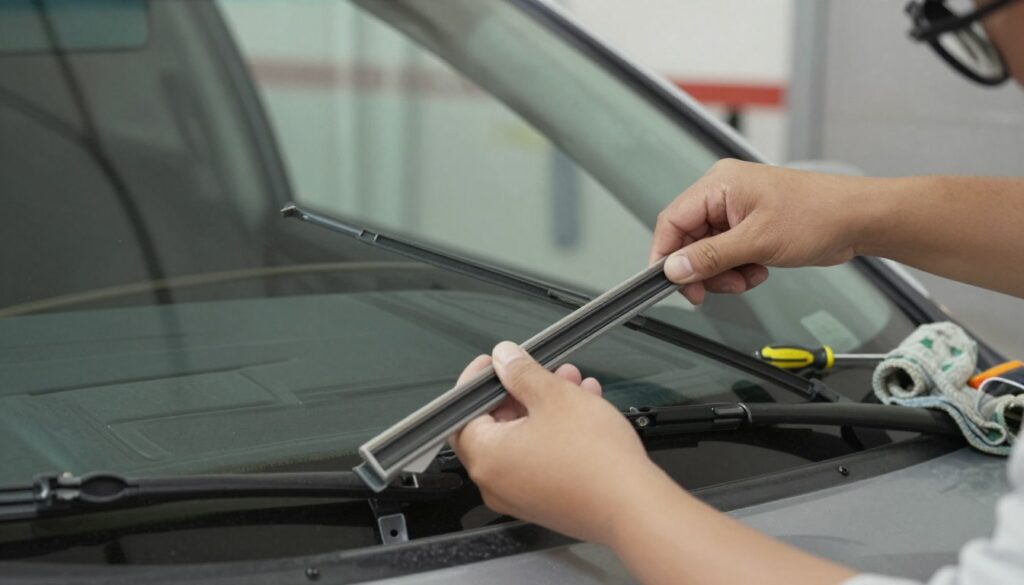
Streaking and Squeaking Problems
Streaking usually comes from a dirty windshield or residue on the blade. Clean the glass with a good glass cleaner and wipe the blade edge with a damp cloth. Squeaking means the wiper arm isn’t pressing evenly on the blade.
“A clear windshield is the foundation of safe driving; never underestimate the impact of clean glass on your wiper blade longevity.”
Wiper Blade Misalignment
The blade might lift at high speeds or not sit right on the glass. This is often due to a bad adapter fit or a weak wiper arm spring. If you’re having trouble, you might need professional wiper replacement help to get the arm right.
Unique Vehicle Considerations
Modern luxury cars have special “service modes” for the wiper arms. Trying to force them up can damage the paint or motor. Always check your owner’s manual to find the right service position before starting your DIY Windshield Wiper Installation.
| Issue | Likely Cause | Recommended Fix |
|---|---|---|
| Streaking | Dirty Glass | Clean with solvent |
| Squeaking | Uneven Pressure | Check arm tension |
| Lifting | Loose Adapter | Re-seat connection |
| Chattering | Old Rubber | Replace blade |
Final Thoughts on DIY Wiper Blade Replacement
By taking care of basic car maintenance ourselves, we feel safer on the road. Doing these tasks helps us connect more with our cars and keeps our travel plans smooth.
Advantages of Hands-On Maintenance
DIY car repairs save us money by cutting out labor costs. We feel secure knowing our wipers work well in bad weather. This makes a simple task feel rewarding and valuable.
Building Long-Term Habits
Regular maintenance keeps our cars running longer and avoids costly repairs. Replacing wiper blades is just the start. It helps us learn more about car repairs and builds our confidence.
Expanding Your Automotive Knowledge
Check out resources from Bosch or Rain-X to learn about new car tech. Online forums and service manuals are great for learning about cars. We hope this guide helps you start your journey to becoming a more skilled driver.
FAQ
Why should we perform a DIY Windshield Wiper Installation instead of going to a mechanic?
DIY installation saves money and time. It ensures the job is done with high-quality parts, giving you satisfaction.
How often do we really need a Windshield Wiper Replacement?
Most manufacturers suggest replacing wipers every six to twelve months. Check them sooner if you notice streaking or live in extreme climates.
What is the most important safety step during a DIY Car Repair involving wipers?
Always place a thick towel on the windshield. This protects it from the wiper arm if it snaps back while removing the blade.
How do we determine the correct size for a Windshield Wiper Blade Replacement?
Measure the existing blades or consult your owner’s manual. Use digital fitment guides from brands like Michelin to confirm the correct sizes.
Are there any specific DIY Automotive Tips for luxury vehicles like Audi or Mercedes-Benz?
Yes, luxury vehicles require the wipers to be in “service position” via the dashboard menu. This is essential to avoid damage.
What should we do if our new blades are stil streaking after a Step-by-Step Windshield Wiper Replacement?
Clean the windshield and blades with glass cleaner first. If streaking persists, ensure the correct adapter was used and the blade is securely locked.
Can regular Home Auto Maintenance really make our wipers last longer?
Yes, regular maintenance, like wiping the blades with a damp cloth, can extend their life. Avoid using wipers for heavy ice or frost to prevent damage.

Hi! I’m Moheen Iftikhar, the person behind «CarCruisei». I’m deeply interested in the automotive world, from new car trends and advanced vehicle technology to useful driving advice. On this platform, I publish informative car reviews, expert insights, and practical tips to keep every car enthusiast informed and inspired.