


EV Charging Stations: How Long Does It Take to Charge an Electric Car?
Switching to electric cars is a big step for many drivers in the U.S. As we look at the best SUVs 2026, many wonder about charging times. Knowing how long it takes to charge is key for a good driving experience.
Finding out exactly how long it takes is tricky. Car charging time changes based on many things. These include the battery size, how full it is, and the charger’s power.
Whether you charge at home or use public electric car charging stations, knowing what to expect helps. We want to make these details easy to understand. This way, you can enjoy your electric car without worry.
Key Takeaways
- Refueling duration varies significantly based on battery size and power source.
- Public infrastructure availability impacts your overall travel planning.
- Home equipment often provides the most convenience for daily needs.
- Understanding power levels helps manage expectations during road trips.
- Reliable data ensures a smoother transition to sustainable driving.
Understanding Electric Vehicle Charging
Many drivers think the wall unit is the charger. But, the real magic is inside the car. The actual charger is a part of the vehicle itself.
It’s important to know the difference between the external equipment and the car’s system. This helps us understand electric vehicle charging better. Knowing this is key for those switching from traditional cars, like our guide to top-rated sedans and most fuel-efficient gas cars for daily use.
What are EV Charging Stations?
EV Charging Stations connect your car to the electrical grid. They act as a safety gate, controlling the flow of electricity to your vehicle.
Without these stations, charging your car’s battery would be impossible. They provide a safe way to transfer power from the grid to your car’s systems.
Types of Electric Vehicle Chargers
The onboard charger is key to the process. It changes AC electricity from the wall into DC electricity for the battery.
Understanding this conversion shows why charging speeds vary. Some stations give AC power, which the car must convert. Others give DC power directly, making charging faster. Knowing this helps you use EV Charging Stations more efficiently and plan your day better.
Charging Time Factors
Many factors affect how fast your battery charges. When looking at your car charging time, remember it varies by vehicle and location.
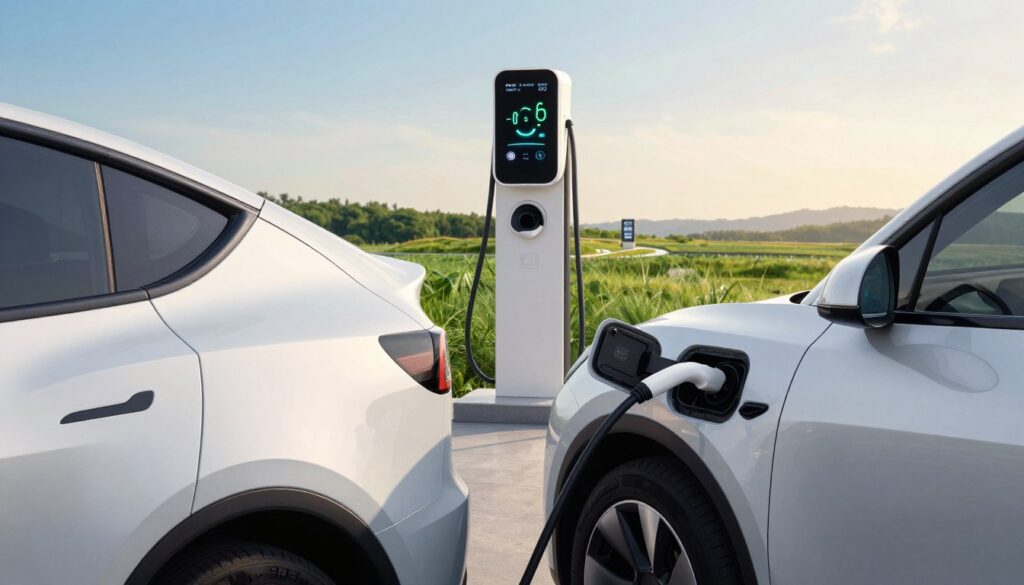
Battery Size and Capacity
The size of your battery, in kilowatt-hours (kWh), sets the charge time baseline. A bigger battery needs more energy to fill up, making charging take longer.
Think of it like a fuel tank. A bigger tank takes longer to fill. This is key when comparing charging times between electric vehicles.
Charger Power Levels
The charger’s power and your car’s onboard charger matter most for charging speed. Even with a high-power station, your car can only take what it can handle.
Using a charger that’s too powerful for your car means wasted energy. Make sure your car and charger match for the best results.
Environmental Conditions
Weather, like cold or hot temperatures, affects charging time. Extreme weather makes charging slower.
Batteries work best in a certain temperature range. Cold or hot weather forces the car to use energy to keep the battery at the right temperature, slowing charging.
| Factor | Impact on Time | Primary Variable |
|---|---|---|
| Battery Capacity | High | Total kWh size |
| Charger Output | High | Kilowatts (kW) |
| Temperature | Moderate | Ambient conditions |
| Vehicle Limit | High | Onboard charger |
Levels of Charging
We divide charging methods into three levels to help you pick the right one for your daily needs. Knowing these levels lets you manage your electric vehicle charging with confidence and ease.
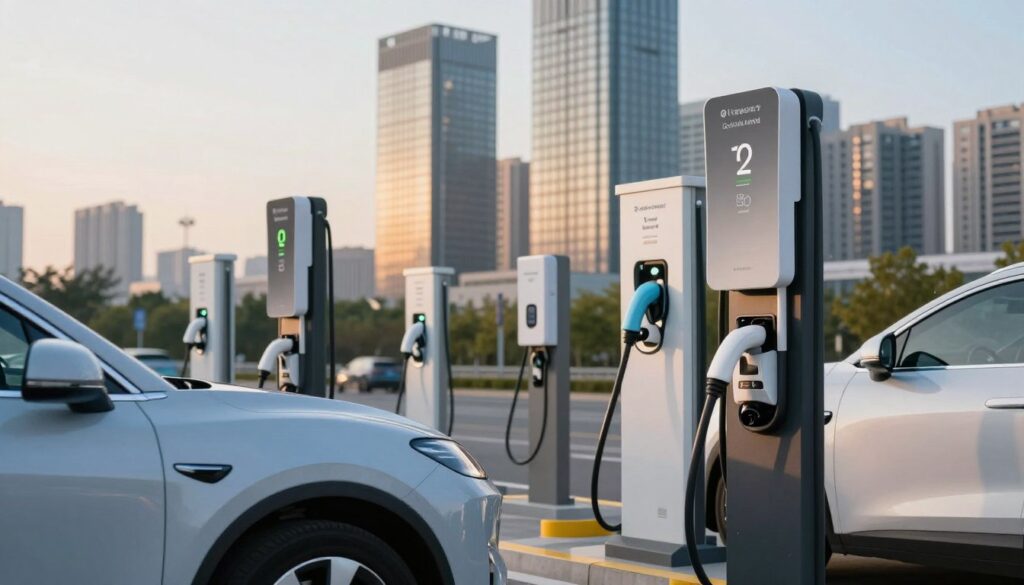
Level 1 Charging Overview
Level 1 charging is the simplest method for drivers. It uses a standard 120-volt household outlet, like the one for your fridge.
This method charges slowly, so it takes days, not hours. It’s perfect for plug-in hybrids or those with short commutes who can charge overnight.
Level 2 Charging Overview
Level 2 charging is the most common for homes and public spots. It needs a 240-volt circuit, like for a big kitchen appliance or dryer.
Most people charge at home with these. You’ll also find them in many public parking garages and shopping centers in the U.S.
- Faster replenishment: Much quicker than Level 1.
- Broad compatibility: Works with almost all modern electric vehicles.
- Convenience: Great for overnight charging at home or while at work.
DC Fast Charging Explained
For long trips, fast charging stations are the best choice. They deliver high-voltage direct current straight to the battery.
This method charges your car fast, often to 80% in under an hour. Though expensive, they’re key for highway travel.
Fast charging stations keep your trip going. They’re a vital part of the electric vehicle charging network for long-distance travel.
Average Charging Times
Switching to an electric vehicle means learning about car charging time. Knowing how long to charge your car is key to planning your day. Whether you choose affordable electric cars or luxury models, understanding charging times is essential.
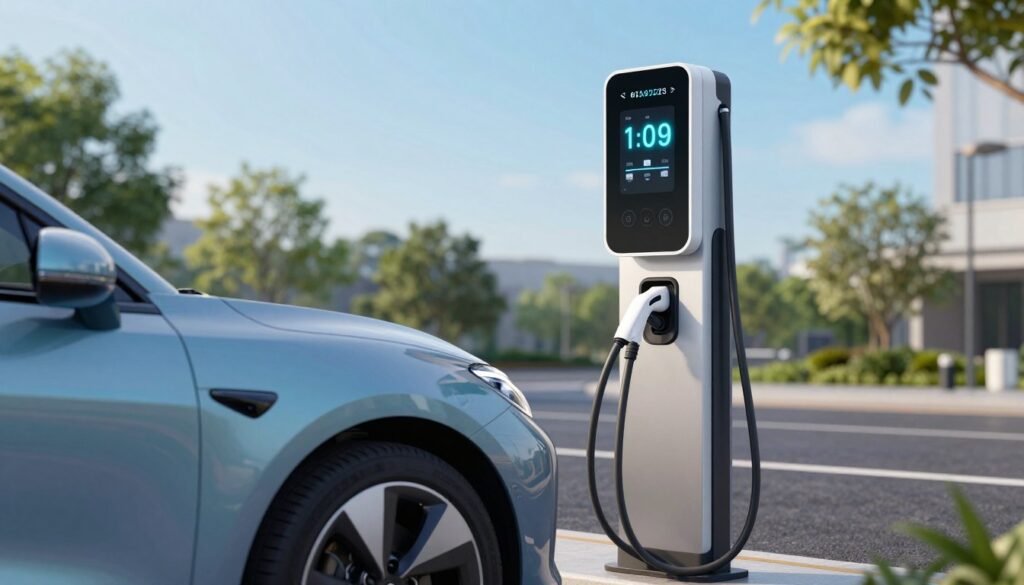
Time for Level 1 Charging
Level 1 charging uses a standard 120-volt outlet. It’s the slowest method, adding 3 to 5 miles per hour. It’s not practical for daily use unless you have a very short commute.
Time for Level 2 Charging
Most people use Level 2 for their main charging speed. It needs a 240-volt connection, like a clothes dryer. You can add 12 to 80 miles per hour, making it great for overnight charging at home.
Time for DC Fast Charging
Fast charging stations are perfect for on-the-go charging. They deliver power directly to the battery, charging up to 80% in 25 minutes to two hours.
| Charging Level | Power Source | Typical Use Case |
|---|---|---|
| Level 1 | 120V Outlet | Emergency or long-term storage |
| Level 2 | 240V Outlet | Daily home or workplace charging |
| DC Fast | 480V+ Station | Road trips and quick stops |
Planning your trips around these charging options helps avoid unexpected delays. By understanding this charging time comparison, you can smoothly transition to electric vehicles.
Plugging In: The Process
Understanding how to use public charging stations is key. Whether you’re new to EVs or looking for new car reviews, knowing these steps is vital. We aim to make you confident when charging your car.
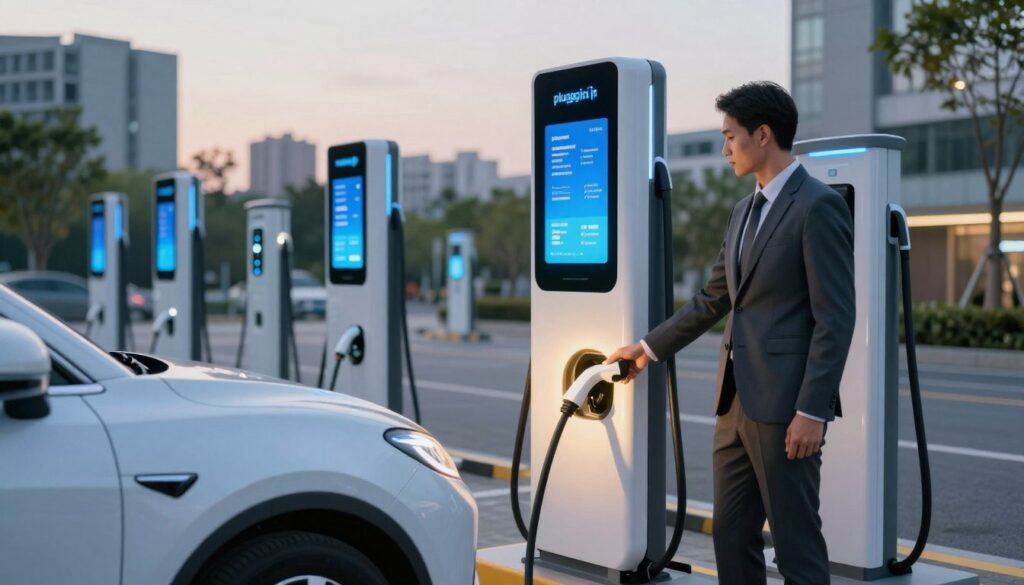
How to Use an EV Charging Station
Most EV Charging Stations need a simple step to start. You’ll use a mobile app, membership card, or credit card reader to unlock it. Always check the station display for any messages before you start.
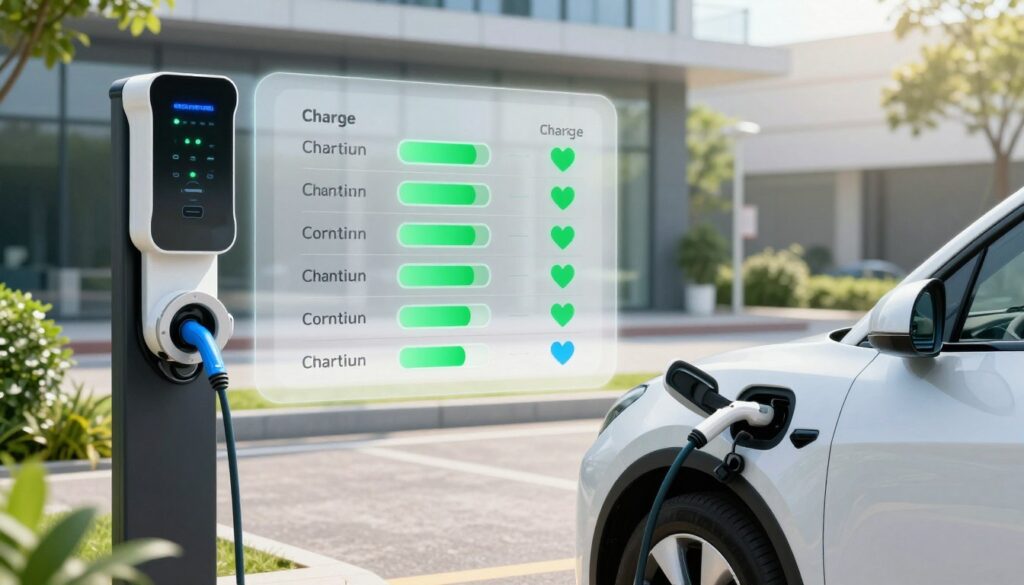
Many stations connect with your phone to track your charge. The official app lets you see how much you’ve charged in real-time. This makes using electric car charging stations easier for everyone.
Connecting Your Vehicle to the Charger
After starting the station, plug the cable into your car’s charging port. Make sure it’s fully connected and won’t come loose. You’ll hear a click when it’s secure.
Some cars need you to use the in-car system to find a charger. This warms or cools your battery, making charging faster. By following these steps, you can use both public and private electric car charging stations smoothly.
Check your car’s dashboard to see if charging has started. If the light turns solid, you can leave. Safety is our priority, so make sure the cable doesn’t trip anyone at the EV Charging Stations.
Charging Locations in the U.S.
Finding electric car charging stations is easier than ever. With more stations popping up, drivers can keep their cars charged. Knowing where to charge helps plan trips and daily life.
Home Charging Solutions
Most people charge their cars at home. Home charging is the most convenient solution for daily driving. Charging overnight means your car is ready to go in the morning.
Public Charging Networks
Public networks are key for long trips. EV charger locations are found along highways and in cities. Companies like Electrify America and ChargePoint offer fast charging for all cars.
Workplace Charging Options
Many workplaces offer charging as a perk. Charging at work means you can top up while you work. It’s great for those without home charging.
| Location Type | Primary Benefit | Typical Speed |
|---|---|---|
| Home | Maximum Convenience | Slow to Moderate |
| Public | High Accessibility | Fast to Ultra-Fast |
| Workplace | Time Efficiency | Moderate |
Cost of Charging an Electric Vehicle
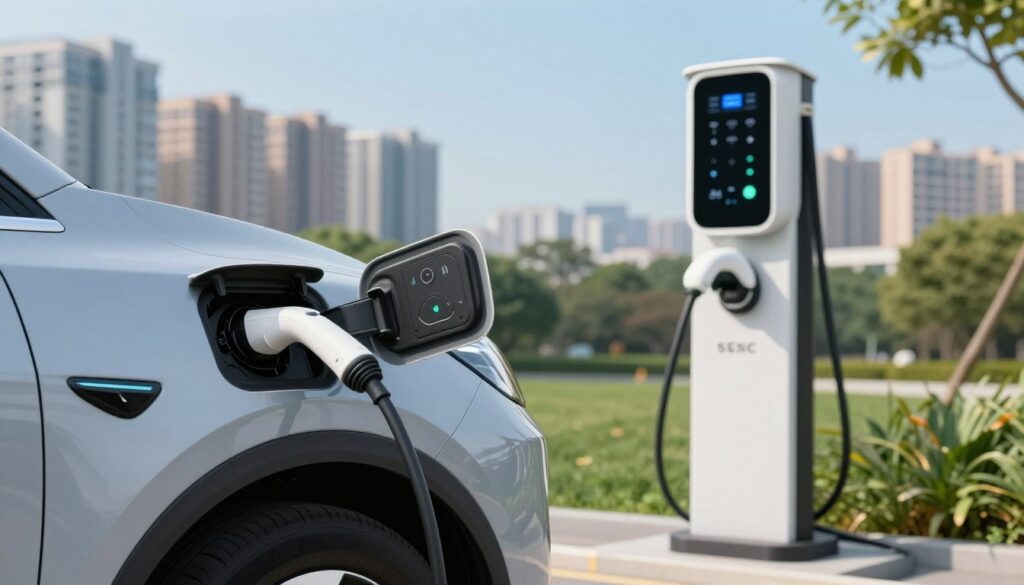
The cost to fuel an electric vehicle can change a lot depending on where and how you charge it. To manage your money well, you need to know how these costs add up over time. By choosing to charge at home, most people can save a lot of money compared to using public charging stations.
Average Kilowatt-Hour Rates
The main cost for drivers is the price of electricity per kilowatt-hour (kWh). Home rates are usually lower than commercial ones because they are regulated differently. Charging at home lets you use lower rates when you don’t need to use as much power.
Looking at these costs, charging at home is the cheapest option. Public stations are convenient but cost more because they have to cover the cost of equipment and grid charges. Keeping your charging habits consistent helps keep your costs steady.
Charging Station Fees
Public charging stations charge in different ways, like flat fees or by the minute. DC fast-charging costs about three times more than home charging. Even though it’s faster, it’s not always needed for daily driving.
A charging time comparison shows that fast chargers save time but cost more. Use fast chargers only for long trips or when you’re in a hurry. By mixing public and private charging, you can save time and money.
| Charging Method | Relative Cost | Speed |
|---|---|---|
| Home Charging | Low | Slow |
| Public Level 2 | Moderate | Medium |
| DC Fast Charging | High | Fast |
Battery Health and Charging
Speed is important, but taking care of your battery is key for long-term use. Knowing your battery’s limits helps you make smart choices every day. While fast charging might be tempting, slow and steady is often better.
Impact of Charging Habits on Battery Life
Lithium-ion batteries work best when they’re not too full or too empty. Charging slows down when the battery is below 10 percent or above 80 percent. This is to avoid damage from overcharging and heat.
Staying away from extreme charges helps keep your battery healthy. This simple habit keeps your car running well for years. Planning your trips with this in mind makes charging easier and more convenient.
Maintaining Optimal Performance
Most makers say to charge to 80 percent daily to keep the battery alive. This avoids the harm of keeping it fully charged for too long. Consistency is key for your electric vehicle’s best performance.
Use a balanced method that meets your needs and the battery’s requirements. You can track your progress on your car’s dashboard or app. Here’s a table to guide you on charge levels and battery care:
| Charge Level | Battery Stress | Charging Speed |
|---|---|---|
| 0% – 10% | High | Slow |
| 10% – 80% | Low | Optimal |
| 80% – 100% | High | Very Slow |
By following these tips, you keep your charging time comparison in check and protect your investment. Taking care of your battery now means better performance and value later.
Future of EV Charging Technology
We are in a new era where charging limits are being broken by innovative engineering. The electric vehicle infrastructure is changing to meet the needs of more drivers in the U.S. These changes aim to make switching to electric as easy as filling up with gas.
Innovations in Charging Infrastructure
Today’s networks are becoming smarter and more connected to the power grid. This intelligent connectivity helps stations manage energy during busy times, keeping the community stable. It also lets us support more vehicles without overloading the grid.
Wireless inductive charging is also on the rise, promising to change city driving. It lets cars charge just by parking over a special pad, without cables. This could make using electric vehicle infrastructure much easier every day.
Developing Faster Charging Solutions
The industry is racing to make charging faster, for those who travel long distances. Tesla’s V4 Superchargers can now charge at up to 500 kW. This shows how fast we’re getting at delivering energy quickly.
New battery designs are also key to this progress. They can handle more heat, allowing for quicker charging without harming the battery. These steps mean charging speed will soon be less of an issue for buyers.
| Technology Type | Current Capability | Future Potential |
|---|---|---|
| Standard Home Charging | 7-11 kW | 19-22 kW |
| Public Fast Charging | 150-350 kW | 500+ kW |
| Wireless Charging | Experimental | Commercial Scale |
EV Charging Etiquette
As more electric vehicles hit the roads, knowing how to charge them right is key. Good charging manners help everyone get along better. By following simple rules, we all stay happy and the charging system works well.
To learn more about being a considerate driver, check out our guide on what is EV charging etiquette. By following these tips, we keep public charging spots open and working for everyone.
Best Practices for Shared Stations
When using electric car charging stations, be aware of your space. Park in the lines to let others get in easily. Move your car quickly when you’re done to let the next person charge.
Here are some easy steps to keep things nice:
- Always put the charging cable back in its place after use.
- Check the station status on your app before you go to avoid wasted trips.
- Be kind and talk to others if you see them waiting for a spot.
Respecting Time Limits
Managing your time is key when using fast charging stations. Many places have time limits to keep things moving during busy times. Keep an eye on your charge and leave when you’re full.
DC fast charging slows down after 80 percent. Save these spots for long trips. This way, others can charge faster without waiting for you.
Respecting these rules shows we care about our community. By being efficient, we make electric driving better for all of us.
Understanding Charging Station Apps
Mobile apps are key for electric vehicle drivers today. They make finding charging stations easy and stress-free. With these apps, we control our energy needs on the go.
Utilizing Apps for Location and Availability
Finding EV charger locations is the first step for a successful trip. Most apps let us filter by connector type, speed, and network. This ensures we find chargers that fit our car.
Apps show us EV Charging Stations that are open. They also offer user reviews and photos. This helps us check a site’s safety and accessibility before we go. If you’re new, learn more about charging electric vehicles with these guides.
Benefits of Real-Time Updates
The best part of these apps is the real-time data they provide. Knowing if a charger is free or broken saves us time and stress. This is key when looking for fast charging stations on long trips.
With these updates, we can plan our stops better. This helps us avoid long waits. These apps let us use fast charging stations confidently. They ensure we reach our destination smoothly.
Conclusion: Making the Switch to Electric
Switching to electric travel is a big change. It’s like making charging your phone a normal part of life. We’re moving towards a world where electric cars are as common as gas ones.
Understanding Your Charging Needs
Learning how to charge your car is key. It lets you fit travel into your daily plans easily. With the right charger at home or work, you control your energy use.
Good electric charging means you can travel without worry. It gives you the freedom to go wherever you want.
Building a Greener Network
More electric charging spots are popping up everywhere. This makes long trips easier than ever. Check out places like ChargePoint or Electrify America for charging spots.
Choosing an electric car is good for your wallet and the planet. Join the many drivers who choose efficiency and innovation. Start your green journey with just one plug.
FAQ
Why is it difficult to provide a single, precise car charging time for every vehicle?
Electric vehicle charging is complex. It depends on the car’s charge level, its intake capacity, and the temperature. While we can give general guidelines, the exact time varies based on the car’s charger and the charging station’s power.
What is the fundamental difference between an external charging station and our vehicle’s onboard charger?
The external charger, or EVSE, sends power to the car. But the onboard charger manages how much power the car takes in. For example, in a Ford Mustang Mach-E, the onboard charger changes AC electricity from a wall into DC for the battery.
How do battery size and environmental conditions affect our charging speed?
Battery size is like a fuel tank. A bigger battery, like in the GMC Hummer EV, takes longer to fill. Weather also plays a role. In cold weather, charging might be slower as the car protects the battery.
What are the primary levels of electric vehicle charging available in the United States?
There are three main levels of charging. Level 1 uses a standard 120V outlet. Level 2 uses 240V equipment, like the ChargePoint Home Flex. Level 3, or DC fast charging, provides quick charging for long trips.
Can we see a charging time comparison between Level 2 and DC fast charging?
For daily use, Level 2 charging is best. It takes 4 to 10 hours for a full charge while we sleep. Fast charging stations can charge an 80% in 20 to 45 minutes, depending on the car.
What are the best practices for connecting to electric car charging stations?
Connecting to charging stations is simple. Park, open the port, and plug in. Many cars, like the Hyundai IONIQ 5, use “Plug & Charge” tech or apps for easy connection.
Where can we find the most reliable EV charger locations during a road trip?
The U.S. has many EV chargers. Major routes have public networks like EVgo and Tesla. For daily use, workplace charging or a home station is best.
Is it more cost-effective for us to charge at home or at public fast charging stations?
Charging at home is cheaper. Home rates are around
FAQ
Why is it difficult to provide a single, precise car charging time for every vehicle?
Electric vehicle charging is complex. It depends on the car’s charge level, its intake capacity, and the temperature. While we can give general guidelines, the exact time varies based on the car’s charger and the charging station’s power.
What is the fundamental difference between an external charging station and our vehicle’s onboard charger?
The external charger, or EVSE, sends power to the car. But the onboard charger manages how much power the car takes in. For example, in a Ford Mustang Mach-E, the onboard charger changes AC electricity from a wall into DC for the battery.
How do battery size and environmental conditions affect our charging speed?
Battery size is like a fuel tank. A bigger battery, like in the GMC Hummer EV, takes longer to fill. Weather also plays a role. In cold weather, charging might be slower as the car protects the battery.
What are the primary levels of electric vehicle charging available in the United States?
There are three main levels of charging. Level 1 uses a standard 120V outlet. Level 2 uses 240V equipment, like the ChargePoint Home Flex. Level 3, or DC fast charging, provides quick charging for long trips.
Can we see a charging time comparison between Level 2 and DC fast charging?
For daily use, Level 2 charging is best. It takes 4 to 10 hours for a full charge while we sleep. Fast charging stations can charge an 80% in 20 to 45 minutes, depending on the car.
What are the best practices for connecting to electric car charging stations?
Connecting to charging stations is simple. Park, open the port, and plug in. Many cars, like the Hyundai IONIQ 5, use “Plug & Charge” tech or apps for easy connection.
Where can we find the most reliable EV charger locations during a road trip?
The U.S. has many EV chargers. Major routes have public networks like EVgo and Tesla. For daily use, workplace charging or a home station is best.
Is it more cost-effective for us to charge at home or at public fast charging stations?
Charging at home is cheaper. Home rates are around $0.16 per kWh, while public stations charge more. Home charging saves money in the long run.
How do our charging habits impact the long-term health of the battery?
Charging habits affect battery health. Charging to 80% daily is best. Fast charging can damage the battery. Keeping the charge between 20% and 80% helps the battery last longer.
What innovations are currently improving the future of charging speed?
New tech is making charging faster. 800-volt batteries and 350kW chargers are being developed. These will make charging as quick as filling up at a gas station.
What is the proper etiquette when using shared electric car charging stations?
Be considerate when using shared stations. Move your car after charging and don’t “camp” at the station. This keeps the charging system efficient for everyone.
How can we use mobile applications to monitor our electric vehicle charging status?
Use apps like PlugShare or the Tesla app. They show charger locations, availability, and charging speed. This helps plan trips and avoid delays.
.16 per kWh, while public stations charge more. Home charging saves money in the long run.
How do our charging habits impact the long-term health of the battery?
Charging habits affect battery health. Charging to 80% daily is best. Fast charging can damage the battery. Keeping the charge between 20% and 80% helps the battery last longer.
What innovations are currently improving the future of charging speed?
New tech is making charging faster. 800-volt batteries and 350kW chargers are being developed. These will make charging as quick as filling up at a gas station.
What is the proper etiquette when using shared electric car charging stations?
Be considerate when using shared stations. Move your car after charging and don’t “camp” at the station. This keeps the charging system efficient for everyone.
How can we use mobile applications to monitor our electric vehicle charging status?
Use apps like PlugShare or the Tesla app. They show charger locations, availability, and charging speed. This helps plan trips and avoid delays.

Hi! I’m Moheen Iftikhar, the person behind «CarCruisei». I’m deeply interested in the automotive world, from new car trends and advanced vehicle technology to useful driving advice. On this platform, I publish informative car reviews, expert insights, and practical tips to keep every car enthusiast informed and inspired.