

Electric Car Safety: Can You Charge an Electric Car in the Rain Safely?
Many drivers worry about charging their cars in the rain. It’s a common myth that water and high-voltage systems can’t mix. But, modern car engineering makes sure Electric Car Safety is always a top concern, rain or shine.
Car makers use many layers of protection to keep water out of important parts. Whether it’s a light drizzle or heavy snow, you can charge your car safely. Knowing how these systems work helps clear up any doubts about using them every day.
If you’re thinking about getting a new charger, check out the best home EV chargers for quick installation. By following the right steps, you can make sure your charger works well in any weather. We’re here to guide you through these technical details.
Key Takeaways
- Modern vehicles are built with advanced seals to prevent water intrusion during storms.
- Charging ports and connectors feature specialized sensors that stop power flow if moisture is detected.
- It is perfectly normal to plug in your vehicle during rain or snow without additional precautions.
- Professional installation of home hardware is essential for maintaining long-term system integrity.
- Always inspect your cables for wear to ensure optimal performance in wet conditions.
Understanding Electric Car Charging Basics
Knowing how your electric car charges is key for every driver today. Whether at home or on the move, refilling your battery is designed to be safe and efficient. Learning these basics helps keep your car safe every time you charge it.
How Electric Vehicles (EVs) Charge
Electric cars turn electrical energy from the grid into chemical energy stored in the battery. Most charging happens through an onboard charger. It changes AC from your wall outlet into DC for the battery. This careful conversion keeps your car’s power system healthy.
Want to know how long charging takes? Check out this guide to manage your day better. Knowing these details shows the advanced tech in today’s cars.
Types of Charging Stations Available
There are three main types of charging stations, each with different speeds and power levels. The right station depends on your needs and how much time you have.
| Charging Level | Power Source | Typical Use Case |
|---|---|---|
| Level 1 | 120V AC | Overnight home charging |
| Level 2 | 240V AC | Public and home stations |
| Level 3 (DC Fast) | 480V DC | Rapid highway charging |
Importance of Charging Safety
Safety is the top priority in the electric car world. The National Electrical Code (NEC) requires all charging gear to be weatherproof and have strong grounding. These rules are critical for safe charging of electric cars in wet conditions, stopping electrical issues from reaching you.
“Safety standards in the electrical industry are not merely suggestions; they are the bedrock upon which consumer trust and technological progress are built.”
These strict standards are tested regularly to protect drivers in all kinds of weather. By following the manufacturer’s advice and using approved gear, your car stays safe and reliable, no matter the weather.
Rain and Its Effects on Electric Cars
Every EV owner needs to know how to handle rain and modern tech. Modern cars are made to face different weather challenges. Knowing how electric car charging in rain works helps you feel sure while driving.
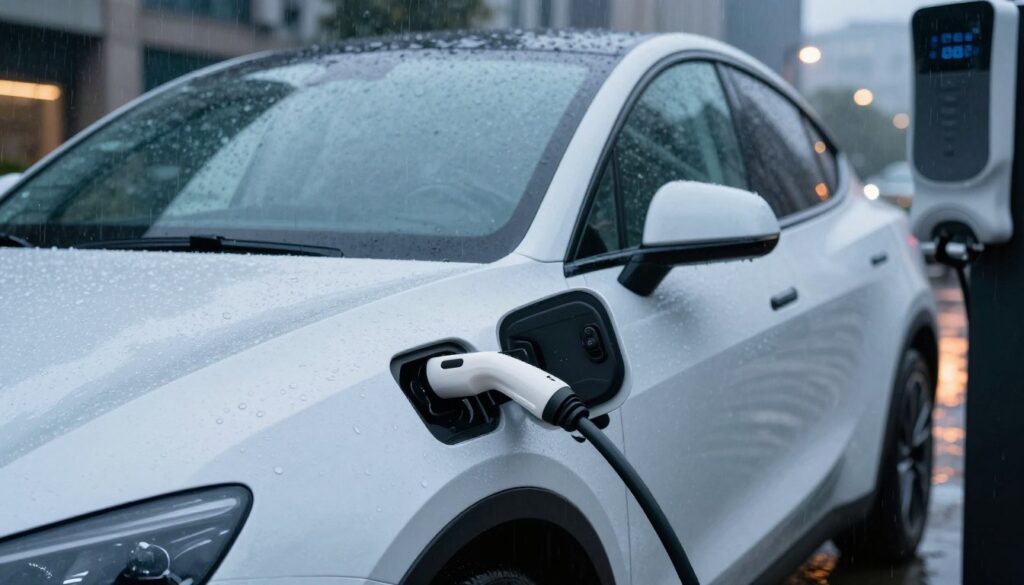
How Rain Affects an Electric Vehicle
Car makers use special seals to keep electric cars dry. These seals keep the high-voltage parts safe from rain. So, you can drive and charge your car in wet weather without worry.
Charging equipment also goes through tough tests to meet safety standards. This means it’s built to keep water out. So, rain doesn’t stop electricity from reaching your car.
Risk Factors to Consider When Charging in Wet Conditions
While most rain is okay, some situations need more care. Deep water or flash floods are dangers that rain alone can’t handle. Being careful with rain safety for electric car charging means knowing when it’s too risky.
Don’t charge your car if the station is in a wet spot. If there’s a lot of water, find a different place. Common sense is your best guide for staying safe.
Being mindful of your surroundings makes electric car charging in rain safe. Always check the ground before charging in a storm. These simple steps keep you and your car safe.
The Safety of Charging Electric Cars in Rain
Many people wonder if it’s safe to charge an electric car in the rain. They worry about the danger of water and high-voltage electricity. Luckily, today’s cars and charging stations are designed with rain safety for electric car charging in mind.
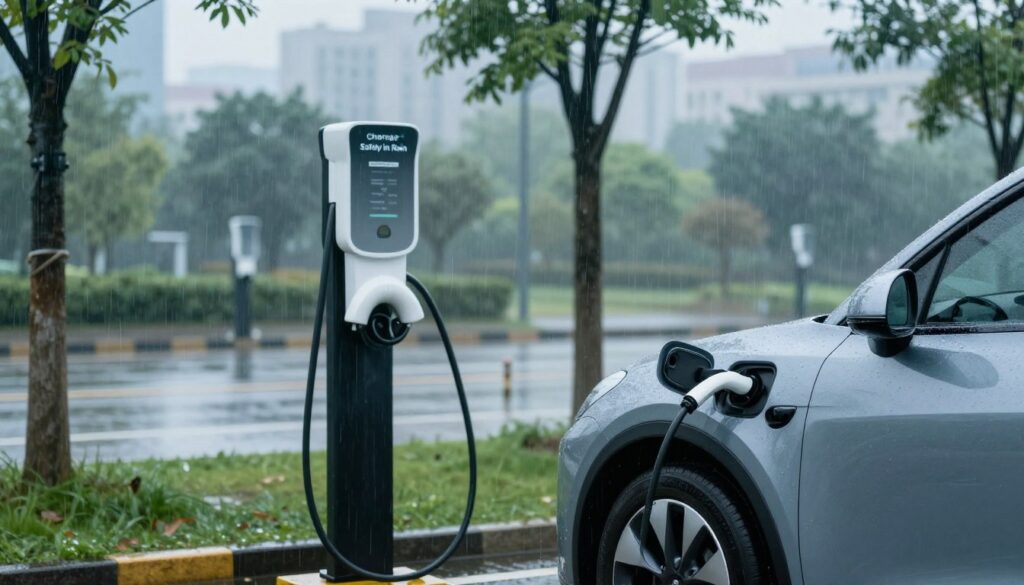
Are Charging Stations Waterproof?
Most charging stations are made to withstand bad weather. They have strong, weatherproof cases that meet high standards. You can trust that these stations are safe from rain, snow, and more.
Thinking about can electric cars be charged in the rain? Look at the station’s ratings. Most outdoor chargers have a NEMA 3R or 4 rating. This means they keep water out, keeping your car safe.
Electric Car Design Features for Wet Conditions
Your car also has special features to keep it safe in the rain. The charging port has seals that make a tight connection. These electric vehicle safety precautions keep the electrical parts dry.
The car and charger also talk to each other before charging starts. This makes sure everything is safe and dry. If you’re curious about car care, check out the safest way to jumpstart a dead car.
Ground Fault Protection and Its Role
The Ground Fault Circuit Interrupter, or GFCI, is key to safety. It watches the electrical current closely. If it finds any current going to the ground, it acts fast.
- Instant Power Cut: The GFCI turns off the power quickly if it finds a fault.
- Continuous Monitoring: It always checks for any current imbalances.
- Automatic Reset: Many units can safely start again after a problem is fixed.
This advanced tech gives drivers peace of mind when charging outside. It makes sure charging is safe, no matter the weather. Your car is built to handle any weather with confidence.
Common Misconceptions About Charging in the Rain
Many people worry about charging electric cars in the rain. They think water might cause a short circuit or an electrical hazard. But, rain safety for electric car charging is a key focus for all major car makers.
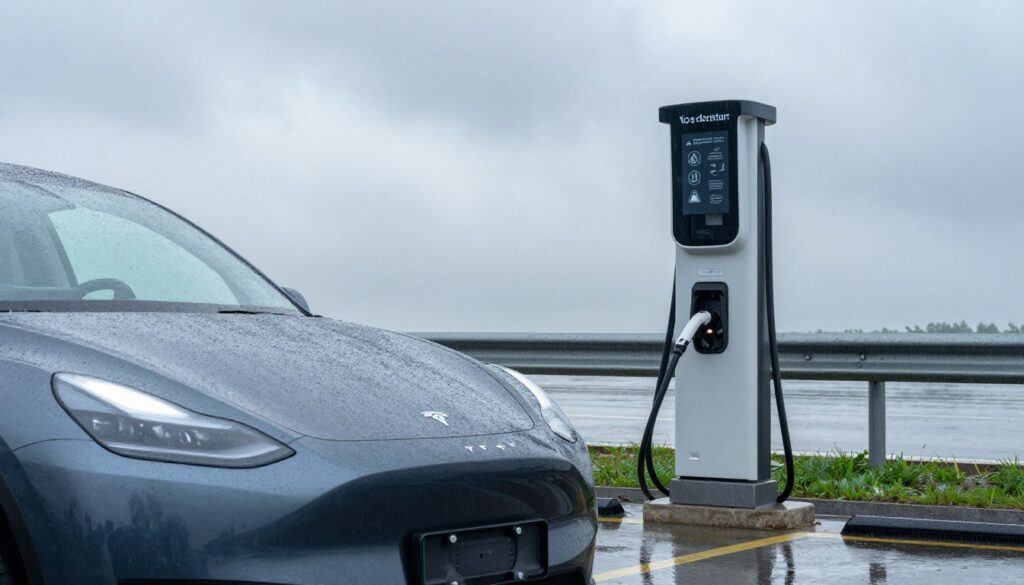
Myths vs. Facts: Charging Safety
Some think the charging port is like an open electrical outlet that can easily short out. But, a smart “handshake” happens between the car and charger before any power flows. This digital check makes sure the connection is secure and dry before power is released.
If the system finds any fault, moisture, or bad connection, it stops the charging. This automated safety protocol lets you charge your car safely, even for long-distance road trips in bad weather.
Understanding Electric Shock Risks
People often wonder, “Can electric cars be charged in the rain?” They don’t know about the protection built into the car. The charging cable and the vehicle port are made to withstand weather and tested under harsh conditions to keep water out.
The risk of electric shock is almost zero because the system needs a closed, verified circuit to work. If the connection isn’t perfect, no electricity flows. This design keeps you and your car safe, no matter the weather.
| Common Myth | Scientific Fact | Safety Outcome |
|---|---|---|
| Water causes instant shorts | Connectors are sealed and insulated | No electrical leakage |
| Charging is dangerous in storms | Electronic handshake prevents power | System remains inactive |
| High voltage is exposed | Pins are recessed and protected | Zero risk of accidental contact |
Best Practices for Charging in Wet Weather
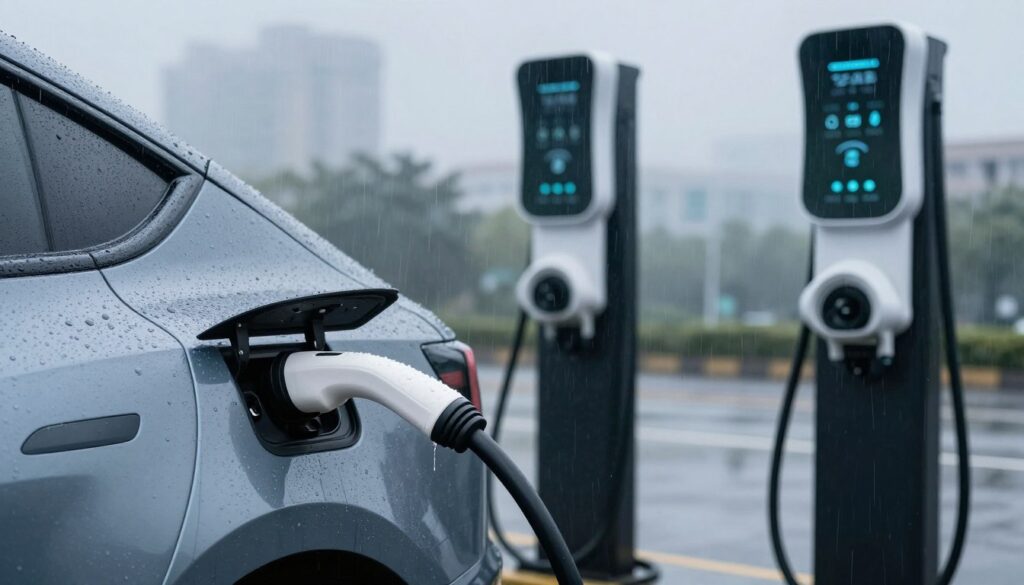
We care about your safety by sharing key habits for electric vehicle charging in wet weather. Being proactive helps you handle electric car charging in rain confidently and smoothly.
Selecting a Safe Charging Location
The place where you plug in is very important for your safety. Always try to find a charging station under a covered structure or in a garage. This keeps you away from rain.
If you must charge outside, stay away from flooded or wet areas. Make sure your charging port and cable are not in deep puddles. This is a key step in keeping your electric vehicle safe.
Ensuring Proper Equipment Usage
The right equipment is key for safe charging. Always use certified, purpose-built EV charging gear for outdoor use.
Don’t use household extension cords or adapters not rated for EV charging. They can’t handle the high voltage or moisture. Here’s how to keep your equipment ready:
- Do a quick visual check of your cables and connectors before each use.
- Look for cracks, frayed insulation, or corrosion on the plug pins.
- Make sure the charging handle is fully seated and locked in the vehicle port.
- Try to keep the charging cable off the ground to avoid water.
Monitoring Weather Conditions
Knowing the local weather forecast is smart. Even though cars can handle some moisture, it’s best to avoid charging in bad weather.
Check the weather before you go out. This helps you plan better. Paying attention to these tips means you can charge safely, keeping your battery levels up without worry.
Manufacturer Guidelines for Charging Safety
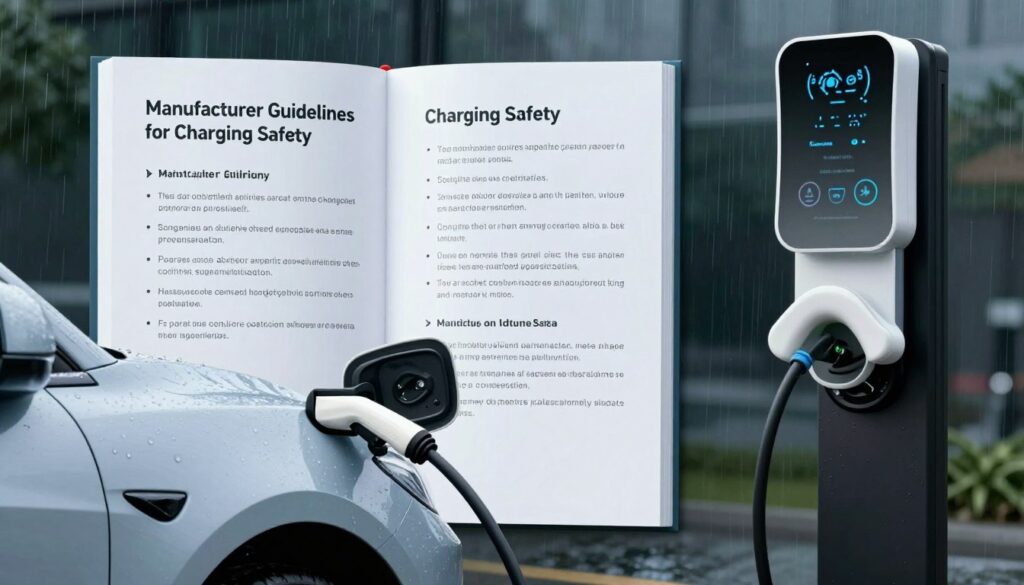
We believe the best safety info comes from the car’s designers. Every electric vehicle manufacturer tests their systems a lot. They make sure they work well in different weather.
By following the maker’s rules, your car stays in top shape. This keeps your warranty valid and protects your investment.
Recommendations from Leading Brands
Big car brands give special advice for different weather. For example, many offer tips on charging electric cars in the rain. This clears up common questions.
They stress using only certified charging gear. Always choose official hardware over cheaper, untested options.
Reviewing User Manuals for Safety Tips
Your owner’s manual is key to safety. It’s important to check it for tips specific to your car.
These guides have important info on:
- Best charging temperatures.
- How to store charging cables.
- Signs of ground fault protection.
If you’re unsure about something, the manual has the answer. Keep it handy for quick checks on charging safety.
| Manufacturer | Safety Resource | Primary Focus |
|---|---|---|
| Tesla | Digital Manual | Weather-Resistant Charging |
| Ford | Owner Portal | Equipment Compatibility |
| Rivian | In-Vehicle Guide | Extreme Climate Protocols |
| General Motors | Support App | Fault Detection Systems |
Real-Life Experiences with Charging in the Rain
Learning from other drivers can ease your worries about charging in the rain. While tech specs are key, real-life experiences show how electric cars handle wet conditions. We’ve gathered insights from across the country to share how modern tech faces the elements.
Case Studies of Charging in Adverse Conditions
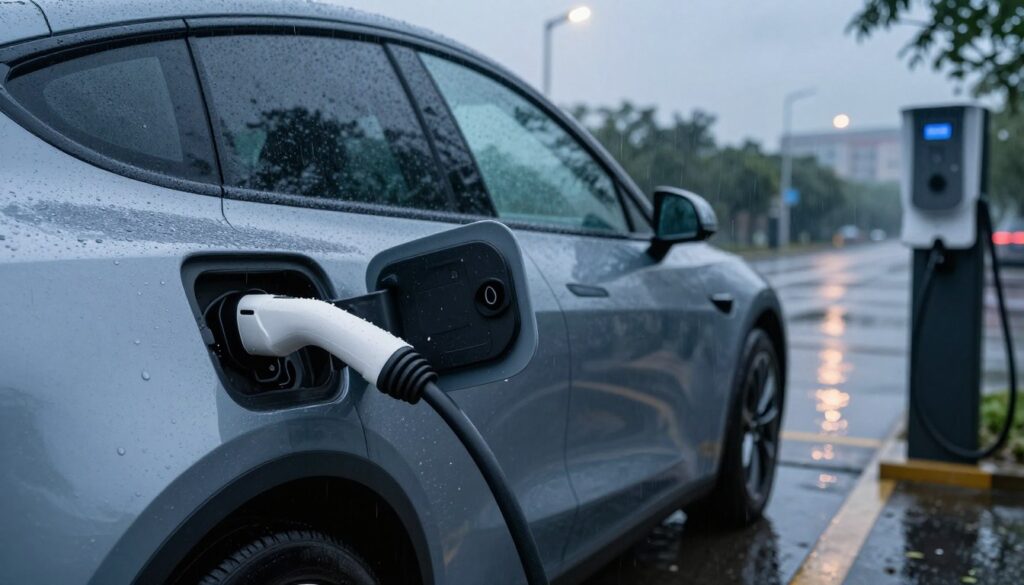
Many electric car owners charge their cars in heavy rain and snow. Their stories show that modern charging infrastructure can handle a lot of moisture. For example, drivers in the Pacific Northwest charge their cars in constant rain without issues.
These experiences prove that charging in wet conditions is common, not rare. By following the manufacturer’s advice, the equipment handles the weather well. You can trust that your car is made to keep you and the battery safe during these times.
Feedback from Electric Vehicle Owners
The electric vehicle community grows more confident with time. Many new owners start out unsure but soon see how reliable the systems are. We share these stories to connect the technical side with the practical reality of daily EV ownership.
Most owners say using high-quality, undamaged equipment makes charging easy. Reliability is a core feature of today’s charging tech, keeping your schedule on track no matter the weather. We hope these shared experiences help you feel more at ease when charging in a storm.
What to Do If You Experience Electrical Issues
Knowing how to spot equipment damage is key for electric vehicle owners. Charging systems are built with strong electric vehicle safety precautions. But, staying alert for malfunctions is important to protect you and your vehicle. Catching small issues early can prevent big problems.
Signs of Electrical Problems to Watch For
Checking your charging cable and station regularly is a good habit. Look for signs of wear like frayed insulation or exposed wiring. If you see these, stop using it right away.
Also, watch for unusual heat or a burning smell near the charging port. If the connector feels too hot, it might be damaged. Learn more about safe charging practices to keep your setup safe.
Emergency Procedures for Charging
If you think there’s an electrical fault, disconnect the power safely first. If your electric vehicle got wet, don’t try to charge it. Wet vehicles can have damaged battery seals that could cause short circuits.
In case of an electrical emergency, follow these steps to stay safe:
- Stop charging right away using the vehicle or station interface.
- If it’s safe, unplug the charging cable from the wall outlet.
- Call a certified technician or your vehicle’s maker for a check.
| Issue Type | Severity | Recommended Action |
|---|---|---|
| Minor Scuffs | Low | Monitor for further wear |
| Exposed Wiring | High | Stop use and replace |
| Flood Exposure | Critical | Do not charge; seek service |
| Burning Odor | High | Disconnect and inspect |
By following these electric vehicle safety precautions, you keep your charging safe. Always get professional help if you’re unsure about your charging equipment.
Future Innovations in Electric Vehicle Safety
New technologies are changing how we charge electric vehicles in bad weather. As more people drive electric, car makers focus on robust engineering. They want drivers to feel safe no matter the weather.
Designs are getting better at handling moisture and stress from the environment. This is a big change.
Advances in Charging Technology
Today’s charging gear is very advanced, with high IP ratings like IP65 or IP66. These ratings mean the equipment is sealed against dust and water jets. This makes charging safer for everyday use.
Want to know if you can charge an EV in the rain? Check out this article: Can I charge an EV in the rain
Future charging systems will have smart sensors that check for moisture. These sensors will adjust power to avoid electrical problems. With advanced diagnostic software, charging stations will spot and fix risks before they happen.
Concepts for Improved Weather Resistance
Designers are looking at new materials that repel water better. These materials could stop water from building up on connectors and ports. This makes charging more reliable.
We might see more fully sealed charging units soon. These units won’t have any exposed parts.
Wireless charging is another exciting area. It eliminates the need for cables, reducing wet connector risks. These advancements make electric cars a good choice for any climate.
| Feature | Current Standard | Future Innovation |
|---|---|---|
| Water Resistance | IP65/IP66 Ratings | Hermetically Sealed Units |
| Connection Type | Physical Cable/Plug | Wireless Induction Pads |
| Safety Monitoring | Basic Ground Fault | AI-Driven Real-Time Diagnostics |
Resources for Electric Car Owners
Being an electric car owner means you need reliable info and expert advice. Keeping up with the latest is key to keeping your car safe and efficient. Using certified, outdoor-rated equipment for charging at home is a smart move. It ensures your safety and peace of mind in the long run.
Helpful Organizations and Websites
Many groups offer great data on safety standards. The U.S. Department of Energy has lots of info on charging and driving tips. Also, PlugShare connects you with other owners for real advice on charging in different places.
Check the official sites of big charging makers. They have FAQs and support pages for safety questions. Keeping up with these sites means you’ll know about new tech and safety rules.
Educational Materials on EV Safety
Your car’s manual is key for learning about your charging system. It’s important to read it well, as it has specific tips for your car. Always follow the manufacturer’s instructions for your home charger to avoid dangers.
There are also guides on electrical safety for charging at home. These explain how to spot risks and when to call an electrician. Using these resources helps your car run better and keeps your home safe.
| Resource Type | Primary Benefit | Accessibility |
|---|---|---|
| Manufacturer Manuals | Model-specific safety protocols | High |
| U.S. Dept. of Energy | National safety standards | High |
| Community Forums | Real-world troubleshooting | Medium |
| Certified Electricians | Professional installation checks | Low |
Conclusion: Charge Safely in Any Weather
Modern electric vehicles are great for drivers in the United States. They work well in different climates and keep you safe.
Charging equipment is made to handle moisture and weather. Using trusted brands like Tesla, ChargePoint, or Electrify America keeps your charging safe during storms.
Prioritizing Your Protection
Always check your owner manual for tips on your car. Keeping your charging cables and ports in good shape is key.
By following these tips, you’ll feel more confident every day. You’ll know your car is safe, no matter the weather. So, enjoy driving, rain or shine.
FAQ
Can electric cars be charged in the rain safely without risk of shock?
Yes, electric car charging in rain is safe. Modern cars and charging stations are built to handle moisture. They have a special “handshake” system that makes sure the connection is safe before electricity flows.
What specific electric vehicle safety precautions should we take during a storm?
Always check your charging cable for damage before using it. Also, avoid charging in flooded areas. This is because chargers are weather-resistant but not submersible.
Are public charging stations like those from ChargePoint or Tesla Superchargers waterproof?
Yes, public charging stations are built to withstand rain and snow. They have high IP ratings, which means they keep out water and snow. These stations are tested to prevent electrical hazards in heavy rain.
Why is it important to avoid using household extension cords for safe charging of electric cars in wet conditions?
Household cords are not made for outdoor use with electric cars. They lack the insulation needed for high currents. Always use the approved charging cables or a dedicated home station for safety.
How does Ground Fault Circuit Interrupter (GFCI) technology protect us while charging?
GFCI technology is key for rain safety. It constantly checks for electricity leaks. If it finds any, it cuts the power quickly to prevent shocks.
Should we follow different guidelines for a Ford F-150 Lightning versus a Tesla Model 3 when charging in the rain?
Yes, each car has its own guidelines for charging in rain. Check your car’s manual for specific recommendations. Following these ensures your car stays in top condition.
What are the warning signs of damaged charging equipment that we should watch for?
Look for scorched plastic, frayed cables, or cracked housings. If you see these, don’t use the station. Also, never charge a car that’s been in floodwater without a professional check.
Does the speed of charging change when it is raining?
Rain usually doesn’t slow down charging. Cars like the Kia EV6 or Audi e-tron keep temperatures and power flow steady. As long as everything is working right, charging stays efficient.

Hi! I’m Moheen Iftikhar, the person behind «CarCruisei». I’m deeply interested in the automotive world, from new car trends and advanced vehicle technology to useful driving advice. On this platform, I publish informative car reviews, expert insights, and practical tips to keep every car enthusiast informed and inspired.