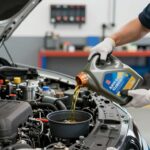


Car Maintenance Checklist: How Often Should You Change Your Car Oil
Keeping a car in top shape is like regular dental visits. It’s all about paying attention to the engine’s health. By sticking to a Car Maintenance Checklist, we can dodge costly repairs before they happen.
Many people think oil needs to be changed every 3,000 miles. But, thanks to new engine tech, we can go longer without changing it. This means less waste and more time for us.
Knowing when to change your car oil is key to keeping it running well. By being proactive, we make sure our cars last longer. Let’s dive into the best ways to keep our vehicles in top condition.
Key Takeaways
- Modern engines require less frequent fluid service than older models.
- Routine inspections prevent minor issues from becoming major repair bills.
- Consulting the owner’s manual provides the most accurate service schedule.
- Consistent care preserves the resale value of the vehicle.
- Driving conditions significantly impact the lifespan of engine lubricants.
Importance of Regular Oil Changes
Fresh motor oil is like the lifeblood of your car, making sure everything works well. Following best practices for car maintenance helps protect your engine from damage. This simple step is key to keeping your car running longer.
Benefits of Fresh Oil
Clean oil is a vital lubricant that reduces wear on moving parts. It also carries away debris and contaminants, keeping the engine clean and efficient. Using fresh oil gives your engine several benefits:
- Enhanced lubrication for reduced friction between metal surfaces.
- Improved heat dissipation to prevent overheating.
- Prevention of harmful sludge buildup within the engine block.
Consequences of Neglecting Oil Changes
Ignoring oil changes can harm your car’s health over time. When oil degrades, it can’t absorb heat well, causing damage. Old oil turns into sludge that blocks oil passages and starves parts of lubrication.
Neglecting this task can lead to engine failure. Replacing an engine is much more expensive than regular maintenance. We must prioritize oil changes to avoid these costly repairs.
How Oil Affects Engine Performance
The quality and condition of your oil affect how your car drives. Proper lubrication ensures the engine runs efficiently, which is key for good fuel economy. If you’re looking for top-rated sedans and most fuel-efficient gas cars, remember that engine health is essential.
A well-running engine uses less fuel and emits fewer emissions. Regular oil changes are critical best practices for car maintenance for every driver. By keeping your oil fresh, you ensure your car stays reliable for years.
Typical Oil Change Intervals
Knowing your car’s service needs is key to a good car maintenance schedule. Many ask how often should you change your car oil to keep it running well. By matching factory advice with your driving style, you can avoid engine damage.
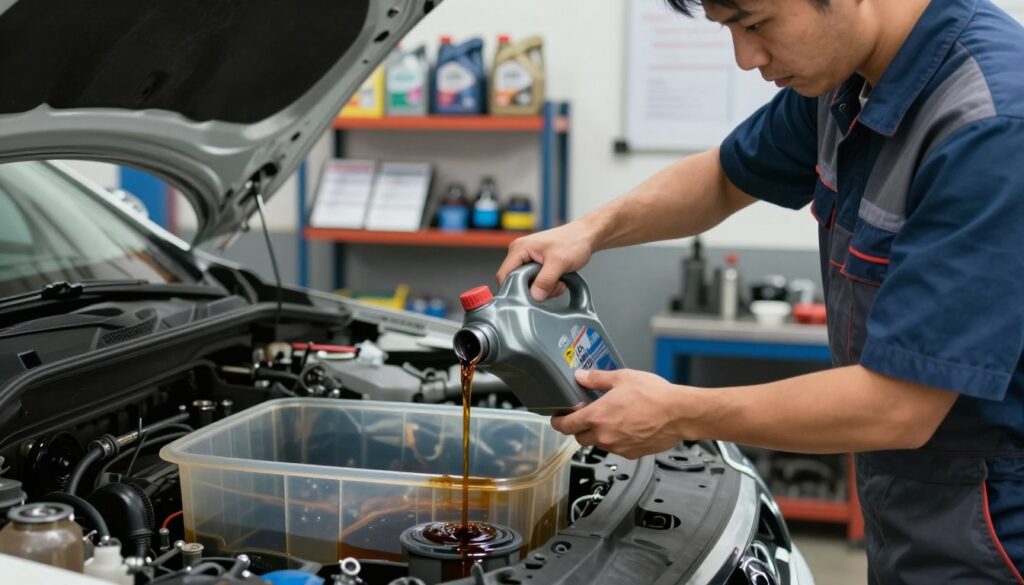
Manufacturer Recommendations
Your owner’s manual tells you when to change your oil. Modern cars have systems that check oil quality based on driving conditions. It’s best to follow these digital alerts, as they’re more accurate than just mileage.
Factors Influencing Change Frequency
Driving in heavy traffic, towing, or extreme weather can wear out your oil faster. This means you might need to change it more often. If you’re not sure, contact our team for advice.
Conventional vs. Synthetic Oil Guidelines
The oil you use affects how often you need to change it. Synthetic oils handle heat better and last longer than conventional oils. So, synthetic blends can go longer between oil changes.
| Oil Type | Typical Interval (Miles) | Performance Level |
|---|---|---|
| Conventional | 3,000 – 5,000 | Standard |
| Synthetic Blend | 5,000 – 7,500 | Enhanced |
| Full Synthetic | 7,500 – 15,000 | Superior |
Signs Your Oil Needs Changing
Knowing when your oil needs a change is key for every driver. Even if you stick to the car oil change intervals, your car might show signs it needs oil sooner. These signs can help you keep your engine running smoothly.
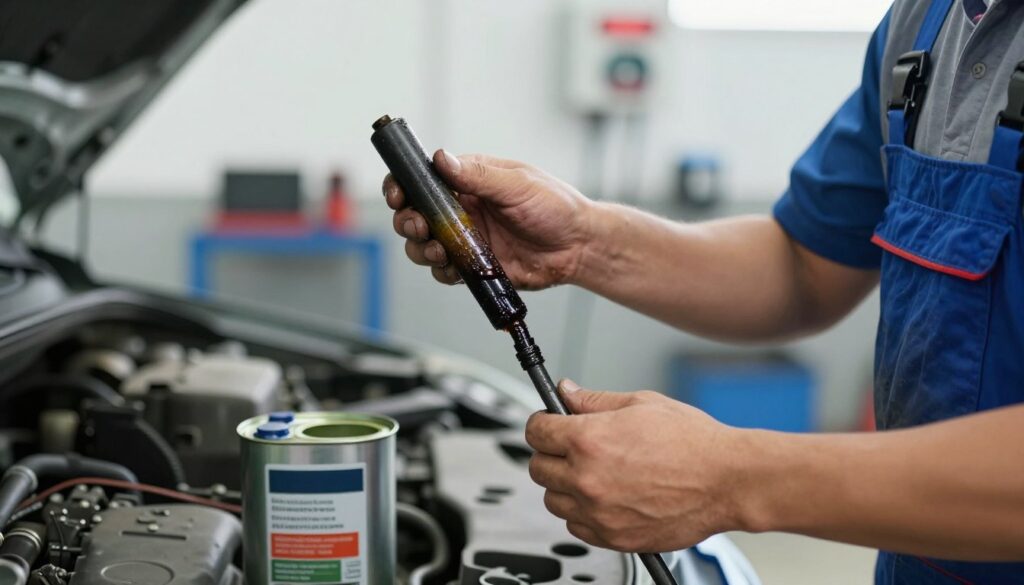
Oil Color and Consistency
Clean oil is usually amber and clear. But, it can turn dark and thick over time. This happens when it picks up debris and carbon, failing to protect your engine.
Check your dipstick often to see these changes. If the oil looks dirty or feels thick, it’s time to change it. This keeps your engine in top shape.
Oil Change Warning Light
Today’s cars have sensors to watch over the oil. When the dashboard light comes on, it means your oil isn’t doing its job well.
Don’t ignore this light. It’s a sign of trouble. Keeping up with car oil change intervals helps protect your engine from damage.
Unusual Engine Noises
Oil keeps metal parts from rubbing together. If it breaks down, you might hear tapping, ticking, or knocking sounds from the engine.
These sounds mean your engine is under strain. If you hear them, it’s time to change the oil. This prevents serious damage to your engine.
Types of Engine Oil
Choosing the right engine oil is key to keeping your car running well. Your engine needs the right kind of oil to work well under different conditions. Knowing the differences between oil types helps make sure your car meets the maker’s standards.
Conventional Oil
Conventional oil comes from crude oil and is a common choice for many cars. It’s often the most affordable option for drivers with standard engines and who don’t drive too much. But, it needs to be changed more often than other types.
Synthetic Oil
Synthetic oil is made in a lab to offer better performance and protection for modern engines. It stays thick in cold or hot weather, making it great for high-performance cars or the best SUVs 2026. Synthetic blends also help keep your engine clean longer.
High-Mileage Oil
High-mileage oil is for cars with over 75,000 miles. It has special additives to stop leaks and save oil in older engines. Using this oil is a top car oil change tip for keeping an older car running.
| Oil Type | Best For | Key Benefit | Cost Level |
|---|---|---|---|
| Conventional | Standard Engines | Affordability | Low |
| Synthetic | High-Performance | Superior Protection | High |
| High-Mileage | Older Vehicles | Seal Conditioning | Medium |
How to Check Your Oil Level
Knowing how to check your engine oil is key to car care. Regular checks help prevent engine damage. Just a few minutes of checking can keep your engine running smoothly.

Tools You’ll Need
Start by getting a few simple items. You’ll need a clean rag or paper towel and gloves to keep your hands clean. Having your car’s manual handy helps find the dipstick and oil level markers.
Step-by-Step Instructions
First, park on level ground and turn off the engine for ten minutes. This lets the oil settle for an accurate reading. Find the dipstick, usually with a bright handle, and pull it out.
Wipe the dipstick clean, then put it back in and pull it out again. Look at the oil level against the markers. If it’s low, add the right oil right away. These checks are vital when checking your car’s condition.
“An ounce of prevention is worth a pound of cure when it comes to engine maintenance.”
When to Seek Professional Help
While you can do routine checks, some issues need a pro. If you see oil puddles or add oil too often, you might have a leak. Don’t ignore dashboard lights, as they often mean low oil pressure.
| Observation | Status | Recommended Action |
|---|---|---|
| Level at Full Mark | Optimal | Continue regular monitoring |
| Level at Low Mark | Needs Attention | Add oil immediately |
| Dark/Gritty Oil | Contaminated | Schedule a full oil change |
| Persistent Leaks | Critical | Visit a professional mechanic |
Learning these car oil change tips helps you avoid big problems. If unsure, always get a certified mechanic’s help to keep your car running well.
DIY Oil Change Process
Learning to change your oil at home can save you money and time. It also makes sure the job is done correctly. With a good vehicle maintenance guide, you can improve your car skills. This helps keep your engine running smoothly.
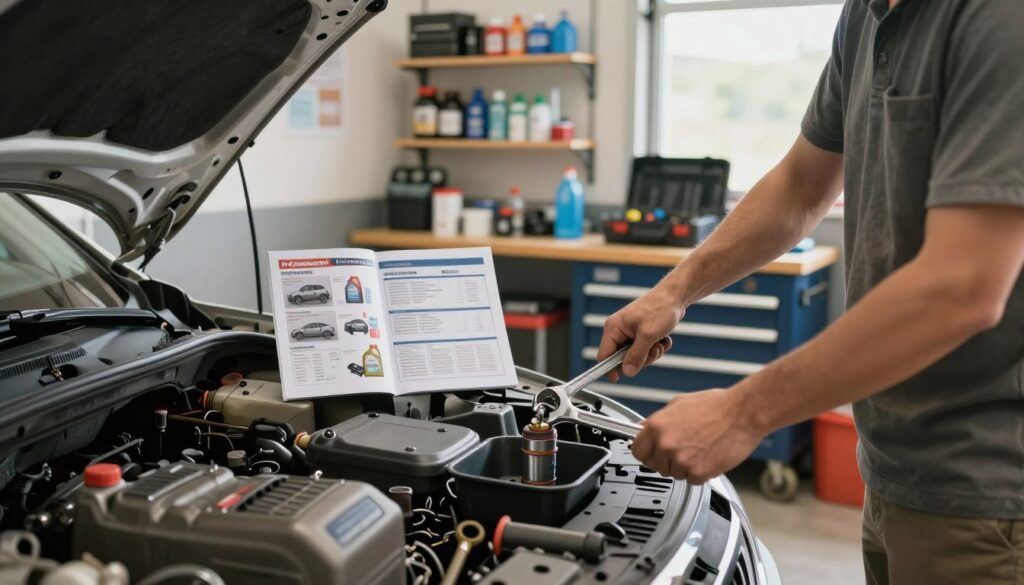
Essential Supplies
First, get all the tools you need to avoid any delays. You’ll need a quality oil filter, the right motor oil, a wrench for the drain plug, and an oil filter wrench. Also, a clean drain pan and lots of rags are key to keep things clean.
Check your owner’s manual or a trusted vehicle maintenance guide for the correct oil and filter for your car. The wrong parts can harm your engine, so make sure you’re using the right ones.
Step-by-Step Guide
With your supplies ready, follow these steps for a smooth service:
- Warm up the engine for a few minutes and then turn it off.
- Use jack stands to safely lift the vehicle and find the oil drain plug.
- Put a drain pan under it and remove the plug to drain the old oil.
- Put in a new oil filter and tighten the drain plug well.
- Fill the car with new oil through the filler cap, checking the level with the dipstick.
Safety Precautions to Consider
Always put safety first when working under a car. Never rely only on a hydraulic jack; use strong jack stands for support. Wear gloves and eye protection to avoid hot oil and debris.
Remember, used motor oil is dangerous. Put it in a sealed container and take it to a recycling center or auto parts store for safe disposal. This keeps your DIY work safe and eco-friendly.
Choosing the Right Oil for Your Vehicle
Choosing the right oil is more than picking a brand at the auto parts store. Your engine needs the right lubricant to work well. Using the wrong oil can cause wear and lower performance. Stick to the manufacturer’s standards to keep your vehicle running smoothly.
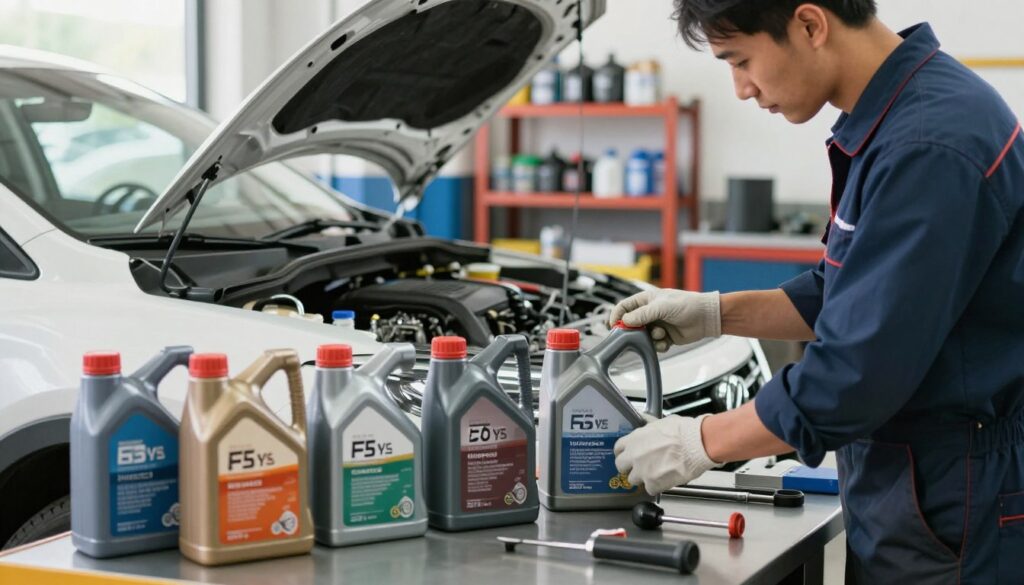
Understanding Viscosity Ratings
Viscosity is how thick the oil is and how it flows at different temperatures. You’ll see numbers like 5W-30 or 10W-40 on the bottle. The “W” is for winter, and the number before it is for cold weather. The second number is for normal engine temperatures.
Choosing the right viscosity is key. Oil that’s too thick doesn’t flow well in cold starts. Oil that’s too thin doesn’t protect well in heat. Always check your owner’s manual for the right grade for your engine.
Compatibility with Engine Type
Modern engines need special oil to keep them clean and running well. Newer cars often need synthetic oil. Older cars might do better with conventional or high-mileage oil, which helps seals and reduces oil use.
“The longevity of your engine is directly tied to the quality and compatibility of the oil you choose. Never compromise on the manufacturer’s specifications, as these are the result of thousands of hours of rigorous testing.”
To keep your engine in top shape, know the recommended oil change frequency for your car. The wrong oil can damage your oil filter and make you change oil too often.
Environmental Considerations
Your local climate affects your oil’s performance. In cold areas, you need oils that stay fluid easily. In hot places, choose oils that don’t thin out too much.
| Viscosity Grade | Best Temperature Range | Primary Use Case |
|---|---|---|
| 0W-20 | -40°F to 68°F | Modern fuel-efficient engines |
| 5W-30 | -22°F to 86°F | General purpose, varied climates |
| 10W-40 | -4°F to 104°F | Older engines, warmer regions |
| 20W-50 | 32°F to 122°F | High-performance or heavy-duty |
The Role of Oil Filters
The oil filter is like a shield for your car’s engine. It catches harmful particles that could damage your engine. Without it, your engine would get dirty and work less efficiently.
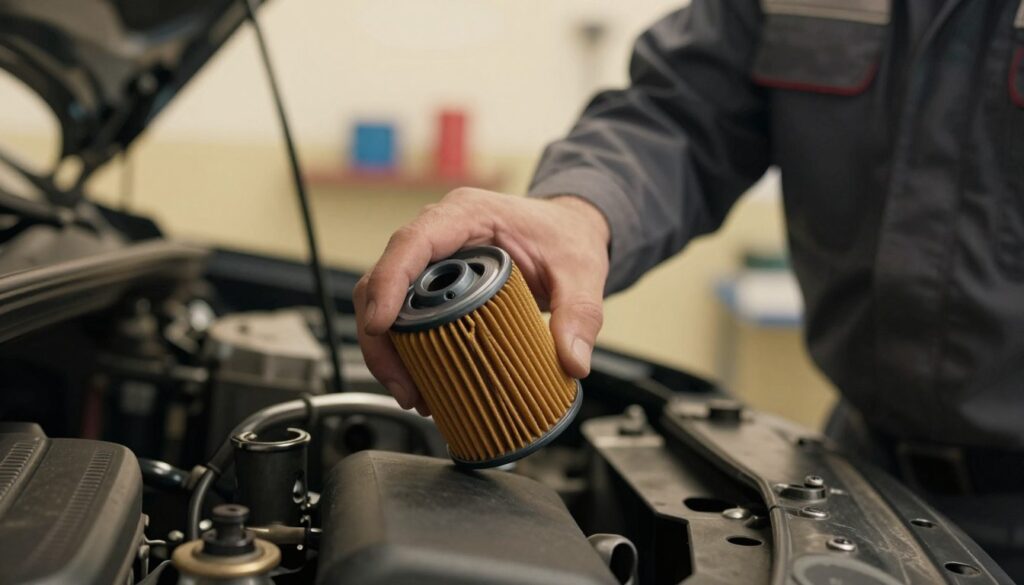
Importance of Oil Filters
The oil filter is a key part of your engine’s health. It keeps dirt, metal shavings, and carbon deposits out of the oil. This helps your engine run smoothly and last longer.
Consistent filtration is key to keeping your engine in top shape. A clogged filter can let dirty oil through, which can harm your engine. This defeats the purpose of regular maintenance.
When to Replace Your Oil Filter
Always replace your oil filter when you change your oil. Many people wonder how often to change their car’s. The answer is that the oil and filter work together. Changing them together keeps your oil fresh.
If you drive in tough conditions, like heavy traffic or dusty areas, change your filter more often. Staying proactive with maintenance keeps your engine oil effective. Always check your owner’s manual for the right mileage intervals.
How to Choose the Right Filter
Picking the right filter is important. Not all filters are the same, and a bad one can harm your engine. Choose filters that meet or exceed your car’s original equipment manufacturer (OEM) specs.
Think about the type of oil you use when picking a filter. Synthetic oils need high-efficiency filters for longer use. Here’s a table of common filter types:
| Filter Type | Best For | Key Benefit |
|---|---|---|
| Standard Cellulose | Conventional Oil | Cost-effective protection |
| Synthetic Blend | High-Mileage Engines | Improved debris retention |
| Full Synthetic | Extended Drain Intervals | Superior flow and durability |
| High-Efficiency | Severe Driving Conditions | Maximum particle capture |
Seasonal Considerations for Oil Changes
Seasonal changes remind us to check our engine oil. Local weather changes stress our engines, so we need to adjust our maintenance. By staying on top of these changes, our vehicles stay reliable all year.
Winter Oil Change Considerations
When it gets cold, engine oil gets thick. This makes it hard for the oil pump to work when it’s cold. We suggest using lower viscosity oil in winter to help your engine start right.
This small change helps your battery and starter motor last longer.
“An ounce of prevention is worth a pound of cure when it comes to preparing your vehicle for the harsh realities of winter driving.”
Summer Oil Change Advice
Summer heat is tough on engine oil, making it thin out fast. We recommend checking your oil often during long drives or in heavy traffic. Maintaining the correct oil level is key to avoid overheating and wear.
Impact of Extreme Temperatures
Big changes in weather hurt engine oil additives. This can cause sludge and less protection for your engine. Here’s how extreme weather affects your car:
| Condition | Primary Risk | Recommended Action |
|---|---|---|
| Extreme Cold | Slow Circulation | Use thinner synthetic oil |
| Extreme Heat | Oil Thinning | Check levels weekly |
| Frequent Shifts | Additive Breakdown | Follow strict intervals |
Knowing how seasons affect our cars helps us take better care of them. Regular maintenance prevents engine problems. This way, our engines stay in top shape all year.
Keeping a Maintenance Schedule
We think a proactive way to care for your car starts with a good tracking system. Following best practices for car maintenance keeps your car reliable and safe. It helps you manage your car oil change frequency and other important service times.
Creating Your Own Checklist
Making a Car Maintenance Checklist tailored to your car is key. Start by listing all the must-do tasks like fluid checks, tire rotations, and filter changes. Include when you should do them based on mileage.
Keep this list in your glove box or on your garage wall for easy access. Marking off tasks as you do them gives you a clear sense of accomplishment. It also helps you not miss out on important maintenance.
Using Maintenance Apps
If you like digital tools, many apps can help with your car maintenance schedule. Apps like Simply Auto or Carfax let you enter your car’s details. They send reminders for upcoming services.
These apps save your service history online, so you can access it anytime. Using tech to track your car oil change frequency means you’ll never forget a service, even when you’re busy.
Importance of Documentation
Keeping a detailed record of all services is very important. It proves you’ve taken good care of your car, which is key for warranty validity.
Also, a full service history makes your car more valuable when you sell or trade it. Buyers will see your transparency and diligence in caring for your car.
Resources for Further Learning
Learning how to take care of your car is key. You need reliable information and expert advice. We suggest checking out professional resources to keep up with the latest on engine health.
Educational Materials
Your owner’s manual is the best guide for your car. It’s filled with vehicle maintenance tips specific to your engine. Look for trusted car websites and manufacturer sites. They have tools that adjust service times based on how you drive.
Digital Tracking Tools
Today’s apps make tracking your car’s service easy. They help you figure out when to change your oil. They consider your car’s mileage and the weather where you live. Keeping a log helps you avoid missing appointments and keeps your engine running smoothly.
Professional Service Networks
Going to certified mechanics is a smart move. They handle tough car problems. Building a relationship with a local mechanic means your car gets the best care every time. This keeps your car running well and lasts longer.
How often should you change your car oil?
Modern cars with synthetic oil can go 7,500 to 10,000 miles. Check your owner’s manual for your car’s specific needs.
What is the recommended oil change frequency for older vehicles?
Older cars or those with conventional oil need a change every 3,000 to 5,000 miles. High-mileage oil can help over 75,000 miles.
How do driving habits affect car oil change intervals?
Frequent short trips or towing means more frequent oil changes. It prevents sludge buildup and keeps your engine healthy.
When to change car oil if I don’t drive very often?
Even if you don’t drive much, oil degrades over time. Change your oil at least twice a year to keep additives effective.
What are the best practices for car maintenance regarding oil?
Check your oil level monthly, replace the oil filter, and use the right viscosity oil. Follow your car’s manufacturer recommendations.
Can a vehicle maintenance guide help me save money?
Yes. Regular maintenance prevents costly repairs. It saves you money in the long run.
Why is the oil filter so important in the car maintenance checklist?
The oil filter removes contaminants. Neglecting it means your fresh oil will be contaminated, shortening your engine’s life.
Is synthetic oil better for my car oil change frequency?
Generally, yes. Synthetic oils like Pennzoil Platinum offer better thermal stability and longer service intervals than conventional oils.

Hi! I’m Moheen Iftikhar, the person behind «CarCruisei». I’m deeply interested in the automotive world, from new car trends and advanced vehicle technology to useful driving advice. On this platform, I publish informative car reviews, expert insights, and practical tips to keep every car enthusiast informed and inspired.