

Home EV Chargers: Best Home EV Chargers for Fast Garage Installation
Switching to an electric vehicle changes your daily commute. You don’t need to go to a gas station anymore. Instead, you charge your car right where you park.
Finding the right equipment is key for a smooth transition. Our team tested many units for months. We looked for reliability, safety, and efficiency to make sure your car is ready every morning.
Whether you’re new to EVs or upgrading, our guide makes choosing easier. We focus on chargers that are easy to install quickly. This way, you can start your day without delay. Choosing quality home EV chargers means convenience and peace of mind for your home.
Key Takeaways
- Refueling at your residence is the most convenient way to maintain your electric vehicle.
- Our recommendations are based on extensive, real-world testing in actual garage environments.
- Selecting the right hardware ensures your car is fully powered before your morning commute.
- We prioritize units that offer simple and efficient setup processes for all users.
- Investing in reliable equipment prevents common charging issues and improves overall battery health.
Understanding Home EV Chargers and Their Importance
Home charging is key for electric vehicle owners. It offers unmatched convenience across the United States. Most charging happens at home, where you park your car overnight.
To understand electric vehicle charging stations, we need to know the basics. Many people mix up the wall unit with the car’s charging hardware.
What is an EV Charger?
The device on your wall is called Electric Vehicle Supply Equipment (EVSE). Its main job is to talk to your car and safely send power from your home grid.
The real “charger” is inside your car. It turns the power from your wall into direct current (DC) to fill your battery pack.
Why Home Chargers Matter
Home charging is the most cost-effective and reliable for most drivers. Plugging in overnight means a full battery every morning, without needing a gas station.
This method saves a lot of time and money over your car’s life. If you want to know more about charging times, check out this guide to plan your day better.
Types of EV Chargers Available
When looking at home charging solutions, you’ll see different power levels. Knowing these helps you pick the right one for your garage:
- Level 1 Charging: Uses a standard 120-volt outlet. It’s the slowest but doesn’t need special setup.
- Level 2 Charging: Needs a 240-volt circuit, like a clothes dryer. It charges faster and is common for home use.
- DC Fast Charging: Found mainly in public places, not homes. They need a lot of power and cost a lot to set up.
Factors to Consider for Fast Garage Installation
A fast garage installation needs careful planning. Check your home’s electrical setup first. This ensures it can handle the new load. Proper planning avoids delays and keeps your system safe for years.
Electrical Capacity of Your Garage
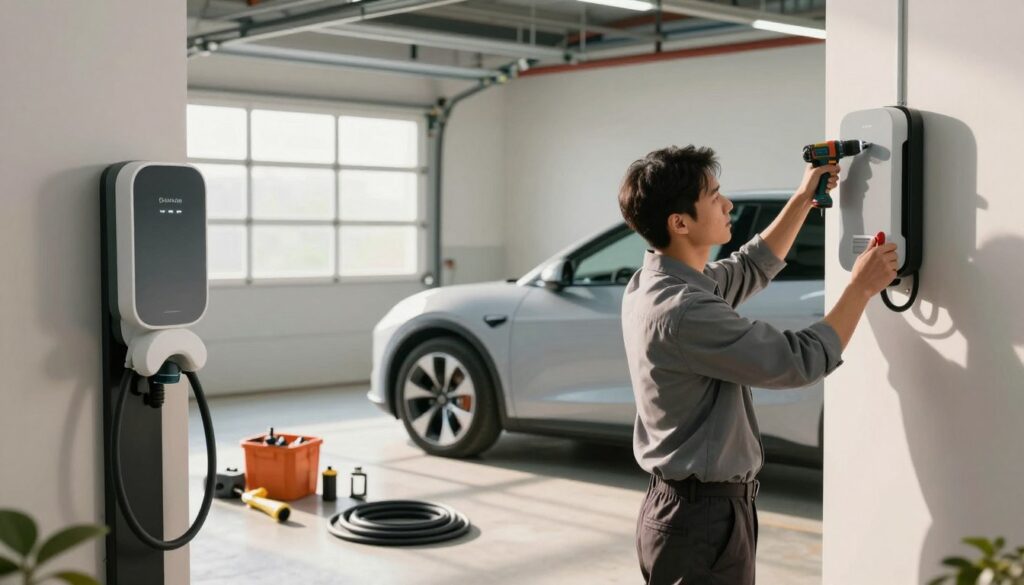
Your home’s electrical panel is key. Most homes need a 240-volt circuit for fast charging. This is like the power for an electric dryer. Check if your panel has enough amperage for a dedicated circuit.
If your panel is full, you might need to upgrade or use a load-management device. Professional load calculations help figure out if your home can handle the charger’s power without issues.
Location and Wiring Requirements
The distance to your electrical panel affects costs. Shorter wires mean lower labor costs and faster setup. Choose a spot that avoids complex wiring through walls or ceilings.
Decide between hardwired units and plug-in car chargers. Hardwired units are better for outdoor or wet areas. They’re more permanent. Plug-in models are flexible for future changes.
- Ensure the mounting wall is structurally sound.
- Verify that the cable length reaches your vehicle’s charging port comfortably.
- Confirm that the chosen location is protected from direct impact or heavy traffic.
Charger Compatibility with Your Vehicle
Not all chargers fit all vehicles. Make sure the charger matches your car’s needs. Most U.S. electric vehicles use the J1772 standard. But, many are switching to NACS. Check your car’s charger capacity to avoid unnecessary costs.
Choosing the right plug-in car chargers or hardwired units involves looking at technical specs:
| Feature | Standard Level 2 | High-Output Level 2 |
|---|---|---|
| Amperage | 32 Amps | 48-50 Amps |
| Connection | NEMA 14-50 Plug | Hardwired |
| Best For | Daily Commuters | Large Battery EVs |
Choosing the right hardware for your vehicle ensures a seamless and efficient charging experience. Early planning prepares your home for the future of transportation.
Top Brands for Home EV Chargers
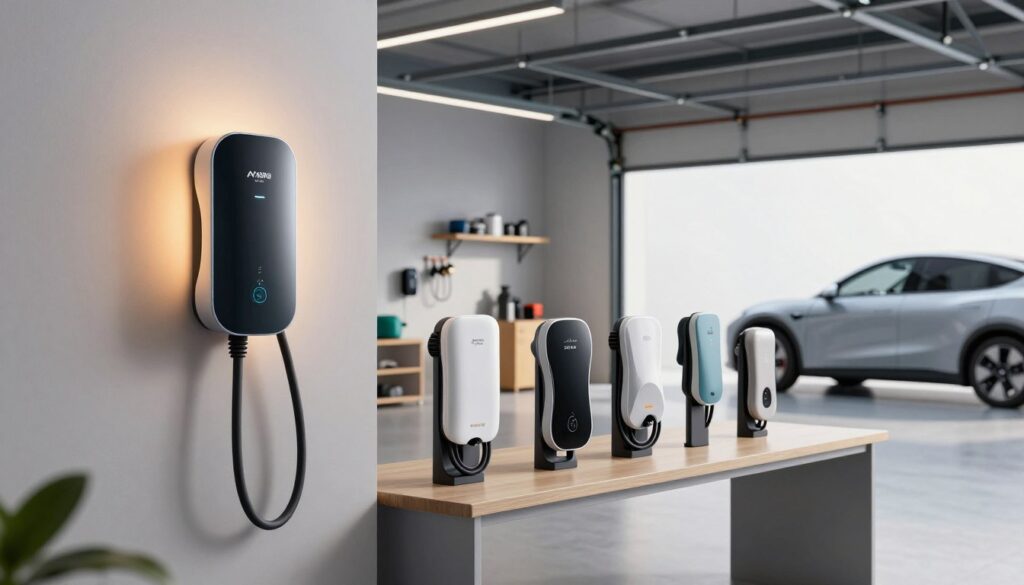
Today, many manufacturers are known for their reliable and advanced home EV chargers. These chargers ensure your electric vehicle gets a safe and efficient charge every time. Whether you want the cheapest plug-in hybrid SUVs or a top electric vehicle, these brands have what you need.
Tesla Wall Connector
The Tesla Wall Connector is a top choice for many drivers. It’s known for its sleek design and strong power delivery. It works with many electric vehicles, thanks to its universal compatibility. Its high amperage makes it a leading top-rated EV charger for homes.
ChargePoint Home Flex
The ChargePoint Home Flex is great for those who want to stay connected. It has advanced app integration for tracking energy use and scheduling charges. Its flexible installation makes it easy to fit into various garage setups.
JuiceBox 40 Smart EV Charger
The JuiceBox 40 is known for its smart technology and easy-to-use interface. It tracks energy use in real-time, helping you save on electricity costs. Its high performance and intelligent software make charging a breeze.
| Brand Model | Key Advantage | Smart Features |
|---|---|---|
| Tesla Wall Connector | Universal Compatibility | Basic Scheduling |
| ChargePoint Home Flex | Advanced App Integration | Full Energy Monitoring |
| JuiceBox 40 | Real-time Data Tracking | Smart Grid Optimization |
Installation Process Overview
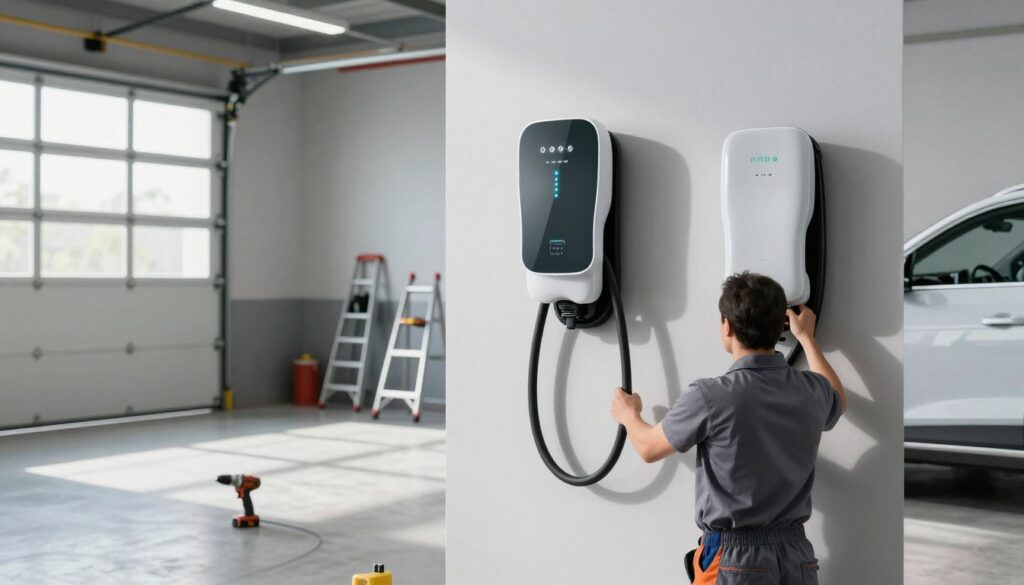
Getting ready is key for a fast garage installation of your new charging gear. Check your home’s electrical power before buying to make sure it can handle the extra load. A clean, easy-to-reach spot helps technicians work quickly without delays.
Preparing Your Garage for Installation
Clear the area around your electrical panel and where you’ll mount the charger. Make sure your garage has good air flow and the wall can hold the unit’s weight. You might also want to look into high-quality car phone mounts to keep your car tidy while charging.
Choosing the Right Contractor
Finding a skilled installer is critical for a good EV charger installation. Look for a licensed electrician with EVSE experience. Check their credentials and ask for references to make sure they know local codes and safety rules.
“The safety of your home electrical system depends on the precision of the installation. Never cut corners when dealing with high-voltage equipment, as professional oversight is the only way to guarantee long-term reliability.”
DIY vs. Professional Installation
While DIY might seem appealing, it’s not safe for high-voltage charging stations. It can cause fires, void warranties, and harm your car’s battery. Here’s why going pro is better.
| Feature | DIY Installation | Professional Installation |
|---|---|---|
| Safety Compliance | High Risk | Guaranteed |
| Warranty Status | Often Voided | Fully Maintained |
| Permit Handling | Owner Responsibility | Managed by Expert |
| Installation Speed | Slow/Uncertain | Fast and Efficient |
Choosing a pro for your EV charger installation means your system is safe and meets standards. This ensures a fast garage installation that meets your needs for a long time.
Best Practices for Safe EV Charger Installation
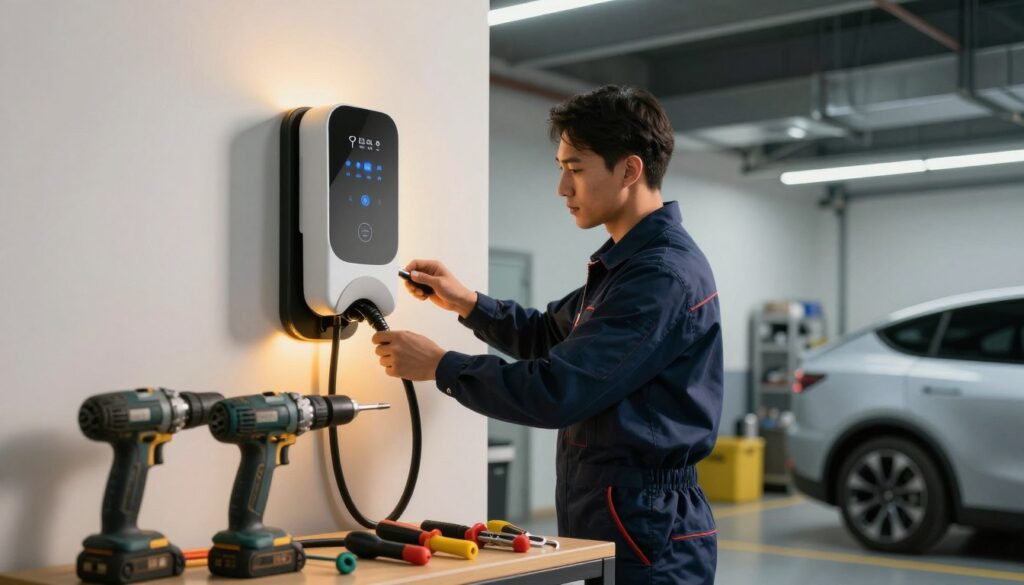
When we start an EV charger installation, safety and electrical integrity are top priorities. High-voltage equipment needs careful handling to ensure your home can handle the power without risk.
Ensuring Proper Electrical Work
First, get a licensed electrician to check your home’s electrical panel. They’ll see if your system can support a dedicated circuit for your charger.
Overloading your panel can cause overheating or breaker trips. Checking your electrical load keeps your home safe while you charge your car. This is important, as it ensures your home is ready for the best electric cars for long-distance travel.
Following Local Codes and Regulations
Following local building codes is not optional; it’s the law. It protects your property and insurance. Most places need a permit for any big electrical work, like installing a charging circuit.
“Safety is the foundation of every successful infrastructure project. When dealing with electricity, compliance with local codes ensures that your home remains a secure environment for your family and your vehicle.”
After the installation, get a city official to inspect it. This step confirms your EV charger installation meets safety standards, giving you peace of mind for years.
Regular Maintenance Tips
Keeping your charging equipment in good shape is key. Check your charging cable and connector every few months for wear or damage.
- Keep the charging port and connector clean and free of debris.
- Ensure the cable is stored properly to prevent tripping hazards or physical strain.
- Check the mounting hardware periodically to ensure the unit remains securely attached to the wall.
- Listen for any unusual buzzing or clicking sounds during the charging process.
By following these maintenance tips, you can make your EV charger last longer. Regular care prevents small problems from becoming big, expensive issues. This keeps your charging station working well.
Features to Look For in Home EV Chargers
When we look for the best plug-in car chargers, we need to think beyond just power. We must find features that fit our daily lives. The right charger balances your car’s needs with your home’s electrical setup.
Charging Speed and Efficiency
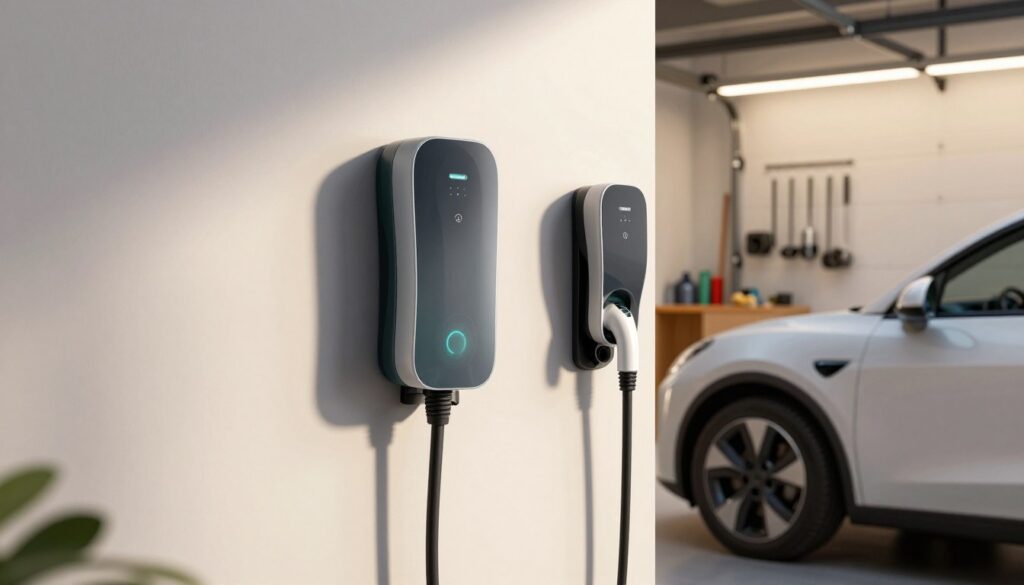
Level 2 charging is often the sweet spot for overnight charging. But, we must check if our car can handle higher amperage. Efficiency means not wasting energy during charging.
Smart Technology Integration
Today’s plug-in car chargers often connect to Wi-Fi. This lets us track energy use in real-time. Smart features help manage loads and prevent overloading. Look for chargers with mobile apps for scheduling charges when rates are low.
Portability and Design
The charger’s design affects its fit in your garage. Wall-mounted chargers are great for permanent setups. Portable chargers are better for travelers. Make sure the cable is long enough to reach your car without tripping you.
| Feature Category | Basic Model | Smart Model |
|---|---|---|
| Connectivity | None | Wi-Fi & Bluetooth |
| Energy Tracking | Not Available | Detailed App Reports |
| Load Management | Manual Only | Automatic Adjustment |
| Installation Type | Plug-in | Hardwired or Plug-in |
The best plug-in car chargers meet our lifestyle needs. By focusing on smart features and design, we get a smooth charging experience for years.
Cost Considerations for Home EV Chargers
Buying home EV chargers means understanding the total cost. The upfront price is clear, but we also need to think about labor costs. This ensures a smooth transition to electric vehicles.
Initial Purchase and Installation Costs
The cost of a charging setup changes based on the model and wiring complexity. Smart chargers are pricier but offer better tracking and energy management. For more details, check out how much does EV charger installation cost.
Professional installation is key for safety and code compliance. Electricians check your electrical capacity. Investing in professional services avoids mistakes and boosts efficiency.
Long-term Savings on Fuel
Home charging is a financially sound investment. It cuts down daily transportation costs. Over time, these savings can cover the initial costs.
Tax Incentives and Rebates
Many homeowners don’t know about financial help for home EV chargers. Federal tax credits and local rebates can reduce costs. They help with both equipment and installation.
| Cost Category | Estimated Range | Financial Impact |
|---|---|---|
| Hardware Purchase | $400 – $1,200 | One-time expense |
| Professional Labor | $500 – $2,000 | Depends on panel capacity |
| Fuel Savings | $800 – $1,500/year | Ongoing annual benefit |
| Incentives/Rebates | $200 – $1,000 | Reduces total investment |
Customer Reviews and Ratings of Popular EV Chargers
Looking for the best home EV chargers? It’s important to consider both professional tests and real user experiences. We’ve mixed our own tests with thousands of user reports to give you a clear view. This way, you can pick the most reliable charger for your garage.
Comparing User Experiences
Users often look for simplicity and connectivity in a charger. Our research shows they like chargers that are easy to use and connect to apps. For more details, check out the best home EV chargers on the market.
Reliability is key in user reviews. People praise chargers that stay connected and charge without problems. On the other hand, chargers with software issues or hard installation get low ratings.
Analyzing Performance Metrics
Performance isn’t just about speed; it’s about consistency and thermal management. Even the fastest chargers can fail if they get too hot. We look for chargers that keep their power up and stay cool.
“The true test of a home charger is not how it performs on day one, but how it handles the rigors of daily charging over several years of service.”
When we check top-rated EV chargers, we see how they handle power changes and grid demands. Here’s how leading models stack up:
| Charger Model | Reliability Score | App Ease of Use | Thermal Efficiency |
|---|---|---|---|
| Tesla Wall Connector | Excellent | High | Superior |
| ChargePoint Home Flex | High | Excellent | Good |
| JuiceBox 40 | Good | High | Good |
Brand Reputation in the Market
A brand’s reputation comes from its support and updates. We look for brands that help customers and keep improving their products. These top-rated EV chargers come from companies known for their reliability.
Choosing a charger is about finding the right balance. Look for products with good user feedback and strong performance. This ensures a smooth transition to electric vehicles. Remember, long-term value is more important than a low initial price.
Eco-Friendly Benefits of Home EV Chargers
We believe that home charging is key to a sustainable future. By charging our cars at home, we help make our energy cleaner. This choice is more than just convenient; it’s a step towards caring for our planet.
Reducing Carbon Footprint
Electric vehicles cut down on emissions a lot. Charging at home means our daily drives pollute less. This makes reducing our carbon footprint real and achievable.
Switching to electric means we use less oil. This helps fight climate change. Every charge at home means cleaner air for us all.
Using Renewable Energy Sources
Home charging lets us use renewable energy. Many of us pair our cars with solar or wind power. This makes our driving carbon-neutral.
Charging during off-peak hours helps the grid. It makes our energy use more efficient. This supports a cleaner, more stable power system.
Supporting Sustainable Practices
Choosing electric mobility changes how we think about energy. It makes us more aware of our energy use at home. This awareness can lead to more sustainable choices.
The table below shows how home charging compares to gas cars:
| Feature | Traditional Gas Vehicle | Home EV Charging |
|---|---|---|
| Tailpipe Emissions | High | Zero |
| Energy Source | Fossil Fuels | Grid or Renewable |
| Efficiency | Low | High |
| Environmental Impact | Significant | Minimal |
Our commitment to these practices helps our planet. By choosing the right tech now, we ensure a cleaner future.
Future Trends in Home EV Charging
We’re moving into a time where our garages will be key spots for managing energy. Modern electric vehicle charging stations are becoming more than just outlets. They’re turning into smart devices that talk to our homes and the grid.
Advancements in Charging Technology
The biggest upcoming change is bidirectional charging. This lets your car send power back to your home when needed. It’s great for when the power goes out or during peak hours.
We’ll soon see chargers that work way faster. This means you won’t have to wait as long to get your car ready to go. These updates will keep your electric vehicle charging stations up to date as car batteries get bigger.
Integration with Smart Home Systems
Future chargers will fit right into your smart home setup. They’ll connect to your network and start charging when electricity is cheap. This makes your charging process smooth and efficient.
This intelligent load balancing keeps your home’s electrical system balanced. It makes sure you don’t overload your system. It also manages your energy use for all your appliances, making life easier.
The Role of Renewable Energy
Using solar panels with your charger is becoming more common. Homeowners are pairing their electric vehicle charging stations with batteries to be energy-independent. This is a big step toward using clean energy.
By using solar power, we can cut down our carbon footprint. This shift helps make our daily drives cleaner. It’s a step toward a cleaner and more resilient energy future for all.
Conclusion: Choosing the Right Home EV Charger for Us
Choosing the right equipment for your garage is the final step in your journey toward seamless electric vehicle ownership. By focusing on quality and reliability, you ensure that your home charging solutions provide consistent power for years to come. We have analyzed the essential factors to help you navigate this important decision with confidence.
Recap of Key Considerations
When evaluating your options, always prioritize safety and vehicle compatibility above all else. It is vital to assess your home’s electrical capacity before making a final purchase to avoid unexpected upgrades. You can find more detailed advice in our best home EV charger guide to ensure you select a unit that matches your specific driving habits.
Final Thoughts on Installation
The process of EV charger installation should never be taken lightly. We strongly recommend hiring a licensed professional to handle the wiring and setup to ensure compliance with local building codes. Proper installation not only protects your investment but also guarantees the safety of your home and family.
Encouragement to Make the Switch
Embracing the convenience of charging at home is the best way to maximize the benefits of your electric vehicle. Imagine waking up every morning to a fully charged battery, ready for the day ahead without ever visiting a gas station. We encourage you to take this step today and enjoy the long-term savings and environmental impact that come with your transition to sustainable driving.
Resources for Further Information
Switching to home energy management needs reliable data and expert advice. We suggest checking out these resources to help you make smart choices for your setup.
Official Manufacturer Portals
Check out Tesla, ChargePoint, and Enel X’s websites for the latest on electric vehicle charging stations. You’ll find detailed support and installation guides for your specific needs.
Government Incentives and Databases
The U.S. Department of Energy has a database of federal and state tax credits. Looking into these can help you save money when buying from top EV charger brands.
Independent Comparison Tools
Use sites like PlugShare or car review websites to compare different models. These tools let you see how various models perform based on user feedback and efficiency ratings.
Staying up-to-date keeps your home energy system efficient and ready for the future. We hope these resources help you confidently power your vehicle.
FAQ
Why should we prioritize a home installation over relying on public electric vehicle charging stations?
Owning an electric vehicle means waking up to a full battery every morning. Home EV chargers are more convenient and cost-effective than public stations. They ensure our cars are always ready for the day without needing detours.
What is the difference between Level 1 and Level 2 home charging solutions?
Level 1 charging uses a standard outlet and is slow, adding 3 to 5 miles per hour. Level 2 chargers, like the ChargePoint Home Flex, charge faster. They add up to 25–37 miles per hour, making them the best choice for home use.
How do we determine if our electrical panel can support a fast garage installation?
We need to check our home’s electrical capacity before installing. Level 2 chargers need a 40-amp to 60-amp circuit. A certified electrician should do a load calculation to ensure our panel can handle the charger without overloading.
Should we choose a plug-in car charger or a hardwired unit for our garage?
It depends on what you need. Plug-in chargers are easy to move, but hardwired units like the Tesla Wall Connector charge faster and are more weather-resistant.
Which EV charger brands are currently considered the top-rated EV chargers in the industry?
Tesla, ChargePoint, and Enel X Way (JuiceBox) are at the top. The Tesla Wall Connector is known for its design and compatibility. The ChargePoint Home Flex is loved for its app and flexibility.
Why is it important to hire a professional for EV charger installation?
DIY installation is risky due to the high voltage. Professionals ensure the wiring meets codes and the circuit is grounded. Many warranties and rebates require professional installation.
What smart features should we look for in modern home charging solutions?
Look for Wi-Fi connectivity and smartphone apps. These features let us schedule charging, track energy use, and get notifications. Brands like JuiceBox offer load sharing for charging two cars at once.
Are there financial incentives available to offset the cost of home EV chargers?
Yes, there are savings to be had. Look into the Federal Tax Credit for electric vehicle infrastructure. Local utilities like PG&E offer rebates and discounted rates for off-peak charging.
How does home charging contribute to a more sustainable lifestyle?
Home charging reduces our carbon footprint by using electricity instead of gasoline. Adding solar panels lets us power our cars with renewable energy, reducing our grid reliance even more.
What is bidirectional charging, and will it work with our current home setup?
Bidirectional charging lets our EV send power back to the house during outages. Brands like Ford and Wallbox are leading in this technology. If you’re interested in using your car as a backup battery, look for “future-proof” hardware.

Hi! I’m Moheen Iftikhar, the person behind «CarCruisei». I’m deeply interested in the automotive world, from new car trends and advanced vehicle technology to useful driving advice. On this platform, I publish informative car reviews, expert insights, and practical tips to keep every car enthusiast informed and inspired.