

Coolant Flush Guide: How to Change Car Coolant and Radiator Fluid
Keeping your engine at the right temperature is key for its long life. We think knowing how to do a coolant flush guide helps car owners avoid overheating and damage.
Looking after your car’s cooling system is more than just adding coolant. A regular car coolant change gets rid of harmful stuff that builds up. Our coolant change tutorial makes this important task easy for everyone.
Whether you want to do it yourself or get a pro to do it, knowing the coolant system procedure is important. We show you how to do car coolant maintenance right. By following our steps, your engine will run smoothly, making radiator fluid replacement a breeze.
Key Takeaways
- Regular maintenance prevents engine overheating and costly repairs.
- A clean system improves overall vehicle performance and longevity.
- DIY methods save money while ensuring high-quality results.
- Safety precautions are essential when handling thermal liquids.
- Consistent scheduling keeps your engine running efficiently year-round.
What is Car Coolant and Why is it Important?
Car coolant is more than just colored water. It’s a vital chemical cocktail that protects your engine from extreme heat. Without it, your car could overheat and damage critical parts. A proper coolant flush guide keeps your cooling system clean and efficient.
The Role of Coolant in Engine Temperature Regulation
Coolant absorbs heat from the engine and moves it to the radiator. This keeps the engine from overheating and warping. It’s key for keeping your car running smoothly, no matter the weather.
Coolant also stops corrosion and scale in the radiator. If you want to keep your car in top shape, check the transmission fluid level too. Clean fluids are essential for your car’s long-term health.
Types of Coolant: Ethylene Glycol vs. Propylene Glycol
Modern coolants come in two main types: ethylene glycol and propylene glycol. Both keep your engine safe from freezing and boiling. Choosing the right one is important in any coolant flush guide.
Ethylene glycol is common because it’s good at transferring heat and is affordable. Propylene glycol is safer and less toxic, great for pet owners and those who care about the environment. Always check that your coolant meets your car’s needs to avoid damage.
Signs Your Coolant Needs to be Changed
Keeping your car in good shape means watching for signs from your engine. Knowing when to change your radiator fluid service is key to avoiding damage to your cooling system.
Ignoring these signs can lead to serious damage in your radiator and heater core. Regular maintenance keeps your engine running at the right temperature.
Overheating Engine Symptoms
A temperature gauge that stays in the red is a clear sign of trouble. If your engine gets too hot while driving, it’s a sign the coolant isn’t working right.
Also, a sudden increase in heat while driving is a warning sign. If your engine overheats on the highway, pull over and let it cool before checking the coolant.

Discolored or Dirty Coolant
Checking the coolant’s color is a simple way to see if it needs to be changed. Fresh coolant is clear and bright. But it gets dirty and loses its protection over time.
If your coolant looks murky, brown, or has sludge, it’s a big warning sign. This means it’s full of rust, scale, or engine debris.
Not taking care of this can block the coolant flow and harm your engine. Getting a professional radiator fluid service right away is important. A timely car coolant change saves you from expensive repairs later.
Tools and Materials Required for a Coolant Flush
To do a radiator fluid replacement right, you need the right tools and materials. Make sure your workspace is clean and big enough to move around safely. Just like when you change engine oil, getting ready is key.
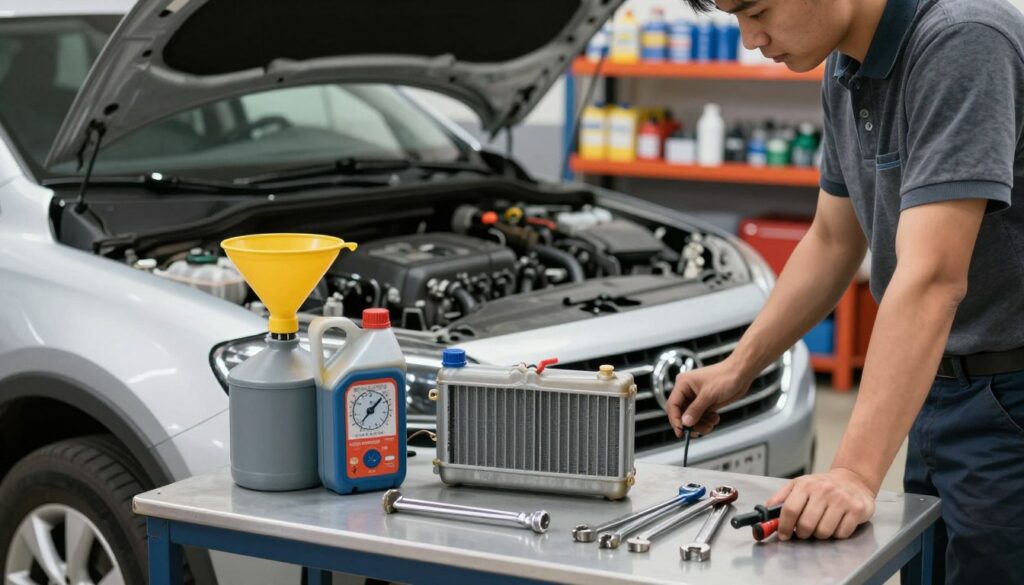
Essential Tools You’ll Need
When working with car chemicals, safety comes first. Wear chemical-resistant gloves and eye protection to avoid spills. The right tools help keep your garage or driveway clean.
Here’s what you need for the radiator fluid replacement:
- Large drain pan: To catch the old fluid without making a mess.
- Fluid line or funnel: To direct the flow of coolant into your container.
- Wrench set: Necessary for removing the radiator drain plug or hose clamps.
- Pliers: Useful for adjusting stubborn hose clips.
- Clean rags: To wipe up any minor drips immediately.
Recommended Types of Coolant
Choosing the right antifreeze is as important as having the right tools. Not all cars use the same coolant. Always check your owner’s manual for the right type.
Some coolants say they work for all cars, but it’s safer to use what your car’s maker recommends. Make sure the coolant’s color and chemical match your car’s needs. The wrong coolant can damage your radiator and water pump.
Step-by-Step Guide to Flushing Your Coolant
To keep your engine cool, you need to remove old coolant and debris. A structured coolant system procedure helps protect your engine from overheating and corrosion.
Prepare Your Vehicle
First, park your vehicle on a flat surface and let the engine cool down completely. Opening a hot radiator cap can cause burns from steam or boiling liquid. Always wear safety glasses and gloves to protect yourself from chemicals.
Find your radiator drain plug or petcock at the radiator’s bottom. Have a big catch pan ready to prevent spills and keep your area clean.
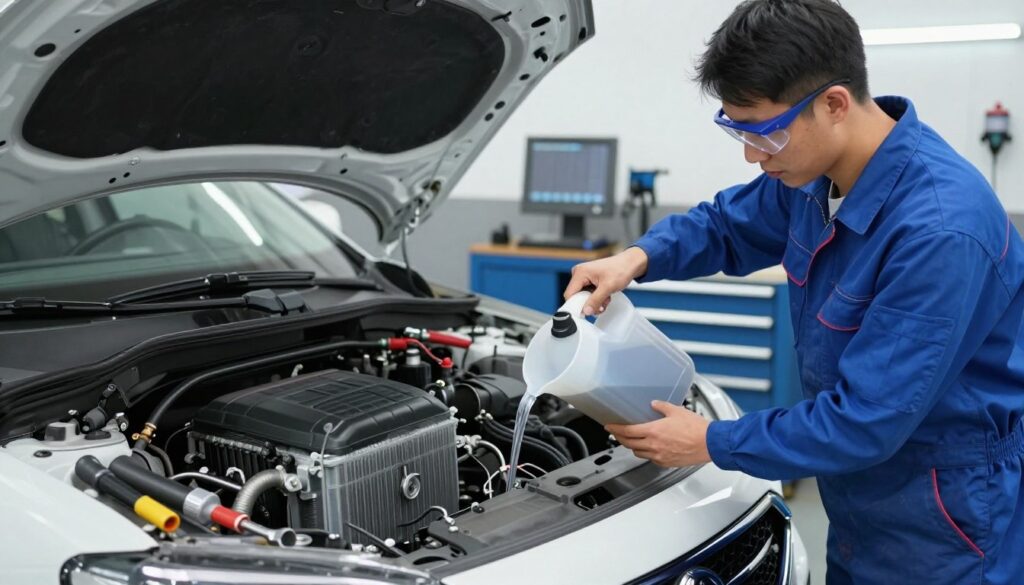
Draining the Old Coolant
With your safety gear on, put the drain pan under the radiator petcock. Slowly open the plug to let the old coolant flow into the pan.
- Make sure the drain pan is big enough for all the fluid.
- Remove the radiator cap slowly to release any vacuum pressure.
- Check the drained fluid for sludge or metal particles.
Flushing the System
After draining, close the petcock and fill the radiator with distilled water. Use distilled water to avoid mineral buildup that can harm your engine.
Start your engine and turn the heater to the highest setting. This lets the water circulate through the heater core. Run the engine for a few minutes, then turn it off and let it cool before draining the water again.
Keep repeating this coolant system procedure until the water draining is clear. This cleaning removes sediment and rust, making your cooling system work better.
Refilling the Coolant: Best Practices
After draining the old fluid, we move on to refilling the system with new coolant. This step is key to keeping your engine safe from corrosion and overheating. Being precise here helps protect your engine for a long time.
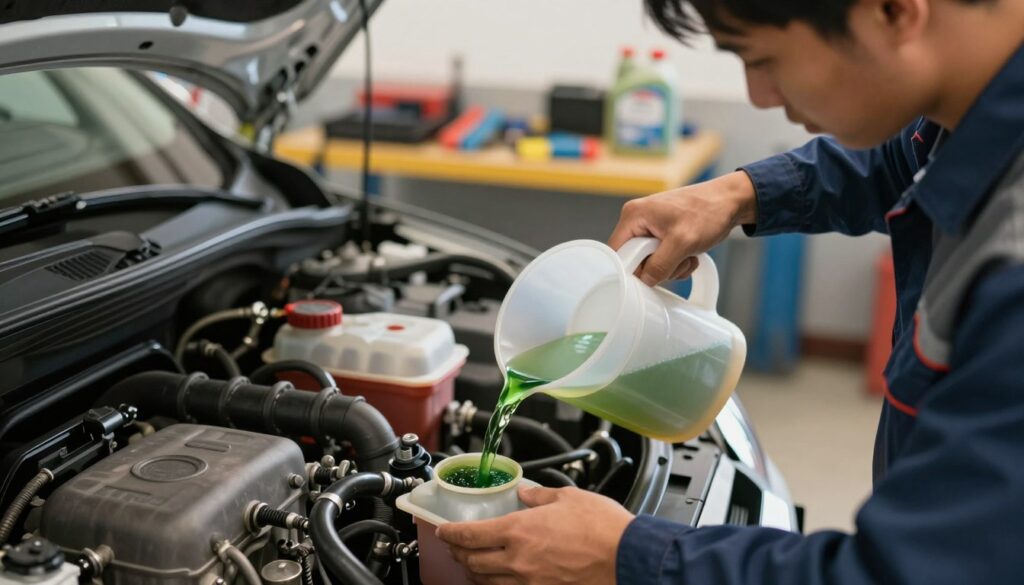
Choosing the Right Type of Coolant
Choosing the right antifreeze is the first step to a healthy cooling system. Most car makers suggest mixing 50 percent antifreeze with 50 percent distilled water. Using distilled water is important because tap water can cause buildup in your radiator.
For those who like to DIY, buying a pre-mixed 50/50 blend is easy. It saves you from worrying about the right mix. Always check your car’s manual to see what coolant your car needs.
How to Properly Add New Coolant
When it’s time to add new coolant, pour it slowly into the radiator or expansion tank. Filling too fast can create air pockets that harm cooling. Here are some tips for a smooth coolant change tutorial:
- Fill the reservoir only up to the “Full” or “Max” line to allow for expansion.
- Use a clean funnel to avoid spills and keep the system clean.
- Check the radiator cap for wear or cracks before closing the system.
- Wipe away any spills from the engine bay to avoid odors or paint damage.
Keeping the fluid level right is key for your engine’s health. By following these steps, you help your car run at its best. Taking your time avoids problems like airlocks and overflow.
Bleeding the Cooling System
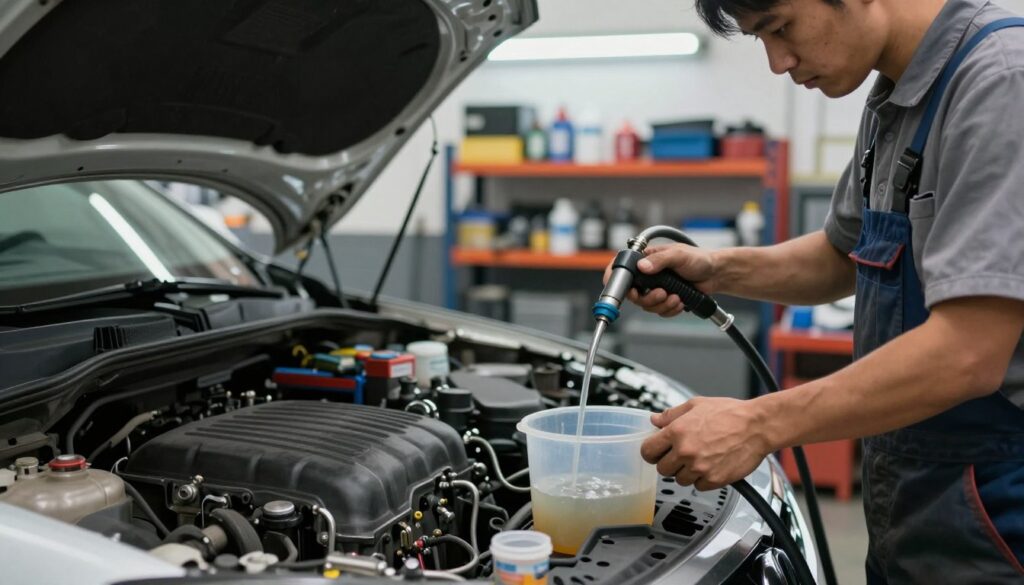
To get your engine running at its best, you need to learn how to bleed the system. This step is often skipped in a coolant change tutorial, but it’s key for your car’s long-term health. It removes air pockets, keeping your car’s temperature steady and preventing sudden spikes.
Why Bleeding is Necessary
Air pockets can harm your cooling system. They block the flow of coolant, causing overheating in certain parts of the engine. This can damage your engine over time.
Without bleeding, your temperature gauge might show wrong readings or swing wildly. To fix this, you need to make sure your system is full of coolant, not air. For more tips, check out this guide on how to bleed a car.
Steps to Bleed Your Cooling System
First, park your car on a flat surface and let the engine cool down completely. Remove the radiator cap and start the engine. Let it idle for 10 to 15 minutes to let the coolant circulate and air bubbles rise.
As the engine warms up, you’ll see the fluid level drop as air escapes. Just add more coolant to keep the level right. Once you see no more bubbles, put the cap back on. This step makes sure your cooling system is ready for driving.
Checking for Leaks After a Coolant Flush
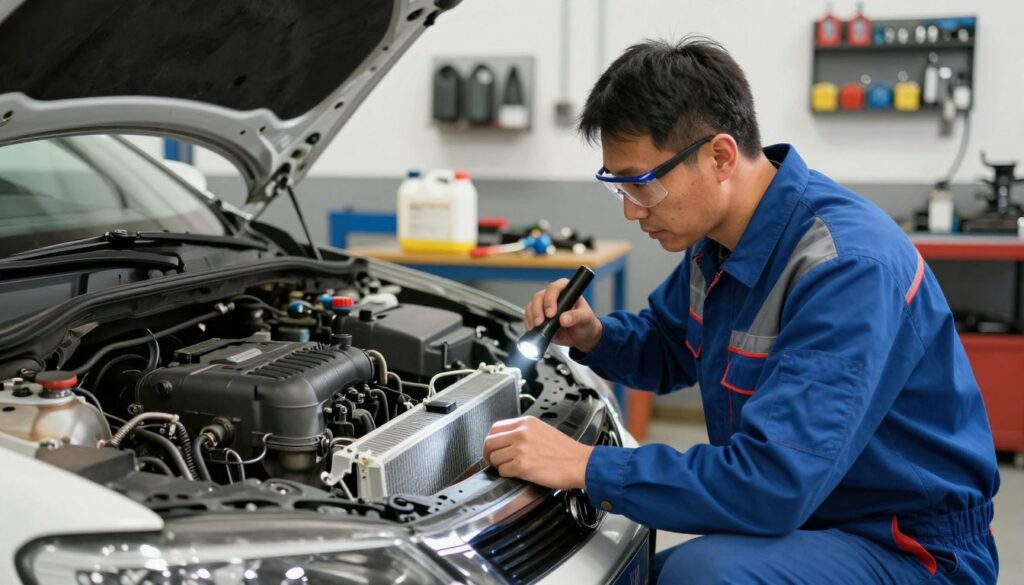
After finishing our coolant change tutorial, check for leaks right away. A small drip can cause big engine problems if ignored. Look for leaks after your first drive to make sure everything is tight.
Common Leak Locations to Inspect
Look for moisture or residue when checking for leaks. A sweet, syrup-like odor under the hood means coolant is leaking. Check these areas closely:
- Radiator drain plug: Make sure it’s tight and the O-ring is in place.
- Hose connections: Check clamps for tightness and not damaging the rubber.
- Radiator seams: Look for white or colored residue that means a slow leak.
- Water pump area: Check the weep hole for any dripping.
How to Fix Minor Leaks
If you find a small leak, don’t worry. Most are just loose clamps or bad drain plugs. Tightening them usually fixes the problem.
If the leak won’t stop, you might need to pressure test the cooling system. This finds hidden cracks in hoses or tanks. If you find a damaged hose, replace it to keep your cooling system working right.
How Often Should You Change Your Coolant?
Knowing when to change your radiator fluid is key for car care. Regular car coolant maintenance keeps your engine safe from heat and corrosion. A set schedule helps your water pump and radiator last longer.
Manufacturer Recommendations
Most car makers say to flush coolant every 24,000 to 36,000 miles. But, this is just a starting point. Always check your owner’s manual for your car’s specific needs.
If you’re not sure, look up how to change engine coolant. Following these tips can prevent costly problems. Being proactive saves money and keeps your engine cool.
Factors That Affect Coolant Lifespan
Driving and weather conditions can make you need to change coolant sooner. Harder driving makes coolant additives break down faster. Here are the main factors:
- Extreme Weather: Freezing or scorching weather stresses your cooling system.
- Heavy Traffic: Stop-and-go driving limits airflow, raising fluid temperatures.
- Towing Loads: Hauling heavy loads increases engine heat, speeding up coolant breakdown.
Watching these factors helps you know when your car needs more coolant service. Regular car coolant maintenance keeps your engine cool, no matter the road.
Environmental Considerations for Disposal
Looking after your vehicle cooling system care is more than just fixing your car. After draining the radiator, you face a hazardous substance that needs careful handling. We must make sure our car care doesn’t harm the environment or our community.
Safe Disposal Methods for Old Coolant
Used coolant is very toxic and can harm pets, wildlife, and water sources. You should never dump it down a storm drain, sewer, or on the ground. Doing so is illegal and can damage the environment badly.
To dispose of it safely, follow these steps:
- Always put the old fluid in a clean, secure plastic container with a tight lid.
- Make sure the container is clearly labeled so others know what’s inside.
- Use a funnel to avoid spills on your driveway or lawn.
- Keep the container in a cool, dry place, away from kids and pets, until you can take it out.
Recycling Options Available
The best way to care for your vehicle cooling system is to recycle. Many auto parts stores and waste facilities accept used antifreeze for safe disposal. This way, the chemicals are handled properly, not dumped in landfills.
If you’re not sure about local rules, check out this guide on how to dispose of antifreeze and vehicle fluids safely. Taking your waste to a certified center shows you’re a responsible car owner. Recycling helps keep our environment clean and your engine running well.
Frequently Asked Questions About Coolant Flushes
Doing your own car maintenance can save you money and teach you new skills. Many people wonder if they can do a coolant flush at home. It’s all about having the right tools and feeling comfortable with engine parts.
Time Commitment for Maintenance
Doing a full service takes about two to four hours if you’re good at it. This includes draining, flushing, and bleeding air. Make sure you have a whole afternoon to do it right.
Professional Service Versus Home Projects
A dealership might charge $200 to $250 for a full service. Doing it yourself saves on labor costs and ensures quality fluids. This guide aims to help you keep your engine cool. Regular care means your engine will run well for a long time.
FAQ
How long does a coolant flush take to complete?
A coolant flush takes about 60 to 90 minutes. This allows for cooling, draining, and bleeding the system.
Can I perform a DIY coolant flush at home without special equipment?
Yes, you can do a DIY coolant flush at home. You’ll need a drain pan, basic tools, and a way to dispose of the old coolant safely.
Why is a full radiator fluid service better than just topping off the reservoir?
A full service removes rust, scale, and sediment. Just topping off doesn’t clean the system. It dilutes the new coolant and leaves old contaminants behind.
What are the benefits of regular car coolant maintenance?
Regular maintenance prevents corrosion, lubricates seals, and keeps your engine running efficiently. It’s a cost-effective way to avoid major repairs and extend your car’s life.
Is a professional coolant system procedure different from what I do at home?
Yes, a professional procedure uses a pressurized machine to clean the system. While our method is effective, a machine can remove more stubborn debris.
How does vehicle cooling system care impact the environment?
Proper care prevents leaks and ensures safe disposal of coolant. Antifreeze is toxic, so it’s important to protect the environment and wildlife.
When should I consider a full radiator fluid replacement instead of a simple flush?
Replace the coolant every 30,000 to 50,000 miles, or as your manual suggests. If you see heavy rust or the coolant is old, a deep flush is needed to restore efficiency.

Hi! I’m Moheen Iftikhar, the person behind «CarCruisei». I’m deeply interested in the automotive world, from new car trends and advanced vehicle technology to useful driving advice. On this platform, I publish informative car reviews, expert insights, and practical tips to keep every car enthusiast informed and inspired.