


Spark Plug Replacement: Symptoms of Bad Spark Plugs and When to Replace
Keeping your car in top shape is more than just oil changes. Many drivers ignore the ignition system until it fails. Knowing the signs of worn parts can prevent expensive engine damage and keep your car running well.
While we often check engine oil, it’s also important to check transmission fluid level correctly. This ensures your car’s mechanics work together smoothly. Spotting bad spark plugs symptoms early is key. Look out for rough idling, slow acceleration, or a drop in fuel efficiency.
Knowing when to replace spark plugs is important to avoid long-term engine stress. Whether you’re doing a routine Spark Plug Replacement or fixing a misfire, our guide helps. We aim to help you tell apart small maintenance tasks from urgent repairs, keeping your car running at its best.
Key Takeaways
- Recognizing early warning signs prevents expensive engine repairs.
- Poor fuel economy often points to failing ignition components.
- Consistent maintenance extends the lifespan of your vehicle.
- Distinguishing between minor issues and urgent needs saves time.
- Regular inspections ensure your engine runs with maximum efficiency.
Understanding Spark Plugs
At the heart of every internal combustion engine is a small but mighty part called the spark plug. These devices are essential for your vehicle’s daily operation. They act as the primary trigger for the power cycle. Without them, the engine’s complex dance cannot happen.
What Are Spark Plugs?
Spark plugs are special, insulated parts that fit into the cylinder head of an engine. They handle extreme heat and pressure while keeping an electrical connection. Think of them as the gatekeepers of your engine’s power.
“The spark plug is the heart of the engine’s ignition system, turning raw fuel into the kinetic energy that drives us forward.”
How Do Spark Plugs Work?
The main job of a spark plug is to send an electrical current from the ignition system to the combustion chamber. This current jumps across a small gap at the plug’s tip, creating a powerful electrical spark.
This spark ignites the air-fuel mixture inside the cylinder. Once ignited, the mixture expands quickly. This expansion forces the piston down, creating the mechanical energy needed to move your vehicle.
Importance of Spark Plugs in Engine Performance
These small parts are key to keeping your engine running well. When they work right, they make sure the combustion process is complete and on time. This directly affects your car’s power.
Healthy spark plugs are also important for keeping emissions low. They ensure a clean and consistent burn. This helps protect the environment and keeps your engine running smoothly for many miles.
Common Symptoms of Bad Spark Plugs
Spotting signs of spark plug issues early is key to avoiding big problems. When spark plugs start to fail, your car will often show signs. These signs can tell you something’s wrong under the hood.
Knowing about spark plug problems helps you fix small issues before they get big. Whether you drive a small truck or a big one, recognizing these symptoms is important. It helps keep your vehicle’s towing and durability in top shape.
Engine Misfiring
An engine misfire happens when the combustion process is interrupted. This makes the vehicle stutter or jerk when you accelerate. If you see a flashing check engine light, you need to act fast. This usually means a serious misfire that could damage your catalytic converter.
Rough Idling
When your car is stopped at a red light, it should run smoothly and quietly. If you feel a noticeable vibration or hear an uneven rhythm while idling, your spark plugs might be failing. This means the engine is having trouble keeping a steady combustion cycle.
Difficulty Starting the Engine
Spark plugs are essential for starting the engine by igniting the fuel-air mixture. If they’re worn, starting the engine might take longer or not work at all. This is a clear sign that the ignition system is not working right.
Reduced Fuel Efficiency
A healthy engine burns fuel efficiently, but worn plugs can cause it to burn fuel poorly. This makes the engine work harder, leading to higher fuel consumption. If you’re filling up more often than usual, it’s time to check your ignition system for problems.
Warning Signs to Look For
Spotting spark plug warning signs early can prevent costly repairs. Your car often hints at ignition system problems. By noticing these signs of spark plug issues, you keep your engine running smoothly.
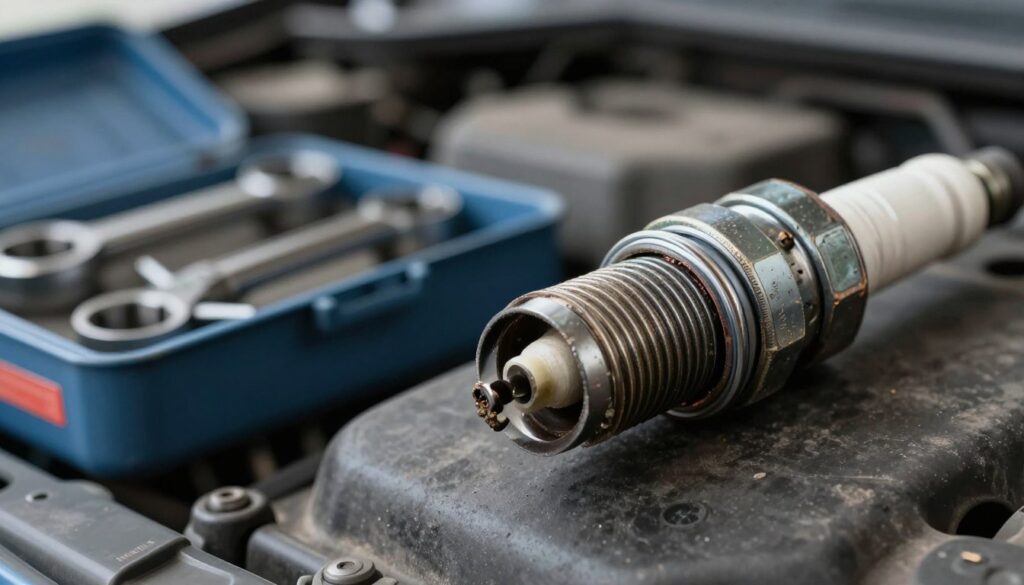
Unusual Noises from the Engine
Strange engine sounds mean your car needs help. You might hear rattling, knocking, or pinging when you accelerate. These sounds often point to spark plug problems, not just squeaking when braking.
Illumination of the Check Engine Light
The check engine light coming on is a big warning. It means your car’s computer has found a problem. This light is a sign that your engine might not be working right.
Poor Acceleration and Power Loss
Feeling like your car is slow or unresponsive is a sign. This happens when spark plugs can’t burn fuel well. These spark plug failure signs also mean your car uses more fuel and performs worse.
Age and Wear: When to Consider Replacement
Keeping track of your spark plug replacement schedule helps avoid unexpected car troubles. It also makes sure your engine works its best. Spark plugs are tough but can wear out over time due to heat and electrical use.

Manufacturer Recommendations
The best way to know when to replace spark plugs is to check your car’s manual. The manual tells you when to change them based on your car’s engine and plug type.
Sticking to these times helps you avoid extra maintenance. It also keeps your warranty and engine in good shape. Always go by the manual’s advice.
Mileage Milestones
Most cars come with spark plugs that last about 80,000 miles. But, driving a lot short distances or towing heavy loads can make them wear out faster.
Keep an eye on your car’s mileage. If you notice your car uses more gas or doesn’t go as fast, it might be time for new plugs.
Visual Inspection Clues
Checking your spark plugs physically is the best way to spot problems. Look for heavy carbon buildup, oil on the plug, or worn-out electrodes when you take one out.
These signs mean your ignition system is not working right. If the metal tip is rounded or burnt, it’s time to replace the plug.
| Plug Material | Typical Lifespan (Miles) | Performance Level |
|---|---|---|
| Copper | 20,000 – 30,000 | Standard |
| Platinum | 50,000 – 60,000 | Improved |
| Iridium | 80,000 – 100,000 | Premium |
Factors Affecting Spark Plug Lifespan
Our daily driving habits greatly affect our engine’s spark plugs. While makers give mileage estimates, these are just starting points. Many outside factors can speed up wear and tear on these key parts.

Driving Conditions
How you drive your car is key to spark plug longevity. Harsh environments make the ignition system work harder than it would on the highway.
Here are common situations that can shorten your spark plugs’ life:
- Stop-and-go traffic: Idling and low-speed driving stop the engine from getting hot enough to clean itself.
- Towing heavy loads: High stress from towing makes the engine hotter, wearing down the plugs faster.
- Short trips: Engines that don’t get hot enough build up deposits on the plug tips.
Fuel Quality
The fuel you use is as important as your driving habits. Low-quality gas can lead to carbon deposits on spark plugs.
These deposits act as an insulator, making it hard for the plug to spark well. Weak sparks mean your engine burns fuel poorly. This can cause performance drops and misfires over time.
Engine Types and Configurations
Not all engines are the same, and their designs affect spark plugs. High-performance engines might need special plugs that last less than standard ones.
Some engines are more sensitive to heat and pressure. It’s crucial to check your owner’s manual for maintenance needs. Regular checks help your engine run smoothly, no matter the design.
The Role of Spark Plug Gaps
Getting your engine to run at its best means paying close attention to the spark plug gap. This small space is where the electrical current jumps to ignite the fuel. If it’s not set right, your engine might not run smoothly.

Understanding Spark Plug Gap Specifications
Every car maker sets a specific gap for your engine. You can find this in your owner’s manual or under the hood. Following these specs helps ensure the spark is strong enough to ignite the fuel mix well.
If the gap is off, your ignition coil might not work right. This can cause a weak spark. On the other hand, a gap that’s too small might not ignite the fuel well. Getting it just right is key for your engine to run smoothly.
Effects of Improper Gapping
Wrong spark plug gaps can cause big problems. If the gap is off, your engine might overheat. This makes the electrodes wear out faster than they should.
“The spark plug gap is the heartbeat of the combustion chamber; even a fraction of a millimeter can be the difference between a smooth idle and a misfiring engine.”
Incorrect gaps can also mess up how your engine burns fuel. This can lead to poor fuel economy and less power when you need it. Here’s what can happen if the gap is wrong:
| Gap Condition | Primary Symptom | Long-term Risk |
|---|---|---|
| Gap Too Wide | Engine Misfire | Ignition Coil Stress |
| Gap Too Narrow | Weak Spark | Carbon Fouling |
| Incorrect Gap | Overheating | Electrode Erosion |
How to Check and Adjust Spark Plug Gaps
To check your gap, use a special tool like a wire gauge or a coin tool. Insert it between the electrodes to measure the gap. If it’s not right, you need to adjust it carefully.
To adjust, use the bending tool on your gap gauge to move the ground electrode. Be gentle to avoid damaging anything. After adjusting, check the gap again with your gauge to make sure it’s correct for your engine.
Different Types of Spark Plugs
Not all spark plugs are the same. The wrong one can cause big problems. Your car’s ignition system needs the right parts to work well. Using the wrong plug can hurt your gas mileage or even damage your engine.

Copper vs. Platinum vs. Iridium
The material of the center electrode affects how long the spark plug lasts. Copper is traditional, but newer cars need stronger materials like platinum or iridium. These handle high temperatures and last longer.
| Material | Durability | Best Use |
|---|---|---|
| Copper | Low | Older engines |
| Platinum | Medium | Standard daily drivers |
| Iridium | High | High-performance/Modern |
Copper plugs conduct well but wear out quickly. Platinum and iridium plugs last longer because they resist wear.
Choosing the Right Spark Plug for Your Vehicle
Check your owner’s manual for the right spark plug for your engine. A plug that’s too long can damage your engine. A plug that’s too short won’t ignite the fuel right, leading to bad gas mileage and dirty plugs.
When buying new plugs, make sure they fit your engine perfectly. The plug’s heat range must match your engine’s cooling. Don’t think a “premium” plug is always better if it doesn’t meet your car’s needs.
Performance Spark Plugs Explained
Performance spark plugs are made to give a stronger spark. They’re good for modified engines or high-compression setups. But, they must match your car’s ignition coil output.
These plugs can make your car’s throttle more responsive. But, they’re not a fix for a neglected engine. Stick to the manufacturer’s recommended plug unless you’ve made big changes to your car. Proper selection keeps your engine running well for a long time.
DIY Spark Plug Inspection and Replacement
Many car owners find Spark Plug Replacement easy with the right help. Doing it yourself helps you understand your car’s ignition system better. It also makes sure your engine runs well. While cleaning with a wire brush might seem tempting, we usually suggest replacing the plugs fully once they’re out.
Tools Needed for Spark Plug Replacement
First, get the right tools to make the job easier. You’ll need a spark plug socket, a ratchet with an extension, a gap tool, and a torque wrench. The right tools help avoid damaging the cylinder head threads and ensure the plugs fit right.
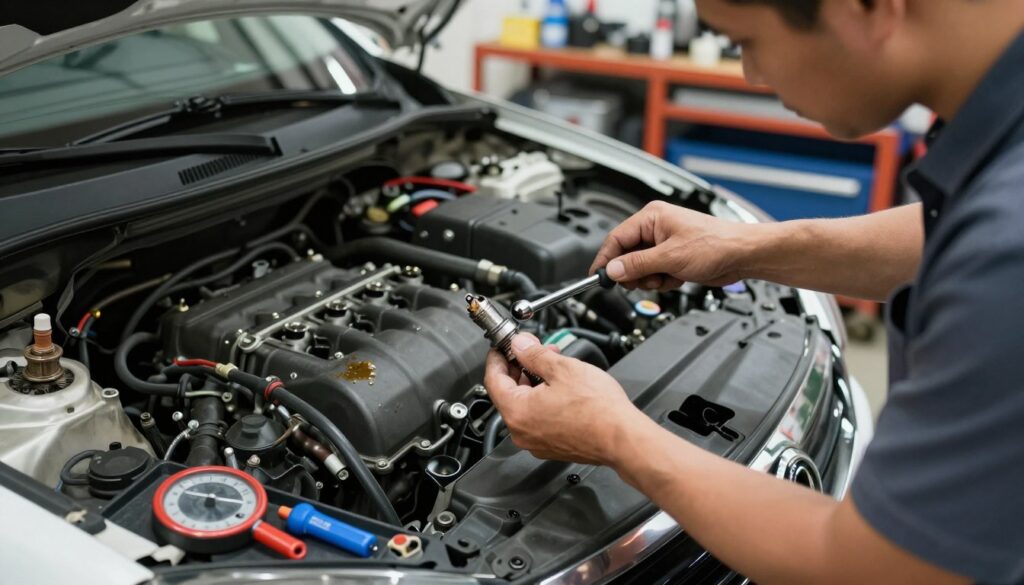
Step-by-Step Guide to Replacing Spark Plugs
Make sure the engine is cool before starting. This prevents burns and thread damage. Remove the ignition wires or coil packs, marking them so you can put them back in the right order.
Before putting in the new plug, check the gap to make sure it’s right. If you’re not sure about the timing or specific needs for your car, learn more about when to change spark plugs to keep your engine running well. Hand-thread the new plug first to avoid cross-threading, then tighten it with a torque wrench to the factory setting.
“The quality of your maintenance today determines the reliability of your engine tomorrow.”
Common Mistakes to Avoid
One big mistake is over-tightening the spark plugs, which can damage the threads in the cylinder head. Always use a torque wrench instead of guessing. Also, never skip checking the gap, as the wrong gap can cause poor combustion and engine misfires.
Keep the area clean while removing the plugs to avoid debris getting into the combustion chamber. Taking your time is essential for your engine’s long-term health. By avoiding these mistakes, your car will stay reliable and efficient for a long time.
When to Seek Professional Help
Even the most confident DIY fans may hit a wall with spark plug problems that need a pro. Routine upkeep is doable at home, but some signs mean your engine needs a pro’s eye.
Signs You Need a Mechanic’s Expertise
Notice engine misfires that won’t go away? Or the check engine light won’t turn off even with new parts? It’s time to get a mechanic’s help. These signs point to deeper engine issues.
Ignoring these signs can harm your car badly. As experts say,
“An ounce of prevention is worth a pound of cure when it comes to the delicate balance of your engine’s ignition system.”
The Benefits of Professional Installation
Going pro for your car’s upkeep means parts are installed right. Mechanics use special tools to get everything just right, avoiding damage to your engine.
Right installation is key to avoid engine damage, like a failed catalytic converter. Early spark plug problems fixes by pros keep your car running well. For more on spotting issues, check out the warning signs to replace your spark plugs.
Getting a certified mechanic gives you peace of mind. They make sure your ignition system works right, saving you from spark plug problems and costly repairs later.
Maintaining Your Spark Plugs
Keeping your ignition system in check is key to a long-lasting engine. By focusing on spark plug maintenance, we can stop small problems from becoming big, costly repairs. This approach keeps our vehicles running well for years.
Regular Inspection Tips
Make visual inspections a part of your regular car care routine. Look for carbon buildup, worn-out electrodes, or cracked insulators. If you spot any of these, fix them right away to keep your engine running smoothly.
“The secret of getting ahead is getting started. Regular maintenance is the foundation of automotive longevity.”
Importance of Engine Maintenance
Proper spark plug maintenance is vital for engine health. Clean, working plugs mean efficient combustion, saving fuel and cutting emissions. Regular care keeps our vehicles powerful and responsive.
- Check for signs of misfiring during acceleration.
- Monitor your fuel economy for sudden drops.
- Follow the manufacturer’s suggested service intervals strictly.
Other Components to Check Alongside Spark Plugs
While checking your plugs, also look at related parts that help power your vehicle. These parts wear out together and affect your ignition system. Always check the following during your spark plug maintenance routine:
- Ignition wires: Look for fraying, cracks, or signs of heat damage.
- Coil packs: Ensure they are securely connected and free of corrosion.
- Distributor caps: Check for moisture or carbon tracking inside the housing.
By taking a holistic approach to your engine, you ensure that every part of the ignition chain is in excellent condition. This simple habit saves us time and money in the long run.
Conclusion: Keeping Your Engine Healthy
We’ve looked into how engines work, but the real goal is to keep your car running well for years. Spark plugs are key to your car’s performance. Regular spark plug maintenance keeps your engine strong and efficient.
Recap of Spark Plug Importance
Spark plugs are small but very important. They help your car run smoothly by making sure the engine can start. Without them, your car might not run well, leading to problems.
Timely Replacement for Optimal Performance
Keeping up with your car’s maintenance schedule is key. It helps avoid costly repairs later. By taking care of your spark plugs, you ensure your car runs well and saves fuel. A well-maintained engine means a better driving experience.
Frequently Asked Questions about Spark Plugs
Keeping your car in top shape means knowing how small parts affect its performance. We get a lot of questions about how long ignition parts last and the dangers of waiting too long to replace them.
How Often Should Spark Plugs Be Changed?
Most car makers say to change spark plugs every 30,000 to 50,000 miles. But, if you drive a lot in the city or tow heavy loads, you might need to check them sooner. This helps keep your car running at its best.
Can Bad Spark Plugs Cause Engine Damage?
Ignoring spark plugs can cause incomplete burning of fuel and constant misfires. This can damage your catalytic converter and make your engine work too hard. This can lead to big repair bills down the road.
What Happens if I Ignore Bad Spark Plugs?
If you ignore spark plug problems, you’ll see your gas mileage drop and your car will idle roughly. Catching these issues early can save you from expensive repairs. Taking care of your car now means it will run well for years.
FAQ
How often should spark plugs be changed?
Most modern vehicles need spark plug replacement every 80,000 to 100,000 miles. But if you use older copper plugs, replace them every 30,000 miles for best maintenance.
Can bad spark plugs cause engine damage?
Yes. Ignoring spark plug failure signs can lead to unburned fuel in the exhaust system, overheating, and destroying your catalytic converter. Persistent misfiring can also wear out your engine’s cylinders and pistons.
What happens if I ignore bad spark plugs?
Ignoring spark plug issues will lead to reduced fuel economy, sluggish acceleration, and eventually, a car that won’t start. In extreme cases, it can trigger a “limp mode” in modern cars like Audi or Mercedes-Benz.
What are the most common bad spark plugs symptoms?
Common symptoms include engine hesitation, a rough idle, “searching” for RPMs, and a noticeable drop in miles per gallon. You may also notice the check engine light flashing during heavy acceleration.
Are there specific spark plug warning signs I can hear?
Yes, listen for “pinging” or “knocking” noises. These sounds indicate that the air-fuel mixture is igniting prematurely or unevenly due to a faulty plug.
How do I know when to replace spark plugs if I don’t have the manual?
Look for visual signs. If the center electrode is rounded off or if you see heavy black soot (carbon fouling), these are clear signs that you need to replace the plugs immediately.
Can I fix spark plug problems by cleaning them?
While cleaning with a wire brush can temporarily remove carbon deposits, we generally advise against it for long-term use. Once the protective plating on the electrode wears down, the plug will quickly fail again. Replacement is the only permanent fix for spark plug problems.

Hi! I’m Moheen Iftikhar, the person behind «CarCruisei». I’m deeply interested in the automotive world, from new car trends and advanced vehicle technology to useful driving advice. On this platform, I publish informative car reviews, expert insights, and practical tips to keep every car enthusiast informed and inspired.