

Engine Overheating: What to Do When Your Car Engine Overheats on the Highway
Seeing steam from under your hood while driving fast is very stressful. When your car engine overheats on the highway, you must act fast to avoid serious damage. Staying calm is key to keeping everyone safe and your car running right.
Seeing the temperature gauge go up can make you panic. But, if you follow expert advice, you can handle this emergency safely. Using the best synthetic motor oil can help prevent overheating on long trips. Learning these steps can prevent a small problem from becoming a big danger on the road.
Key Takeaways
- Prioritize safety by pulling over to a secure location immediately.
- Turn off the ignition to stop the heat generation process.
- Never remove the radiator cap while the system remains pressurized.
- Monitor your dashboard gauges regularly during long-distance travel.
- Use high-quality lubricants to improve overall thermal management.
Recognizing the Signs of Engine Overheating
Spotting engine overheating signs early can prevent costly repairs and keep you safe. Your car gives hints before a major breakdown. By paying attention, you can protect your engine from serious harm.
Common Symptoms to Watch For
Steam or smoke from under the hood is a clear sign. If you see a white cloud while driving, it means your cooling system is failing. Don’t ignore this as it usually means coolant is leaking onto hot parts.
Dashboard Warning Lights
Your dashboard tells you about your car’s health. Modern cars have a temperature gauge that should stay in the middle. If it goes into the red, your engine is overheating. You might also see a warning light or a check engine light turn on.
Unusual Sounds and Smells
Being aware of sounds and smells is key. A sweet smell means antifreeze is leaking and burning. Burning rubber or plastic smells suggest belts are failing due to heat.
You might hear hissing or bubbling from the radiator. This is usually coolant leaking through a bad hose or cap. Acting fast when you notice these signs is the best way to stay safe.
Immediate Actions to Take
Seeing the temperature gauge spike while driving is scary. But, there are steps you can take to protect your car. If your car engine overheating on highway, turn off the air conditioning. It puts too much strain on the engine.
Turn your heater to the highest setting instead. This helps pull heat away from the engine and into the car.
Safely Pulling Over to the Shoulder
Adjust your climate settings first. Then, find a safe place to stop. Signal your turn and move to the shoulder when it’s safe.
Avoid sudden braking, as it’s dangerous in heavy traffic. If you’re looking for a reliable car, check out the best electric crossover for winter driving.
“Safety is not just a priority; it is the foundation of every successful journey on the road.”
Turning Off the Engine
After stopping, shift into park and turn off the engine. Shutting down the engine stops heat generation. Running it while overheating can cause serious damage.
By turning it off, you let it cool down naturally.
Assessing the Situation
Following these engine overheating emergency procedures is key for your safety and car’s health. Stay inside if you’re in a busy area until it’s safe to get out.
Once outside, check for steam or fluid leaks. Always put your safety first, even if it means not fixing the car right away.
Allowing the Engine to Cool Down
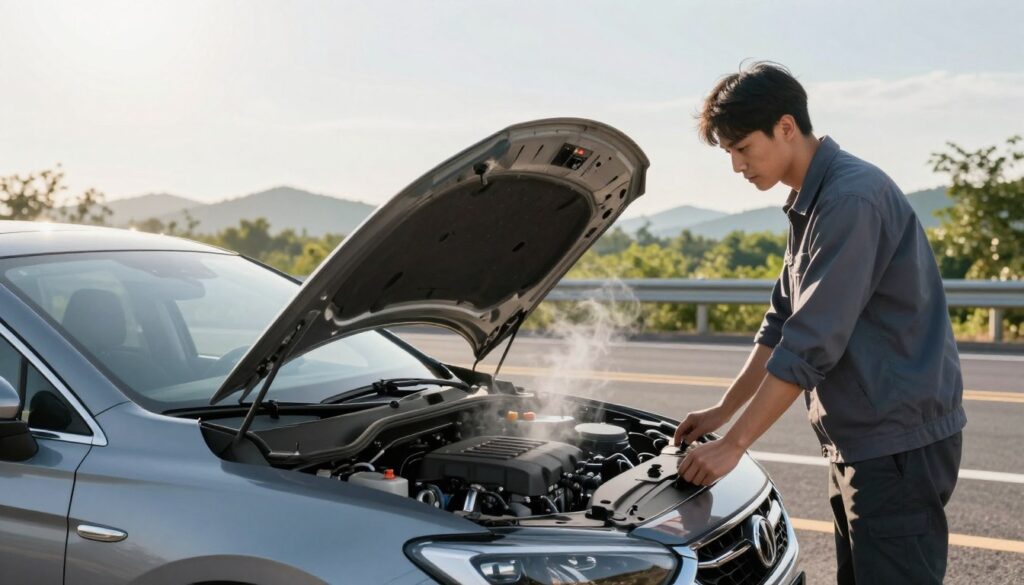
When your engine overheats, patience is key. It’s tempting to open the hood right away. But, doing so can be extremely dangerous. Learning how to cool down an overheated engine safely is vital for your safety and your car’s health.
Why Waiting Is Important
Waiting is critical to avoid burns from steam or boiling coolant. An overheated engine’s cooling system is under high pressure. Opening the radiator cap can lead to a violent spray of hot liquid. Also, waiting lets the engine’s metal parts contract slowly.
Sudden temperature changes can cause engine parts to crack or warp. By waiting, you protect your engine block and cylinder head. This simple step is essential in cooling down your engine safely.
How Long to Wait
We advise waiting 15 to 30 minutes before checking the engine. This time lets the coolant cool down. In hot environments, you might need to wait longer for safety.
Keep the hood closed to let the heat escape through the car’s bottom. If you must open it, do so carefully and stand to the side. Understanding how to cool down an overheated engine means respecting these waiting times.
Signs the Engine Has Cooled
Watch your dashboard temperature gauge to see when it’s safe to inspect. When the needle returns to normal, the engine is likely cool. Also, look for no more steam or hissing sounds.
| Status | Temperature Gauge | Visual Indicators | Safety Level |
|---|---|---|---|
| Critical | Red Zone | Steam/Hissing | Do Not Touch |
| Cooling | Moving Down | Reduced Steam | Wait Longer |
| Stable | Normal Range | No Steam | Safe to Inspect |
Always check if the engine feels cool before touching any hoses or caps. If unsure, wait ten more minutes. These precautions ensure you handle your car with care.
Checking Under the Hood
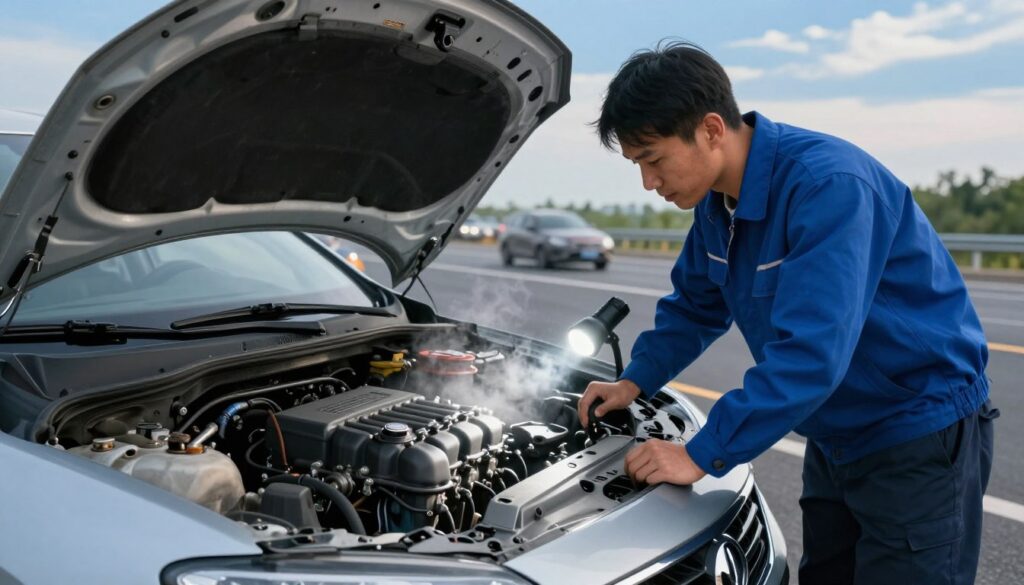
Checking the engine under the hood is key in engine overheating troubleshooting. Wait until the engine cools down a bit. Then, you can open the hood to look for problems. This step is important to find out what might be wrong and to tell a mechanic later.
Looking for Leaks or Smoke
First, look for steam or smoke in the engine bay. Also, check for wet spots or puddles under the car. These signs often mean the cooling system has failed.
- Check for bright green, orange, or pink fluid on the ground.
- Look for white residue around engine components, which suggests a dried coolant leak.
- Listen for any hissing sounds that might indicate a pressurized leak.
Inspecting Coolant Levels
Find the coolant reservoir tank to check the fluid level. The tank will have lines for the minimum and maximum levels. If the fluid is way below the minimum, you might have found the problem.
Examining Belts and Hoses
The belts and hoses help move coolant around the system. Look for cracking, fraying, or bulging on these parts. A broken serpentine belt can stop the water pump, causing the engine to overheat fast.
If you see any damage, don’t drive the car anymore. Proper engine overheating troubleshooting helps avoid serious engine damage.
Adding Coolant Safely
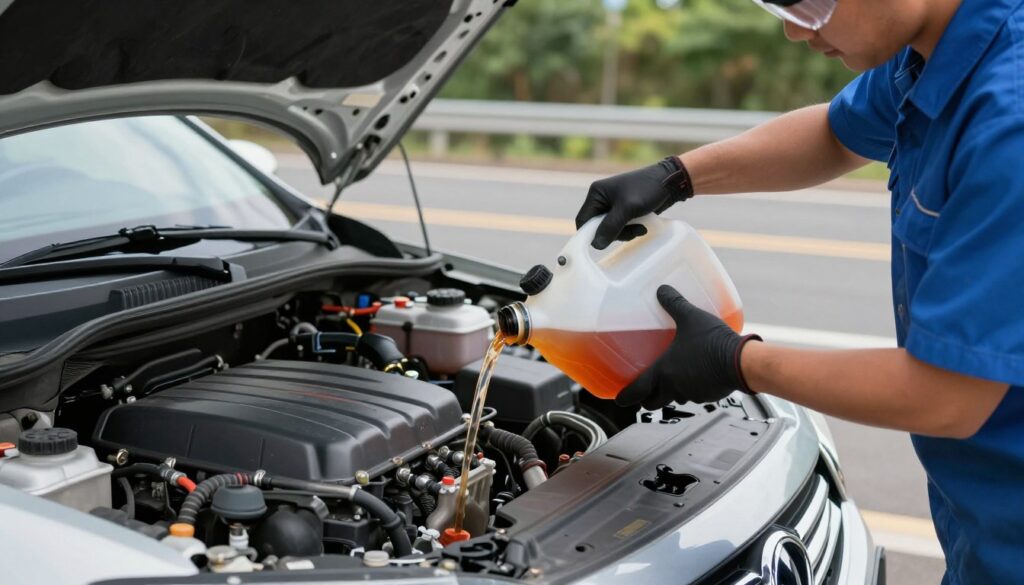
When your engine temperature goes up, knowing how to add coolant safely is key. This is a temporary fix to get you to a service station. But, it must be done with extreme caution to avoid injury. Make sure your car is parked on level ground and the engine is cool before starting.
Understanding Coolant Types
Not all cooling fluids are the same. The wrong one can damage your engine over time. Always check your owner’s manual to find the right coolant for your car. The wrong coolant can cause corrosion and might even void your warranty.
If you want a car that’s easy to maintain, look into top-rated sedans and most fuel-efficient gas cars. Keeping your cooling system compatible with your engine is essential for its longevity. Always check the chemical composition before adding coolant to your radiator reservoir.
How to Add Coolant Properly
When the engine is cool, you can start adding fluid. Use a funnel to avoid spills, as coolant can harm the environment and be slippery. Pour the mixture slowly until it reaches the fill line.
Never open the radiator cap while the engine is hot. The steam can cause severe burns instantly. By taking your time and following these steps, you minimize the risk of further complications while on the road.
When to Seek Professional Help
Adding coolant is just a temporary fix for thermal issues. If you need to add fluid often, it’s a sign of a bigger problem. A leak or a faulty thermostat needs immediate professional help to avoid engine damage.
Don’t rely on temporary fixes if your dashboard lights stay on. If the problem persists after adding fluid, pull over and call for a tow. Protecting your engine from heat damage is worth the cost of professional repair services.
Calling for Roadside Assistance
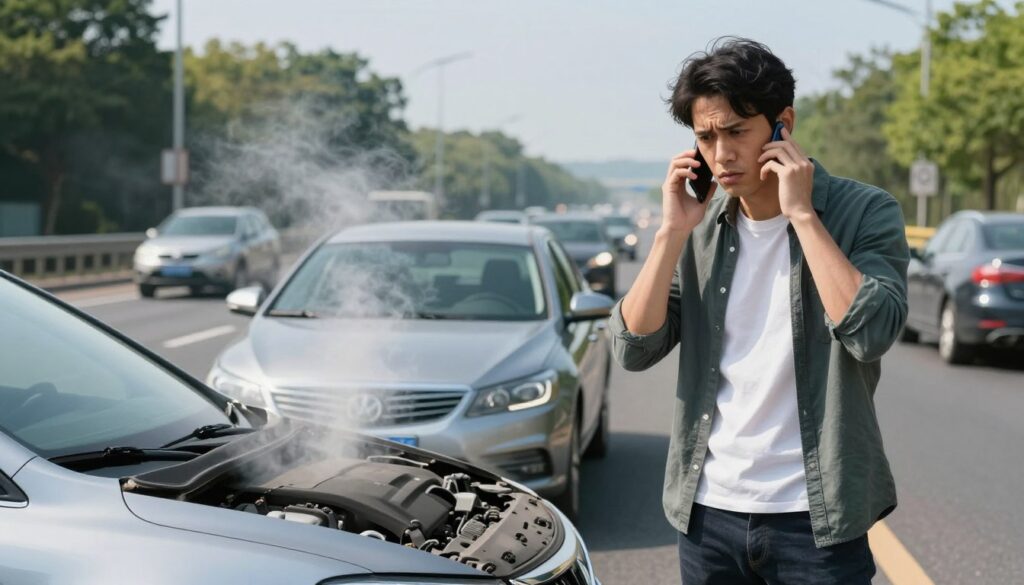
Calling for help is often the best way to keep your car safe and you safe too. While we suggest being ready for emergencies, some engine problems are too big for the side of the road.
When DIY Solutions Aren’t Enough
Some problems are too big for a quick fix on the side of the road. If you see significant coolant leaks, a broken serpentine belt, or if your engine keeps overheating, stop trying to fix it.
Trying to fix it without the right tools or parts can make things worse. Your main goal is to avoid damaging the engine block more. If unsure, call for a professional tow to keep your car safe.
Choosing the Right Service Provider
Finding a reliable service provider is key for a smooth experience. Many people in the U.S. use AAA or roadside help from their auto insurance.
If you don’t have a membership, look for local tow companies with good reviews and clear prices. Make sure they can arrive on time and have the right tools for your car.
What to Expect from Roadside Assistance
After calling for help, focus on staying safe. It’s best to wait in a safe, shaded area away from traffic.
Stay hydrated and watch your surroundings until the tow truck gets there. Professional responders are trained for these situations, so tell them what happened before the engine overheated.
Preventing Future Overheating Incidents
Keeping your car in top shape is key to a stress-free drive. By following engine overheating prevention tips, you avoid costly repairs and dangerous situations. Regular checks keep your vehicle running smoothly for years.
Regular Maintenance Checks
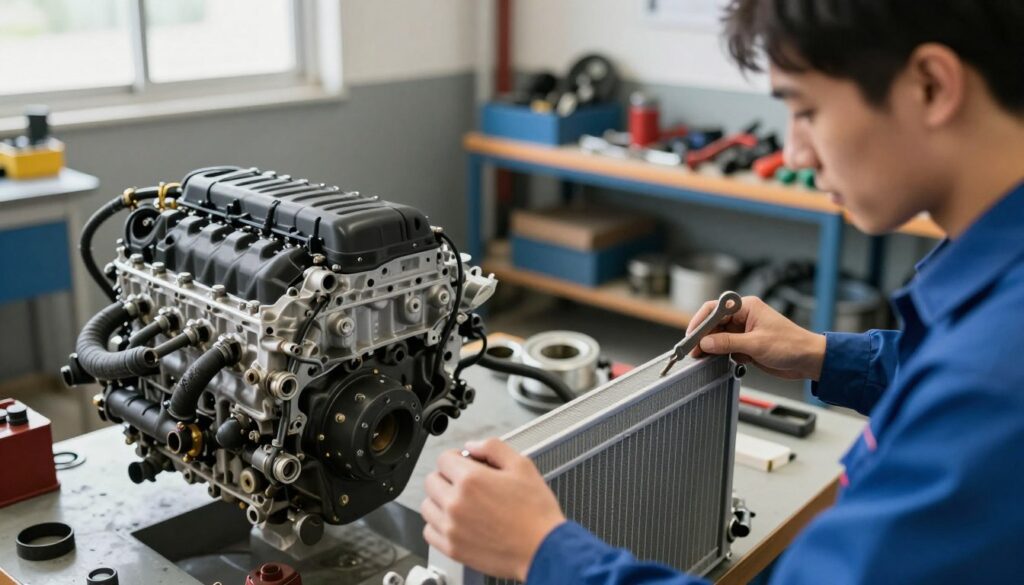
Regular inspections are essential for your car’s long life. Always check your radiator for debris and make sure your thermostat works right during oil changes.
These steps help catch problems early. Proactive care is cheaper than emergency services.
How to Keep Coolant in Good Condition
Good engine cooling system maintenance is more than just adding coolant. You should also do a full coolant flush as recommended by your car’s maker. This removes sediment and stops corrosion.
It’s important to use the right coolant for your engine. The wrong mix can cause sludge, which blocks heat dissipation.
Monitoring Temperature Gauges
Your dashboard tells you important things you shouldn’t ignore. Make it a habit to check your temperature gauge while driving.
If the needle gets close to red, act fast. Staying alert lets you stop safely before damage happens.
Understanding Engine Overheating Causes
Looking into what causes engine overheating reveals a complex system under pressure. Vehicles need a balance of fluids and parts to run smoothly. When this balance is off, the engine can overheat.
Common Causes of Overheating
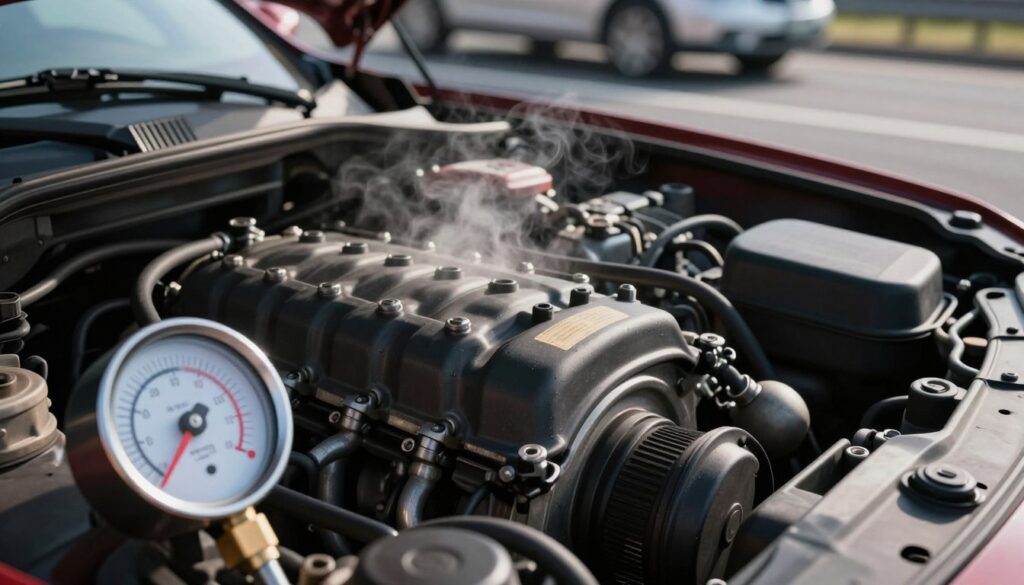
Most overheating issues come from cooling system failures. A leak in a hose or a failing radiator can cause Engine Overheating. Stuck thermostats or water pumps that don’t work right are also common problems.
“An ounce of prevention is worth a pound of cure when it comes to the complex machinery under your hood.”
Role of the Cooling System
The cooling system is vital for your engine. It uses coolant and water to cool the engine and send heat to the radiator. The water pump keeps the fluid moving, and the thermostat controls the flow based on temperature.
If these parts fail, the engine gets too hot. This can damage metal parts and cause lasting harm. Regular checks are key to keeping these parts working well.
| Component | Primary Function | Failure Symptom |
|---|---|---|
| Radiator | Dissipates heat | Visible coolant leaks |
| Thermostat | Regulates flow | Engine runs too hot |
| Water Pump | Circulates coolant | Whining or grinding noise |
How Driving Habits Impact Engine Temperature
Your driving style affects the cooling system’s workload. Heavy towing, driving in traffic, or idling too long can overheat the engine. These actions make the engine work harder than it can handle.
By being aware of these factors, you can drive smarter. Regular maintenance and smart driving can prevent engine overheating. Knowing what causes engine overheating helps you take better care of your car.
Dealing with a Dead Battery After Overheating
After your car overheats, you might find yourself with a dead battery. This can happen because the engine was running for a long time while waiting for it to cool down. The alternator might not have charged the battery well, causing it to lose all power.
Knowing When to Jumpstart
First, check if you really need to jumpstart your car. If the engine cranks slowly or makes a clicking sound, a jumpstart might work. But, if it’s completely silent or shows signs of damage, don’t try to start it.
Trying to start a damaged engine can cause serious harm. If you think the engine is badly damaged from overheating, it’s best to avoid starting it. Always choose the long-term health of your car over a quick fix.
Safety Tips for Jumpstarting a Car
When jumpstarting a car, safety is key. Make sure the engine bay is completely cool before touching any cables. Connecting cables to a hot engine can be dangerous and might damage electrical parts.
Here are the essential steps for a safe jumpstart:
- Make sure both cars are turned off before connecting the cables.
- Connect the positive (red) cable to the positive terminal of the dead battery first.
- Attach the negative (black) cable to a clean, unpainted metal surface on the engine block of the dead car.
- Start the donor vehicle and let it run for a few minutes before trying to start your car.
Finding Help If Your Battery Fails
If a jumpstart doesn’t work, or you’re not sure what to do, call for professional roadside assistance. They can check your battery and decide if it needs a charge or a replacement.
If you’re unsure or feel unsafe, don’t hesitate to call your insurance or a local towing service. They can help you safely get back on the road. Relying on experts ensures you’re fixing the real problem, not just the symptoms.
Assessing Vehicle Damage
After the danger of an overheating engine has passed, we need to check the vehicle’s long-term health. High temperatures can cause hidden stress on metal parts that aren’t easy to spot right away.
Signs of Heat Damage
When an engine gets too hot, parts can expand and get damaged. Look out for warped cylinder heads or a cracked engine block if the heat was extreme.
Other signs include a sweet smell of coolant inside the car or white smoke from the exhaust. These often mean the head gasket has failed, letting coolant into the engine.
Knowing When to Get a Mechanic Involved
Some minor issues can be fixed, but some signs need a mechanic right away. If your car is hard to start, idles roughly, or keeps losing coolant without an obvious leak, stop driving it.
A mechanic has the right tools to find internal problems. They can use a block test kit or a compression tester. Their help is key to avoid more catastrophic damage by not driving a damaged car.
Keeping Records of Overheating Events
It’s a good idea to keep a detailed log of every time your engine overheats. Write down the date, the situation, and any warning lights. This helps your mechanic find the problem faster and might save you money.
Keeping a log is a proactive habit that helps keep your car reliable for a long time.
| Damage Type | Common Symptom | Severity Level |
|---|---|---|
| Minor | Loose hose clamp | Low |
| Moderate | Coolant leak | Medium |
| Severe | Warped cylinder head | High |
| Critical | Cracked engine block | Extreme |
Costs Involved in Engine Repairs
Knowing the cost of cooling system failures is key for every driver. When your car overheats, damage can range from small issues to engine failure. Finding good engine overheating repair solutions helps manage these unexpected costs.
Typical Repair Costs for Overheating
Repair costs vary based on the heat damage. Small problems like a bad thermostat or a leaky hose are cheaper to fix. But, serious damage needs more work and parts.
Want to know more about these costs? Check out this guide on what it costs to fix an overheated. Here are some common repair prices:
- Thermostat replacement: $150 – $300
- Radiator repair or replacement: $400 – $900
- Water pump replacement: $500 – $1,200
- Full engine replacement: $3,000 – $7,000+
Insurance Considerations
Many wonder if insurance covers overheating damage. Standard policies usually don’t cover wear and tear or maintenance issues. But, if an accident caused the overheating, insurance might help with repairs.
Always check your policy to see if it covers mechanical breakdowns. This optional coverage can help with big repair bills. Without it, you’ll have to pay the full cost yourself.
Long-term Effects on Vehicle Value
An overheated engine can lower your car’s value. Buyers are cautious of cars with overheating history, fearing cooling system or engine problems. Even after repairs, doubts about reliability may remain.
| Factor | Impact on Value | Risk Level |
|---|---|---|
| Minor Overheating | Low | Minimal |
| Head Gasket Failure | High | Significant |
| Full Engine Seizure | Very High | Critical |
Keeping service records up to date helps prove your car was fixed right. Being open with buyers can help keep your car’s value higher.
Conclusion: Your Takeaway for a Smooth Recovery
Handling a car in a thermal emergency needs focus and patience. Learning to stay calm helps you find a safe place. This is the first step to mastering these situations.
Essential Strategies for Driver Confidence
Protecting your engine is key. Keep up with maintenance and have an emergency kit ready. Regular checks on your cooling system prevent sudden breakdowns.
If trouble strikes, knowing what to do can help you handle it well.
Building Long-Term Reliability
Regular service keeps your car reliable. See every maintenance visit as an investment in your safety. Being informed and ready turns road stress into a manageable task.
Consistent care leads to years of worry-free travel.
Costs Involved in Engine Repairs
Common Symptoms to Watch For
Being aware is key. You might notice your car not performing well or a sweet smell inside. This could mean your Prestone antifreeze is leaking.
Seeing steam or white smoke coming from the hood is a clear sign. It means your cooling system has failed.
Dashboard Warning Lights
Keep an eye on your dashboard. Cars from Ford or Toyota have a temperature gauge or a red “H” light. If the needle goes into the red or the Check Engine light comes on, your engine is too hot.
Unusual Sounds and Smells
Listen for thumping or “clunking” sounds. This could mean a cooling system blockage or a failing ACDelco water pump. A burning rubber smell might mean a belt, like a Gates serpentine belt, is slipping or melting.
Safely Pulling Over to the Shoulder
When your engine overheats, safety comes first. Signal and move to the right shoulder of the highway. Avoid sudden braking to prevent losing power steering and braking.
Turning Off the Engine
Once you’re stopped, turn off the engine. This stops the heat generation. Leave your hazard lights on to stay visible.
Assessing the Situation
Before getting out, check your surroundings for traffic. Stay back from the hood until the steam clears. Don’t investigate until it’s safe.
Why Waiting Is Important
Patience is important. The pressure in a Behr radiator is high. Opening it when hot can cause a violent eruption of boiling fluid, leading to burns. Waiting lets the pressure normalize.
How Long to Wait
Wait at least 15 to 30 minutes. This time usually lets the engine cool enough for a safe inspection under the hood.
Signs the Engine Has Cooled
Look for the temperature gauge to return to the center or lower. Also, check for the absence of “ticking” sounds, which happen as metal parts contract during cooling.
Looking for Leaks or Smoke
After the engine cools, look for puddles of green, orange, or pink fluid. Also, check for “wet” spots on the engine block that might indicate a leak.
Inspecting Coolant Levels
First, check the coolant reservoir tank. If it’s empty, the system can’t regulate temperature. Only touch the radiator cap when the engine is completely cold, using a thick rag for protection.
Examining Belts and Hoses
Squeeze the radiator hoses; they should be firm but pliable. If they’re brittle, cracked, or bulging, they need to be replaced. Also, check that the drive belts are intact and properly tensioned.
Understanding Coolant Types
Using the wrong coolant can cause chemical reactions and corrosion. Always check your owner’s manual to see if your vehicle needs Zerex G05 or a specific Dex-Cool formula. Mixing incompatible types can lead to “sludging.”
How to Add Coolant Properly
If adding fluid is necessary, use a 50/50 mixture of coolant and distilled water. Pour slowly into the reservoir using a clean funnel to avoid spills on hot engine parts, which could create smoke or odors.
When to Seek Professional Help
If the coolant level drops immediately after refilling, this suggests a major leak or a blown head gasket. In these cases, driving further will cause catastrophic engine failure, and you must call for a tow.
When DIY Solutions Aren’t Enough
If the engine continues to overheat after adding fluid, or if a belt has snapped, roadside repairs are no longer feasible. Safety dictates that we do not attempt complex mechanical work on a busy highway shoulder.
Choosing the Right Service Provider
Contact a reputable provider like AAA or your insurance carrier’s roadside department. Requesting a flatbed tow truck is often the safest way to transport a vehicle with cooling issues to avoid further mechanical strain.
What to Expect from Roadside Assistance
When the technician arrives, provide a clear history of the event. Expect them to verify the vehicle’s location and confirm where you would like the car towed, such as a local Firestone Complete Auto Care or a brand-specific dealership.
Regular Maintenance Checks
Most overheating events are preventable. Routine inspections of your water pump and thermostat during oil changes can catch wear before it leads to a breakdown.
How to Keep Coolant in Good Condition
Advise a professional coolant flush and fill every 30,000 to 50,000 miles. This removes rust and scale that can clog the narrow passages of your radiator and heater core.
Monitoring Temperature Gauges
Part of our proactive driving habit is scanning the dashboard every few minutes. Detecting a rising needle early allows us to exit the highway before the engine reaches a critical temperature.
Common Causes of Overheating
In our experience, the most frequent culprits include a leaking radiator, a stuck thermostat, or a failed cooling fan. Even a loose or dirty radiator cap can prevent the system from maintaining the pressure needed to keep the engine cool.
Role of the Cooling System
We view the cooling system as the engine’s life support. Components like the radiator, water pump, and cooling fans work in a closed loop to transfer heat away from the metal components and dissipate it into the air.
How Driving Habits Impact Engine Temperature
Heavy towing or prolonged idling in extreme summer heat can overwhelm even a healthy cooling system. Understanding your vehicle’s limits helps prevent thermal overload.
Knowing When to Jumpstart
If the engine was running hot for an extended period, the battery might have drained. We only attempt to jumpstart once the engine bay has fully cooled to avoid igniting any residual fumes or spilled fluids.
Safety Tips for Jumpstarting a Car
Use high-quality jumper cables and connect them in the proper sequence—positive to positive, negative to a grounded metal surface. Using a portable jump starter like a NOCO Boost is a safer, more convenient alternative on the highway.
Finding Help If Your Battery Fails
If the car won’t start after a jump, the battery may have suffered internal damage from the heat. We then rely on professional services to provide a replacement battery from brands like DieHard or Interstate Batteries.
Signs of Heat Damage
Look for a milky appearance in the engine oil, which indicates that coolant has leaked into the lubrication system—a classic sign of a warped head or a cracked block. Discolored spark plugs are another red flag.
Knowing When to Get a Mechanic Involved
If the car exhibits white exhaust smoke or a persistent loss of power, take it to a certified technician immediately. Professionals at shops like Pep Boys can perform a “leak-down” test to confirm internal damage.
Keeping Records of Overheating Events
Keep a logbook of every incident, including the date, ambient temperature, and symptoms. This data is invaluable for your mechanic when diagnosing intermittent cooling issues.
Typical Repair Costs for Overheating
Replacing a simple thermostat might cost under 0, while a new radiator can range from 0 to 0. If the engine is “cooked,” a full replacement can exceed ,000 depending on the vehicle make.
Insurance Considerations
While standard maintenance isn’t covered, some insurance policies may cover engine damage if the overheating was caused by a specific covered peril, such as a collision or road debris puncturing the radiator.
Long-term Effects on Vehicle Value
A history of severe overheating can diminish a car’s resale value. Proper documentation of professional repairs helps reassure future buyers that the vehicle has been restored to factory standards.

Hi! I’m Moheen Iftikhar, the person behind «CarCruisei». I’m deeply interested in the automotive world, from new car trends and advanced vehicle technology to useful driving advice. On this platform, I publish informative car reviews, expert insights, and practical tips to keep every car enthusiast informed and inspired.