

Car AC Repair: Why is My Car AC Blowing Hot Air All of a Sudden?
Stepping into your car on a hot summer day can be a letdown. You expect cool air, but get warm instead. This problem often seems sudden, but it usually starts with small issues over time.
Refrigerant leaks are hard to spot because they turn into gas. You might not see a leak, but the cooling stops. Finding the real problem is key to fixing it right.
We’re here to make your car cool again and keep you safe. If your car is overheating, fix it fast to avoid more damage. Keeping your car in good shape is important during the hot months.
Key Takeaways
- Most cooling system failures result from gradual wear, not sudden breaks.
- Refrigerant leaks are hard to find because they turn into gas.
- Getting a pro to check your car is the best way to find the problem.
- Regular checks can stop big problems before they start.
- Fixing small issues early can save you money later.
Common Reasons for Hot Air from Your AC
When your car’s AC starts blowing hot air, it can ruin a nice summer drive. This usually means the cooling system has broken down. Finding the problem early can save you from expensive fixes later.
Refrigerant Leaks
A common reason for hot air is a refrigerant leak. This chemical is key for cooling your car. If a hose or seal cracks, the system can’t work right.
Just like checking other important fluids, like transmission fluid, it’s vital to monitor your AC’s refrigerant. A low level means the evaporator can’t cool the air. If you think there’s a leak, a pro needs to find it.
Faulty Compressor
The compressor is the heart of your AC system. It pushes the refrigerant through the system. If it fails, your car can’t cool down, making it hot inside.
Compressor problems often come from wear or electrical issues. If the clutch doesn’t work, the system stops. A technician should check it if you hear strange noises or no cooling.
Clogged Condenser
The condenser is at the front of your car, between the grill and radiator. It cools the refrigerant using airflow. But it’s easy for debris like leaves and dirt to clog it up.
A clogged condenser can’t cool the refrigerant, making your car hot. Cleaning the front grill regularly helps keep it clear. This simple step can protect your AC system.
Signs Your AC Needs Immediate Attention
Your car often tells you it needs help before it breaks down completely. By paying attention to small changes, we can fix issues before they get worse. This way, we can keep our cars cool and comfortable on the road.

“An ounce of prevention is worth a pound of cure when it comes to automotive maintenance.”
Unusual Noises
When you turn on the AC, it should be quiet. But if you hear squeaking, grinding, or rattling noises from the passenger side, it’s a sign of trouble. These sounds usually mean the blower motor is failing and can’t spin right.
Poor Airflow
Weak air coming out of the vents means your system needs a check-up. If the air barely comes out, your cabin air filter might be clogged. A clogged filter can cause the AC to blow hot air because it can’t move air through the evaporator.
Foul Odors
A musty or damp smell when you turn on the AC is bad news. It usually means mold or mildew on the evaporator core because of trapped moisture. We should fix these smells right away to avoid bad air quality and keep the system working well.
How Refrigerant Levels Affect AC Performance
The air conditioning system in your car needs a special chemical to work. This chemical is key for keeping your car cool when it’s hot outside. When you need Car AC Repair, checking this chemical is the first step.
Understanding Refrigerants
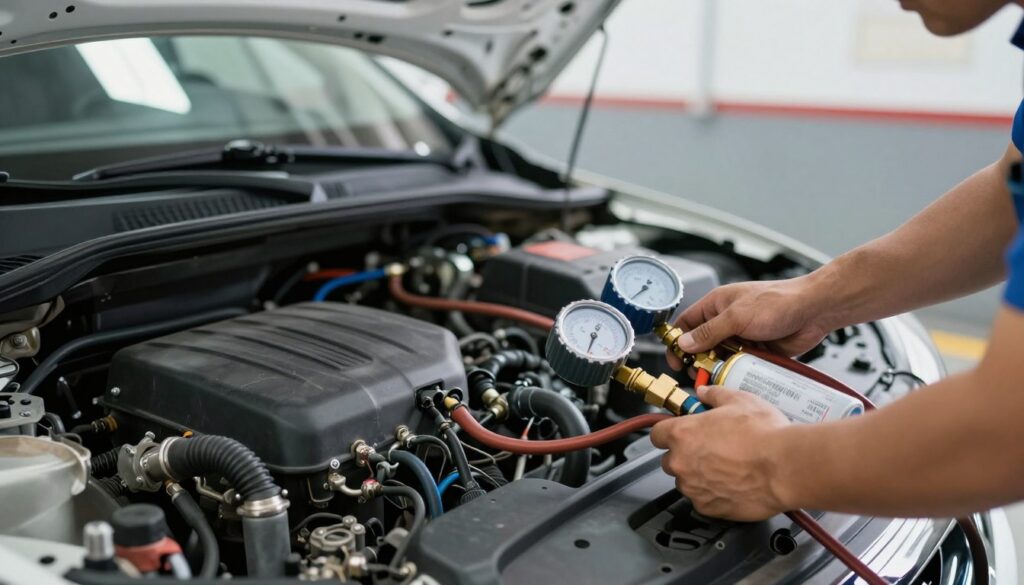
Refrigerant is a heat-absorbing chemical that changes from liquid to gas. It moves through your car, taking heat and moisture from the air. This is why your vents blow cold air instead of hot.
The system needs a closed loop to work well. If this loop breaks, cooling stops fast. Keeping it maintained helps your AC last longer.
Symptoms of Low Refrigerant
A big sign you need car AC services is when your air isn’t cool. If your vents only blow warm air, it might mean you have a refrigerant leak. This usually happens in the hoses or connections.
Not fixing this can hurt the compressor more. We suggest fixing it quickly to avoid bigger problems. Quick action is important for your AC’s health.
Recharging Refrigerant
When fixing car AC, just adding more refrigerant isn’t enough. A leak is usually the cause, and it needs a pro to fix. A technician will find and fix the leak before adding more refrigerant.
Don’t try to fix it yourself. Improper handling can harm your AC’s parts. Car AC services by experts ensure your system works right. They give you peace of mind and keep your car reliable.
The Role of the AC Compressor
When your car AC not working, the compressor is usually to blame. It’s the core of the cooling system. It pushes and moves refrigerant to cool your car.
Without a working compressor, refrigerant doesn’t move. So, your vents just blow warm air, no matter what you set the climate control to. Regular use of your AC is key, to keep seals moist and the unit running smoothly.
What Happens When the Compressor Fails?
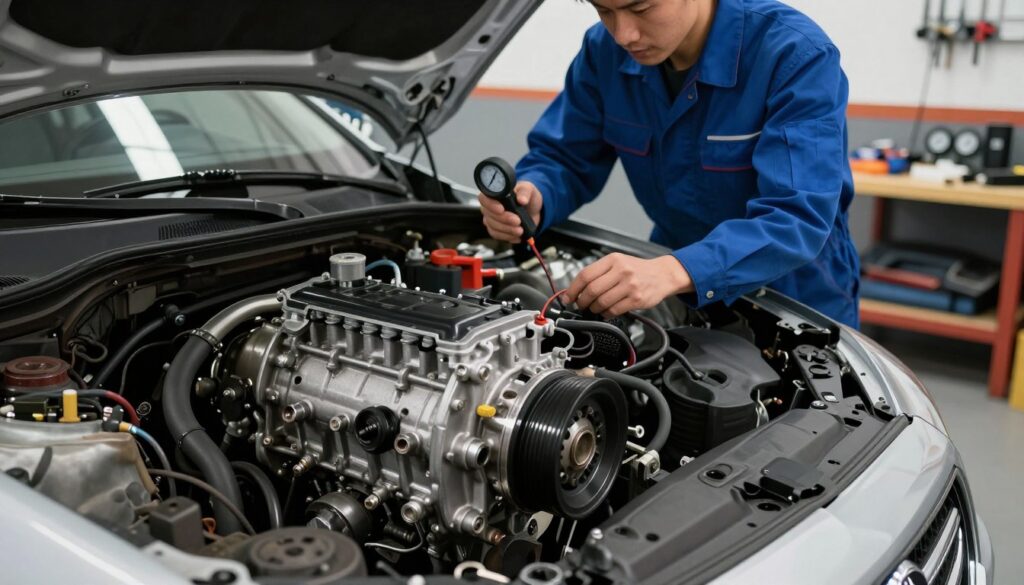
A compressor failure stops the cooling. The system can’t move refrigerant anymore. This usually happens after months of not using it, as parts can stick due to lack of oil.
If your AC blows cold air briefly then warms up, it’s a sign of trouble. This could mean the compressor is struggling. Sometimes, it might even light up the dashboard warning lights. You might need to learn how to clear check engine light without a scanner if it affects your engine sensors.
Symptoms of a Faulty Compressor
Spotting a failing compressor early can save you money. A common sign is an unusual grinding or squealing noise when you turn on the AC. This usually means a bearing or clutch is failing.
Doing car AC diagnostics right is key when you hear these noises or if your AC doesn’t cool. If the compressor clutch doesn’t work, your AC won’t turn on. Your car will stay hot, even on cool days.
Importance of Regular Maintenance
We think a well-kept cooling system is key to a great drive. Regular car AC maintenance helps your car’s climate control last longer. It also keeps you from getting stuck with a broken AC in the summer.
Filter Changes
Changing your cabin air filter is a simple but important task. We suggest doing it at least once a year, or every 12,000 to 15,000 miles.
By replacing this filter, you stop dust, pollen, and road dirt from clogging your air. A clean filter keeps your system running smoothly and saves your blower motor.
System Inspections
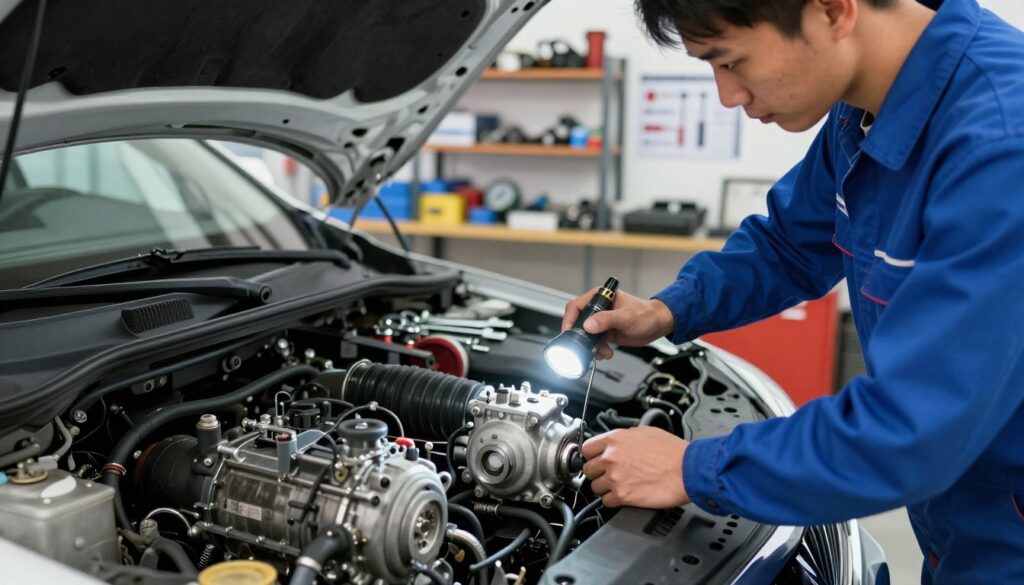
Regular system checks are also a must for keeping your car reliable. Our techs can spot small leaks or worn parts early. This way, we avoid major, costly repairs.
With regular car AC maintenance, we keep an eye on refrigerant levels and check hoses and seals. Sticking to a service schedule keeps your car comfy and reliable all year.
DIY Troubleshooting Tips
If your car AC is blowing hot air, start with some basic car AC diagnostics. Look at the most accessible parts first. This can help you figure out if you can fix it yourself or if you need a pro.

Checking Fuses and Relays
Electrical problems often cause a car AC not working. A blown fuse or a bad relay can stop the compressor. This is even if the rest of the system is fine.
To check these parts, follow these steps:
- Find your vehicle’s fuse box, usually under the dashboard or in the engine bay.
- Look in your owner’s manual to find the AC or climate control fuse.
- Check the fuse for a broken wire inside the plastic casing.
- If the wire is broken, replace the fuse with one of the same amperage rating.
Inspecting Hoses and Belts
Wear and tear on engine parts can also cause cooling issues. Fixing car AC sometimes means looking at the parts that make it work.
Check these areas for damage:
- Drive Belts: Look for cracks, fraying, or loose tension on the belt that powers the AC compressor.
- AC Hoses: Check for leaks, oily residue, or brittle rubber that might mean refrigerant is escaping.
- Connections: Make sure all visible plugs and wires connected to the compressor are tight and corrosion-free.
Be very careful when working near the engine. Never try to open or disconnect pressurized refrigerant lines. This can hurt you badly and is against the law.
If these simple checks don’t fix your AC, the problem might be deeper. In that case, it’s best to talk to our professional service team. They can help avoid more damage to your car.
When to Seek Professional Help
Some car problems can be fixed at home, but others need a pro. Trying to fix complex issues without the right skills can make things worse. If you’re having trouble with Car AC Repair, it’s best to get help from someone with the right tools.
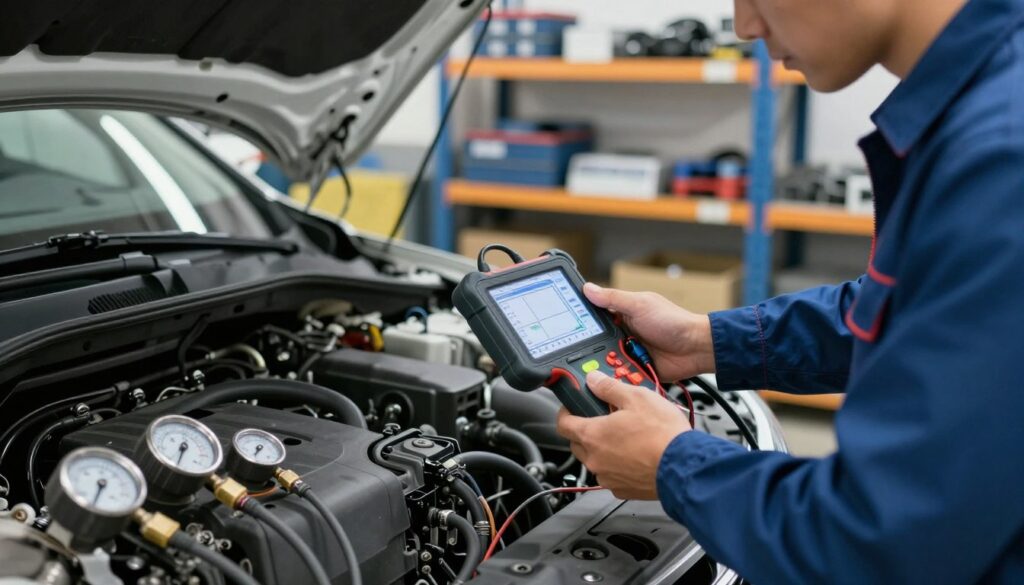
Signs You Need a Mechanic
If simple fixes don’t work, it’s time to call a mechanic. For example, if your AC keeps losing pressure, there’s likely a hidden leak. Shops use special tools to find these leaks, which you can’t see.
Big electrical problems or compressor issues need advanced car AC diagnostics. These systems are under a lot of pressure and use chemicals that need careful handling. If you hear strange noises or smell burning, turn off the AC to avoid serious damage.
Finding a Qualified Technician
Finding the right person for your car AC services is key. Look for a shop with certified techs who know the latest car systems. A good car AC specialist will explain what repairs are needed before starting.
Trusting your vehicle to a professional means you get a correct diagnosis right away. We think clear talk is the base of a good repair job. By picking a skilled expert, your car will cool down efficiently and safely again.
Understanding AC System Components
Your car’s air conditioning system has a precise dance of components to cool the air. Many drivers just turn a dial, but inside, parts work together perfectly. If you’re unsure about these parts, a car AC specialist can help with your vehicle model.
The Role of the Evaporator
The evaporator is key in cooling your car’s air. Warm air from inside meets cold coils, and the evaporator absorbs the heat. This makes the air cooler before it’s blown back in.
But, if the evaporator gets clogged, it can’t cool the air well. Keeping it clean is vital for a cool car in summer.
Function of the Expansion Valve
The expansion valve controls the refrigerant flow. It makes sure the refrigerant expands and cools down in the evaporator coils. This is essential for cooling the air.
If the expansion valve fails, it can mess up the refrigerant flow. This stops the evaporator from cooling the air. If you think there’s a problem, a car AC specialist can fix it.
Exploring Cost Factors for Repairs
When your cooling system fails, knowing the cost is as important as the repair. Budgeting for vehicle maintenance can be stressful, but understanding costs helps. This way, you can make better decisions for your vehicle’s care.
Average Repair Costs
The cost of car AC troubleshooting depends on the problem. Simple fixes, like replacing a fuse, are cheap and quick. But, complex issues like a failing compressor cost more.
Professional diagnostics are key to finding the problem. Minor repairs are cheap, but big fixes cost more in parts and labor. Always get a detailed estimate before starting any big work to avoid surprises.
Impact of Brand and Model
The make and model of your car affect repair costs. Luxury or imported cars need special parts that cost more. Also, how easy it is to get to the parts in your car can affect the repair time.
Vehicle complexity matters too. Modern cars have complex systems that need special tools and skills. Always talk to a qualified technician who knows your car to ensure the job is done right.
Seasonal Considerations for AC Performance
Proactive car AC maintenance keeps your cabin comfy, no matter the weather. Your car’s AC system faces unique challenges each season. Adjusting your habits helps keep it running well for years.
Preparing Your AC for Summer
When it gets hot, make sure your AC is up to the task. A car AC tune-up before summer is a must. It spots leaks and pressure problems early, avoiding summer failures.
Technicians check refrigerant and clean the condenser during this tune-up. A clean system works better, saving fuel and engine stress.
Winter Storage Tips
Many think AC care stops in winter. But, consistent care is key, even when using the heater. Run your AC a few minutes every couple of weeks.
This keeps seals lubricated and refrigerant oil moving. It prepares your AC for warmer weather. Regular car AC maintenance in winter prevents common problems.
| Season | Primary Focus | Action Item |
|---|---|---|
| Spring | System Readiness | Professional Inspection |
| Summer | Peak Performance | Monitor Airflow |
| Autumn | System Health | Check for Leaks |
| Winter | Component Lubrication | Run AC Periodically |
The Impact of Ambient Temperature
When it gets hot, your car’s AC system really works hard. Our comfort depends on how well it cools us down. In the heat, the system needs to work harder to keep us cool.
How Heat Affects AC Efficiency
High temperatures increase the pressure in your cooling system. This makes the compressor work harder. Small refrigerant leaks become more noticeable and cause problems.
When it’s really hot, a car AC not working is common. The system can’t cool the air well because it’s too hot outside. This makes the air from the vents not as cool as you’d like.
Performance in Extreme Weather
Extreme weather tests your car’s limits, revealing hidden weaknesses. In the heat, even small issues like a dirty filter or low refrigerant become clear. You might find your car AC not working because it’s being pushed too hard.
It’s important to manage your expectations in the heat. If your system fails, it’s likely under too much stress. Regular maintenance helps your cooling system handle summer’s heat.
| Temperature Range | System Load | Expected Performance |
|---|---|---|
| 60°F – 75°F | Low | Optimal Cooling |
| 76°F – 90°F | Moderate | Stable Operation |
| 91°F – 105°F+ | High | Reduced Efficiency |
Conclusion: Keeping Your Car AC Efficient
Keeping your car cool is key for a comfortable drive. We think it’s smart to fix small problems early. This way, you won’t get stuck with a hot car on long trips.
Watch for any changes in how your AC works. If it’s not cooling as well, it might need fixing before it breaks down completely.
Prioritizing Routine Inspections
Regular checks are important for your AC. Technicians can find issues like leaks or worn belts. This keeps your car cool and comfortable.
Investing in Professional Expertise
Good repairs give you confidence in your car. For big jobs like refrigerant recharges or compressor swaps, use a certified AC specialist. They make sure your AC works right for a long time.
FAQ
Why is my car AC blowing hot air all of a sudden?
Hot air from your AC can be due to a refrigerant leak, a faulty compressor, or an electrical issue. Our team can diagnose and fix these problems to get your AC working again.
How often should I seek professional car AC maintenance?
We recommend a professional inspection every year, in the spring. Regular maintenance keeps your AC filters clean and refrigerant levels right before summer.
Can I just add more refrigerant myself to fix the cooling?
Adding refrigerant yourself is not a fix. Our team fixes the underlying leak and then recharges your AC professionally. This ensures it’s sealed and safe.
What are the signs that I need car AC repair immediately?
Look for unusual noises, weak airflow, or strange smells. Ignoring these signs can lead to expensive repairs.
Is it expensive to fix a car AC system?
Repair costs vary. Simple fixes are affordable, but major repairs like a new compressor cost more. We provide clear estimates.
Why does my car AC work better when I am driving on the highway?
This often means a problem with your cooling fans or a clogged condenser. Driving fast helps cool the refrigerant. If you notice this, you need professional help.

Hi! I’m Moheen Iftikhar, the person behind «CarCruisei». I’m deeply interested in the automotive world, from new car trends and advanced vehicle technology to useful driving advice. On this platform, I publish informative car reviews, expert insights, and practical tips to keep every car enthusiast informed and inspired.