


Toyota Camry vs Honda Accord Midsize Sedan Head to Head Comparison
For decades, the U.S. car market has seen a legendary rivalry. When looking for the perfect family car, many turn to the Toyota Camry vs Honda Accord. These two models are the top choices for reliability, comfort, and daily use.
Choosing between these iconic cars is not easy. Both brands have worked hard to make every drive smooth and efficient. If you’re looking for more options, check out our guide on top-rated sedans and most fuel-efficient cars.
In this head to head comparison, we dive into the history and modern performance of these cars. We aim to help you make a smart choice for your next car.
Key Takeaways
- Both vehicles are the standard for quality in the American car market.
- Long-term reliability is a key selling point for both brands.
- Each model has its own strengths in fuel efficiency and comfort.
- These cars hold their value well, ranking high in resale value.
- Our analysis helps you find the best fit for your driving needs.
Overview of Midsize Sedans
Even though crossovers and SUVs are popular, midsize sedans are a vital choice for many Americans. They mix efficiency, comfort, and handling well. These cars are key for daily commutes, helping families and professionals.
Importance of Midsize Sedans in the Market
Midsize sedans are loved for their practical nature. Car makers keep investing in them because they offer great comfort and fuel economy. Despite the trend towards bigger vehicles, sedans are always in demand.
These cars offer a unique driving experience. They are designed to be aerodynamic and light, making them fuel-efficient. For many, sedans are the ultimate expression of value and reliability.
Key Competitors in the Segment
The Toyota Camry vs Honda Accord rivalry is a big deal in the industry. These two have set the standard for quality and innovation for years. But, they’re not the only ones vying for your attention.
In a detailed midsize sedan comparison, we must also look at other strong contenders. These cars offer unique features that appeal to different drivers:
- Hyundai Sonata: Known for its bold styling and extensive warranty coverage.
- Nissan Altima: Offers unique engine technology and comfortable seating.
- Kia K5: Provides a sporty aesthetic and high-tech interior features.
- Subaru Legacy: Stands out by providing standard all-wheel drive across all trim levels.
Each competitor pushes the leaders to keep improving. This competition means better technology, safety, and quality for everyone.
History of the Toyota Camry
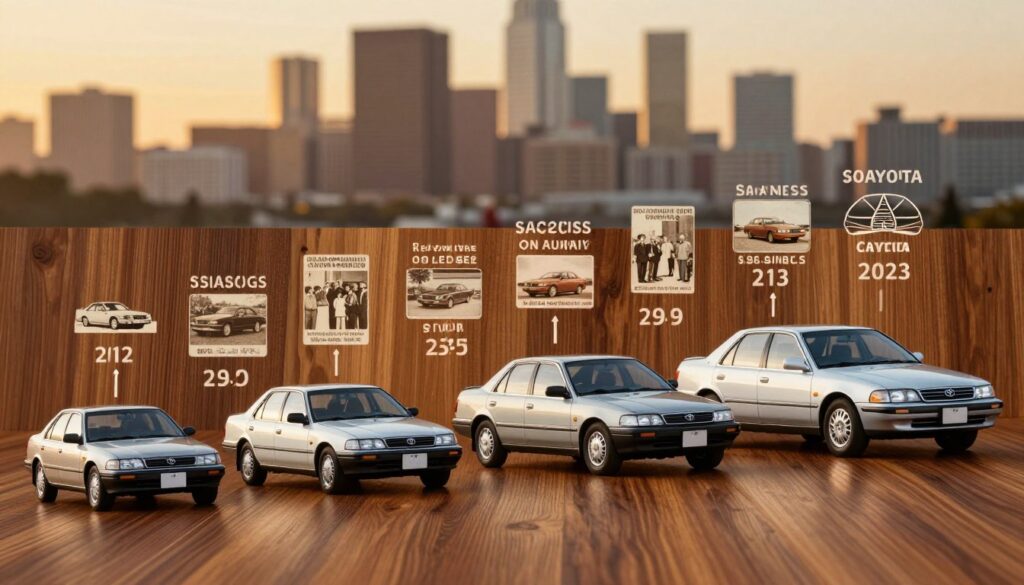
The Toyota Camry has greatly influenced the midsize sedan market over the years. It has grown from a simple compact car to a global benchmark for quality and reliability. Its evolution shows Toyota’s dedication to meeting driver needs in the U.S.
Significant Generational Changes
The Camry started as a compact car, focusing on efficiency and practicality. Toyota then expanded it to fit families better, moving it to the midsize segment. This change brought more space and a smoother ride.
Each new Camry generation brought big improvements in its chassis and engine. It transformed from a basic car to a sophisticated machine that balances performance and comfort. These updates kept it competitive despite tough competition.
Most Notable Features Over the Years
Toyota has always focused on safety and durability with the Camry. Early models were known for their reliability, while later ones added advanced safety features. These efforts made it a top seller for many years.
Design improvements have also been key to the Camry’s popularity. Toyota has made the car more aerodynamic and added modern tech, keeping the driving experience exciting. Below is a table showing major milestones in the Camry’s evolution.
| Generation | Primary Focus | Key Advancement |
|---|---|---|
| Early Years | Reliability | Introduction of fuel-efficient engines |
| Mid-Era | Comfort | Increased cabin space and refinement |
| Modern Era | Safety | Advanced driver-assist technology |
| Current | Performance | Hybrid efficiency and handling dynamics |
History of the Honda Accord
We explore the rich history of the Honda Accord to see why it’s loved in the midsize sedan market. It started as a reliable and thoughtful engineering benchmark. Honda made sure it’s both fuel-efficient and fun to drive, making it a favorite in the US.

Evolution Through the Decades
The Accord first hit the scene in 1976 as a compact hatchback. It was made for those who wanted to save on gas. Over time, it grew into the sleek midsize sedan we know today, with a refined cabin and more room inside.
Honda kept its design consistent, winning over fans. The brand kept up with the competition, making the Accord a great choice for daily drives. It’s known for its stable handling and comfort, making it a top pick for long trips.
Milestones in Accord Development
The Accord has reached many engineering milestones over the years. It introduced CVCC engine tech and advanced safety features, showing Honda’s commitment to technological innovation. These steps have made it a leader in car development.
Here are some key moments in the Accord’s development:
| Era | Key Focus | Market Impact |
|---|---|---|
| 1976–1981 | Efficiency | Established brand presence |
| 1982–1989 | Domestic Production | First Japanese car built in the US |
| 1990–2002 | Size Expansion | Transition to true midsize status |
| 2003–Present | Advanced Tech | Leadership in safety and performance |
These milestones show how Honda has kept improving the Accord. It’s all about long-term reliability and features that put the driver first. The Accord sets the bar for what a modern sedan should be.
Performance Metrics: Camry vs Accord
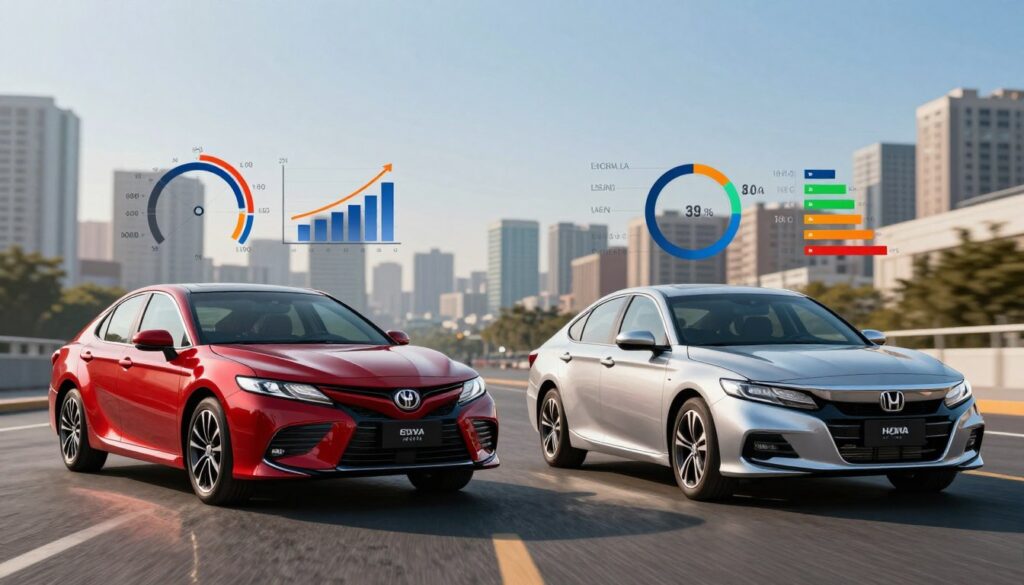
Choosing between the Toyota Camry and the Honda Accord often comes down to a detailed performance comparison of their available powertrains. Both manufacturers have refined their engines over decades to provide a balance of responsiveness and reliability for the average driver. Whether you prioritize highway passing power or smooth city acceleration, understanding these mechanical differences is essential.
Engine Options Comparison
The Toyota Camry typically offers a robust lineup, often featuring a naturally aspirated four-cylinder engine alongside a powerful V6 option in older models or a highly efficient hybrid system. In contrast, the Honda Accord has shifted heavily toward turbocharged four-cylinder engines, which provide impressive torque at lower RPMs. This difference in philosophy changes how each car feels when you press the accelerator.
If you are debating whether a sedan fits your lifestyle better than a sedan vs hatchback configuration, the engine’s power delivery plays a major role. The Accord’s turbochargers offer a punchy feel that many urban drivers enjoy during quick maneuvers. The Camry’s traditional power delivery is often praised for its linear and predictable nature.
Fuel Efficiency Ratings
When conducting a fuel efficiency comparison, both vehicles consistently rank at the top of their class. Modern engineering allows these sedans to achieve remarkable miles per gallon, even with standard gasoline engines. Hybrid variants for both models push these numbers even higher, making them excellent choices for long-distance commuters.
Real-world results often mirror EPA estimates, though driving habits significantly influence your actual savings at the pump. We find that the Accord’s CVT transmission helps maintain optimal engine speeds, while the Camry’s sophisticated hybrid technology remains a benchmark for the industry. The following table highlights the typical performance and efficiency trade-offs you might encounter.
| Feature | Toyota Camry (Base) | Honda Accord (Base) |
|---|---|---|
| Engine Type | 2.5L 4-Cylinder | 1.5L Turbo 4-Cylinder |
| Horsepower | ~203 hp | ~192 hp |
| Combined MPG | ~32 MPG | ~32 MPG |
| Transmission | 8-Speed Automatic | CVT |
Interior Space and Comfort
The true character of a vehicle shows when you step inside. The Toyota Camry and Honda Accord have both improved a lot. They offer refined environments for today’s drivers. Their interior designs are different, but both aim for a premium feel.
Cabin Design and Layout
The Toyota Camry has a cockpit focused on the driver. It has intuitive control placement. The dashboard is modern, with soft-touch materials and quality stitching.
The center console is designed for easy access to important functions. This keeps the driver focused on the road.
The Honda Accord has a minimalist design. Its horizontal lines make the cabin feel wider. Premium textures and a clean layout add to its sophisticated feel.
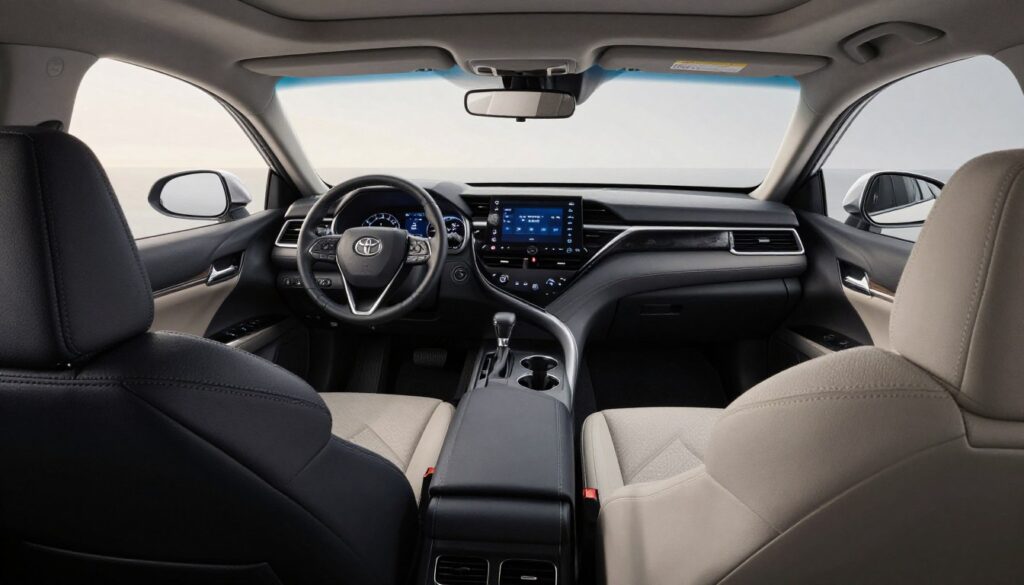
Passenger Space Comparison
Both sedans offer plenty of room for adults in the front and back seats. The Honda Accord is known for its rear legroom. This makes it great for transporting passengers.
The Toyota Camry also offers excellent headroom and supportive seats. These seats are comfortable even on long trips.
Choosing between these two depends on your preference for seat firmness and cabin design. If you’re interested in hybrid vs plug-in hybrid total costs, battery placement can affect interior space.
Cargo Capacity
Practicality is key in the midsize sedan segment. Both vehicles have impressive trunk space. The trunk openings are wide, making it easy to load bulky items.
The low lift-over height in both models makes storing heavy gear easier. This reduces the physical effort needed.
| Feature | Toyota Camry | Honda Accord |
|---|---|---|
| Front Legroom | 42.1 inches | 42.3 inches |
| Rear Legroom | 38.0 inches | 40.8 inches |
| Cargo Volume | 15.1 cubic feet | 16.7 cubic feet |
| Interior Feel | Sporty/Ergonomic | Minimalist/Spacious |
Technology and Connectivity Features
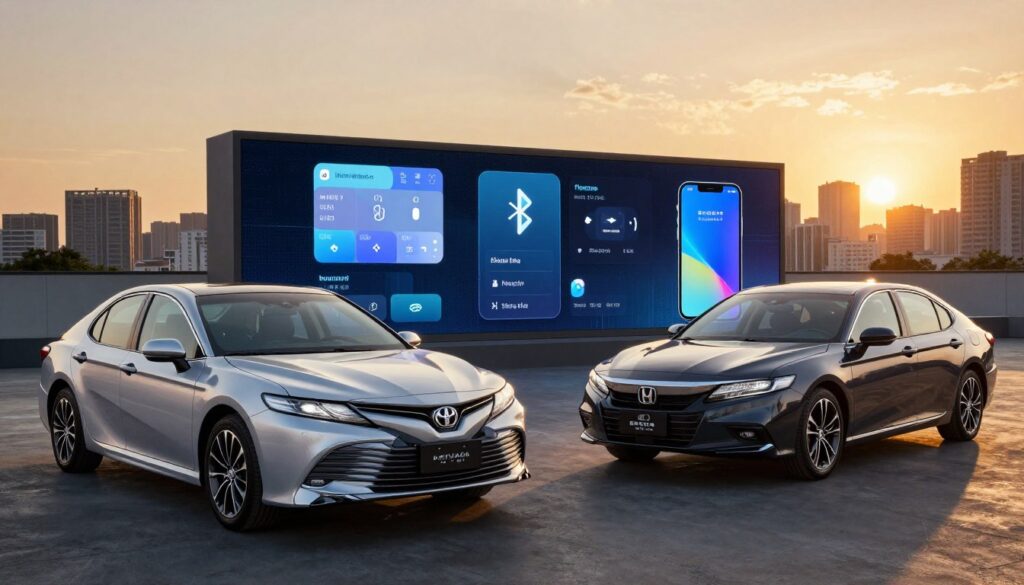
In today’s cars, the fight between Toyota Camry and Honda Accord goes beyond speed. They focus on making your drive smooth with tech. We look at how they make your car a digital hub. Our features comparison shows who wins in making your drive easy and fun.
Infotainment Systems
The heart of a car is its infotainment system. Both Toyota Camry and Honda Accord have made big improvements. The Camry has a simple layout that’s easy to use.
The Accord, on the other hand, has a sleek design with easy controls. Both systems make it quick to get to what you need. This means you can focus on driving, not the screen.
Standard and Optional Tech Offerings
More than just screens, the tech in cars is key. Both sedans have Apple CarPlay and Android Auto, which everyone wants. This shows they’re ready for the future.
Upgrades like better sound systems and wireless charging are also available. These features make driving safer and more convenient. Here’s how they compare.
| Feature Category | Toyota Camry | Honda Accord |
|---|---|---|
| Smartphone Integration | Standard Wireless | Standard Wireless |
| Display Size | Up to 12.3 inches | Up to 12.3 inches |
| Audio System | JBL Premium | Bose Premium |
| Digital Cluster | Available 12.3-inch | Available 10.2-inch |
Choosing between the Camry and Accord depends on what you like. The Camry is solid and reliable. The Accord is sleek and modern. Our features comparison shows both cars meet today’s tech needs.
Safety Ratings and Features
Knowing the safety features of your next car is key for peace of mind. When we compare features, it’s clear that Toyota Camry and Honda Accord focus on safety. They are top choices for families in the U.S.
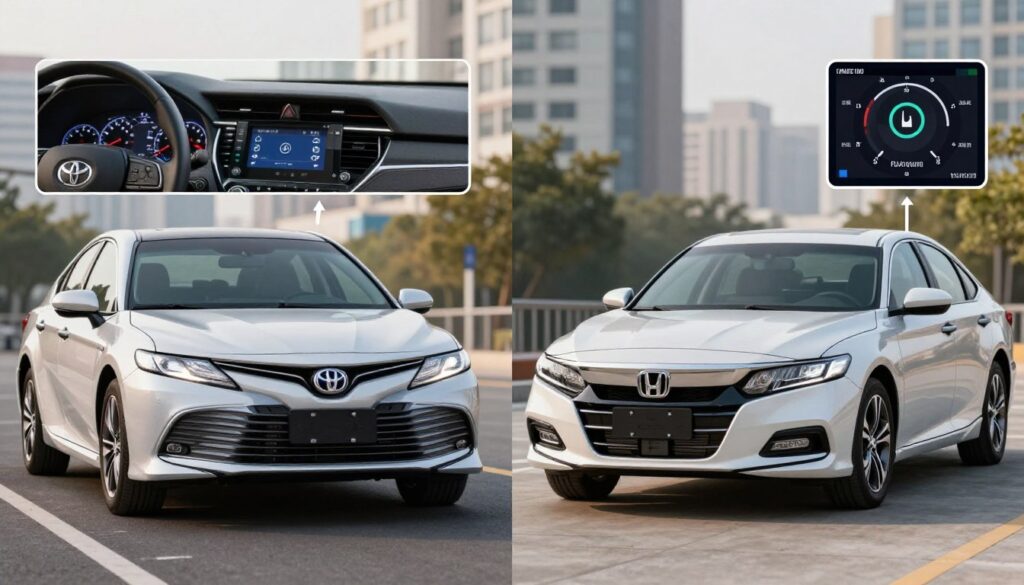
Crash Test Ratings Overview
Both brands get high marks from the NHTSA and IIHS. These groups test cars to check if they can handle crashes well. High scores mean the cars are built to protect you.
Looking at a used Honda Accord vs Toyota Camry shows how safety has improved. Both use strong steel to keep the car safe in crashes.
Advanced Safety Technologies Offered
Both brands have advanced safety systems as standard. Toyota has Safety Sense, and Honda has Honda Sensing. These systems watch the road and act fast to avoid accidents.
These systems include automatic emergency braking, lane-keeping assist, and adaptive cruise control. They help prevent accidents. By looking at these features, we see both brands are serious about making roads safer.
Driving Experience and Handling
When you’re looking at performance comparisons, how these sedans handle is key. The driving experience shows what each car is really about. Each maker has its own way of connecting with the road.
Steering and Suspension Dynamics
The steering feel is what connects you to the road. Some cars give a sharp, athletic response. Others offer a smooth, easy steering that’s great for long drives.
Suspension tuning also shows the difference. Some cars are firmer to reduce roll, while others use special dampers to smooth out bumps.
“The best driving experience is one that balances mechanical precision with the comfort required for daily life on the road.”
Ride Comfort and Noise Levels
Cabin isolation is important for many buyers. Modern tech has made both cars quieter, but they use different methods.
Whether you’re driving in the city or on the highway, the table below shows the main differences:
| Feature | Camry Focus | Accord Focus |
|---|---|---|
| Steering Feel | Balanced/Light | Direct/Responsive |
| Suspension | Plush/Compliant | Firm/Controlled |
| Cabin Noise | Highly Isolated | Engine-tuned feedback |
Your choice depends on what you like. Think about these points when deciding:
- Comfort-seekers like softer suspension that hides road bumps.
- Driving enthusiasts prefer more feedback through the steering wheel.
- Quiet cabins are key for those who use their car as a mobile office or quiet space.
By looking at these points, you can find the perfect car for your driving style.
Cost of Ownership
We often focus on the purchase price, but maintenance and reliability are key to long-term value. A price comparison shows both brands offer good starting prices for those watching their budget. But, the real cost comes over time.
Initial Pricing Comparison
The base MSRP of the Toyota Camry and Honda Accord is very similar. This makes choosing between them tough. Entry-level trims have basic features at a low price. Higher trims add luxury, increasing the cost.
Both brands offer great value. But, regional incentives can sway the choice one way or the other.
When at the dealership, think about the whole deal, not just the monthly payment. Strategic shopping during sales can save a lot on both models. Our study shows that while prices are similar, certain packages can affect your final cost.
Maintenance and Reliability Factors
A reliability comparison shows both brands are known for durability. Toyota and Honda have built a reputation for making cars that last with few problems. Regular service keeps your car in top shape for years.
Having parts easily available also keeps costs down. High production volumes mean parts are cheap and easy to find. This widespread support makes maintenance like oil changes and brake replacements affordable and predictable.
| Factor | Toyota Camry | Honda Accord |
|---|---|---|
| Maintenance Frequency | Every 5,000-10,000 miles | Every 7,500-10,000 miles |
| Parts Availability | Excellent | Excellent |
| Long-term Reliability | Industry Leading | Industry Leading |
Choosing between these two depends on what you like in a car. Both offer a low cost of ownership. Regular maintenance keeps your car reliable for years.
Resale Value and Depreciation
Investing in a midsize sedan means thinking about the long-term costs. The choice between top models often depends on how much value you can get back. Both the Toyota Camry and the Honda Accord are known for keeping their value well in the car market.
Long-Term Value Retention
Depreciation can hit your wallet hard. A reliability comparison shows that both cars perform better than many others. They are built to last, which means they don’t lose value as fast.
These sedans keep a big part of their original price after five years. Their durability means they can go for hundreds of thousands of miles. Driving such a car is like keeping your investment safe for the future.
Market Demand Insights
The used car market for these sedans is strong across the U.S. Their reliability makes them popular, keeping prices steady. A price comparison shows that even older, well-kept models sell for more than less reliable cars.
This demand helps sellers get good prices without lowering them much. Whether you trade in or sell privately, you’ll find many buyers. Choosing the Camry or Accord is a wise financial choice for those who value long-term benefits.
Consumer Reviews and Preferences
Figuring out which car is the best midsize sedan means looking at real-life use. Professional tests give a starting point, but how these cars do in everyday life is key. We dive into these stories to give a full picture of what it’s like to own one.
Owner Satisfaction Ratings
Most owners love the Toyota Camry and Honda Accord. They say exceptional reliability keeps them coming back. Starting the car every morning is a breeze for them.
Looking at long-term data, both cars keep their owners happy. They love the predictable maintenance costs. This makes them top picks for families and commuters.
Key Feedback from Users
People talk a lot about comfort and easy controls. Camry fans love the plush seating and smooth ride. Accord fans prefer the responsive handling and roomy interior.
Some say the tech can feel old compared to newer cars. But, most agree these sedans offer great practical value. It comes down to whether you want a soft ride or a fun drive.
Conclusion: Which Midsize Sedan Reigns Supreme?
Choosing the best midsize sedan means looking at space, power, and fuel efficiency. The Honda Accord and Toyota Camry stand out for different reasons. They meet the needs of various drivers.
Evaluating Your Priorities
The Honda Accord is great for those who want lots of room and a smooth ride. Its big interior and trunk are perfect for families. Check out a fuel efficiency comparison to see how it fits your daily drive.
Making the Final Decision
The Toyota Camry shines with its hybrid powertrain in every model. This makes it very fuel-efficient, saving money for drivers. Your choice depends on whether you like the Accord’s sporty feel or the Camry’s all-wheel-drive.
Try out both cars to feel their unique driving styles. Your needs and future plans will help decide which one is right for you. Both brands are known for their reliability.
Consumer Reviews and Preferences
Importance of Midsize Sedans in the Market
Midsize sedans are key in the American car market. They offer a mix of efficiency, comfort, and style. Even as SUVs gain popularity, midsize sedans remain a top choice for many.
These cars have a lower center of gravity and better aerodynamics. This makes them more fun to drive and saves on fuel.
Key Competitors in the Segment
The Toyota Camry vs Honda Accord rivalry is a big deal in the midsize sedan world. Other notable players include the Hyundai Sonata, Nissan Altima, and Chevrolet Malibu. But the Camry and Accord lead in sales and loyalty.
They set the standard for safety, tech, and value. Other cars aim to match their excellence.
Significant Generational Changes
The Toyota Camry has changed a lot in the U.S. market. It started as a compact car and now is a midsize powerhouse. The 2018 TNGA platform improved its handling and structure.
The 2025 Camry is all hybrid, showing Toyota’s commitment to green cars.
Most Notable Features Over the Years
The Camry is known for its reliability. It introduced Toyota Safety Sense and high-performance TRD trims. It also offers comfort and modern tech, keeping it popular for decades.
Evolution Through the Decades
The Honda Accord started in 1976 as a small hatchback. It grew in size and ambition over the years. It’s known for its excellent chassis and driver focus.
Honda’s engineering precision shines through in the Accord. It’s often the first to get new tech.
Milestones in Accord Development
The Accord was made in America for the first time in 1982. The 10th and 11th generations brought turbo engines and advanced hybrids. Honda focuses on comfort and space.
Engine Options Comparison
The 2025 Toyota Camry has a 2.5-liter engine with a hybrid system. It has 225 horsepower in front-wheel-drive models. The Honda Accord has a 1.5-liter turbo engine and a hybrid system with 192 and 204 horsepower, respectively.
The Camry has more horsepower, but the Accord’s hybrid is more responsive.
Fuel Efficiency Ratings
The Toyota Camry is more fuel-efficient due to its hybrid-only lineup. It gets up to 51 MPG combined. The Honda Accord Hybrid gets up to 48 MPG combined. But the Camry is more efficient overall.
Cabin Design and Layout
The Honda Accord has a stylish interior with metal mesh trim. The Toyota Camry has a cockpit-like design. Both use premium materials for a comfortable feel.
Passenger Space Comparison
The Honda Accord has more rear legroom, making it better for tall passengers. The Toyota Camry is also spacious. But the Accord feels more airy for long trips.
Cargo Capacity
The Honda Accord has more trunk space, making it better for utility. The Toyota Camry has less space but is easier to load. Both have fold-down rear seats for longer items.
Infotainment Systems
The Accord has a 12.3-inch touchscreen with Google built-in. The Camry has a similar system but with dual Bluetooth and voice command. Both are easy to use, but Honda’s is more intuitive.
Standard and Optional Tech Offerings
Both brands offer wireless Apple CarPlay and Android Auto. They also have high-end features like HUDs and premium audio systems. The Camry has a unique Panoramic View Monitor for tight parking.
Crash Test Ratings Overview
Both the Toyota Camry and Honda Accord are very safe. They get top marks from the IIHS and NHTSA. They are often “Top Safety Pick+” winners.
Advanced Safety Technologies Offered
Toyota has “Toyota Safety Sense 3.0” as standard, with Proactive Driving Assist. Honda has “Honda Sensing,” with Traffic Jam Assist. Toyota’s adaptive cruise control is smoother, while Honda’s lane-keeping is more natural.
Steering and Suspension Dynamics
The Honda Accord is known for its driving feel. It has a communicative steering rack and a sporty suspension. The Toyota Camry has improved its handling but is softer.
Ride Comfort and Noise Levels
Both cars are quiet for their class. Toyota uses acoustic glass for less wind noise. Honda uses active noise cancellation. The Camry is quieter, while the Accord is more engaging.
Initial Pricing Comparison
The 2025 Toyota Camry starts at ,400, all hybrid. The Honda Accord starts at ,895 for the non-hybrid LX. The Camry is a better value because the Accord’s hybrid is more expensive.
Maintenance and Reliability Factors
Both cars are reliable and can last over 200,000 miles. Toyota has “ToyotaCare” for free maintenance for two years or 25,000 miles. Honda’s “Honda Service Pass” offers similar coverage, making maintenance costs similar for the first few years.
Long-Term Value Retention
The Toyota Camry and Honda Accord hold their value well. They are in high demand, which slows down depreciation. This makes them good investments.
Market Demand Insights
The Camry is popular for its durability, making it great for high-mileage drivers and fleets. The Accord is sought after for its premium feel. The Camry’s hybrid status will help its resale value in the future.
Owner Satisfaction Ratings
Both cars have high owner satisfaction scores. Accord owners love its driving feel and interior. Camry owners praise its fuel efficiency and reliability.
Key Feedback from Users
Accord owners sometimes miss a volume knob and wish for All-Wheel Drive. Camry owners prefer its infotainment system and find the hybrid engine quiet. There are no major complaints about either car.

Hi! I’m Moheen Iftikhar, the person behind «CarCruisei». I’m deeply interested in the automotive world, from new car trends and advanced vehicle technology to useful driving advice. On this platform, I publish informative car reviews, expert insights, and practical tips to keep every car enthusiast informed and inspired.