


Used Electric Cars: What to Check When Buying a Used Tesla or Nissan Leaf
Looking for a used electric car can be tricky. It’s important to know what to look for, given the special needs of electric vehicles. Whether you want a fast sedan or a city car, our guide will help you choose wisely.
Before buying, make sure to check the car’s history. This is key for its long-term reliability. Battery health and how it charges are the most important things to consider. Our tips will help you find a car that fits your needs and budget.
We’ll show you the main differences between popular electric cars. By focusing on these checks, you’ll protect your investment and feel secure on the road. Let’s go over the key steps for buying the right car.
Key Takeaways
- Always prioritize a thorough battery health check before buying.
- Make sure the charging system fits your needs at home or public stations.
- Check the car’s software and digital features for compatibility.
- See if there’s any warranty left to avoid repair costs later.
- Compare the car’s range to your daily drive to ensure it meets your needs.
Understanding Electric Vehicles
The car world is changing fast as electric vehicles (EVs) become more common. They use special battery packs for power. This makes them cleaner and more efficient for driving in the U.S.
What is an Electric Vehicle?
An electric vehicle, or EV, runs on electricity stored in big batteries. Unlike cars that use gas, EVs have electric motors. This means no oil changes, spark plugs, or exhaust systems.
Benefits of Driving Electric
Driving an electric car has many perks. You’ll spend less on fuel because electricity is cheaper. Plus, there are fewer parts to break, so it costs less to keep it running.
- Lower fuel expenses per mile.
- Reduced routine maintenance needs.
- Quiet and smooth driving experience.
- Zero tailpipe emissions.
Why Choose Used Electric Cars?
Buying a pre-owned electric vehicle is smart money-wise. New cars lose a lot of value quickly, but used ones skip that drop. You get advanced tech at a lower price with used electric cars.
| Feature | Gasoline Vehicle | Electric Vehicle |
|---|---|---|
| Maintenance | High (Oil, Filters) | Low (Brakes, Tires) |
| Fuel Cost | Variable/High | Stable/Low |
| Depreciation | Standard | Higher Initial Drop |
| Emissions | High | Zero |
Choosing pre-owned electric vehicles saves money while enjoying modern tech. With more used EVs on the market, finding a good one is easier than ever.
Tesla Overview
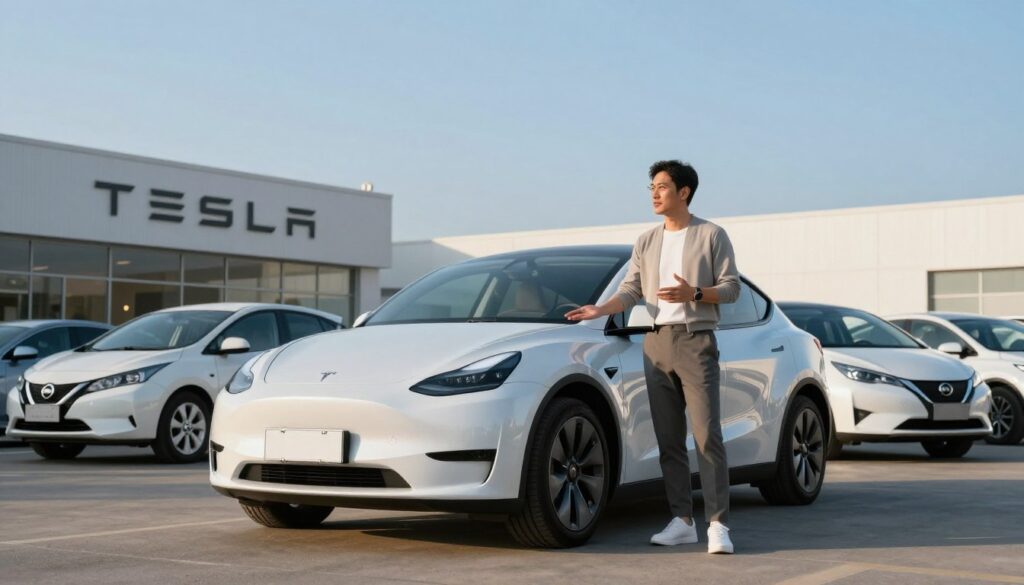
When looking for pre-owned electric vehicles, Tesla is often the top choice. The brand is known for its top-notch performance, range, and digital features. Buying Used Tesla models can be rewarding if you know what to look for.
Tesla Models Available on the Used Market
The used market has a range of Tesla models, from the Model S sedan to the Model Y crossover. The Model 3 is popular for its affordability and efficiency. The Model X offers unique falcon-wing doors and a luxurious interior.
Think about your driving needs when choosing a Tesla. You might also compare these models with the cheapest electric vehicles with all-wheel drive to see how technology has advanced. Each year, Teslas get better, making your daily drive smoother.
Key Features of Tesla Vehicles
One big plus of owning a Tesla is access to the Supercharger network. This network makes long trips easier than with other brands. Reliability and speed are key benefits of this charging system.
Also, Teslas have advanced driver-assist systems and software updates. These keep your car safe and up-to-date. When buying a used Tesla, check that the software is current and the digital account is transferred to you.
Don’t forget to check the battery health and the infotainment screen. A well-kept Tesla can last for years. Make sure to inspect the car’s electronics before buying.
Nissan Leaf Overview
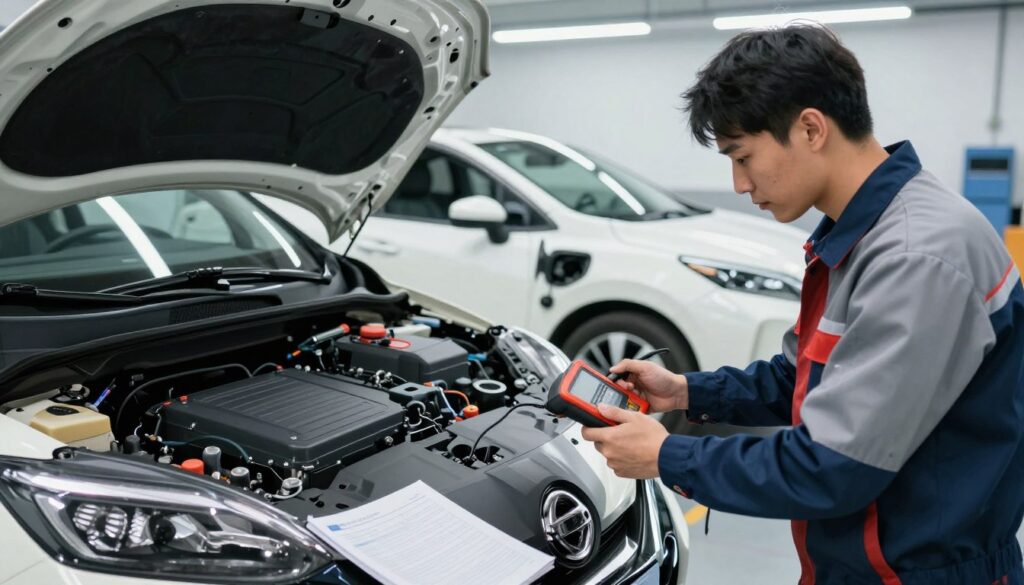
The Nissan Leaf is known for being reliable and affordable for city drivers. It’s a popular choice for those looking to buy an electric car. Many people get a Nissan Leaf Inspection before making a purchase.
Nissan Leaf Models to Consider
The Nissan Leaf has changed a lot over the years. It started with a 24 kWh battery pack, great for short city trips.
Later, Nissan added 40 kWh and 62 kWh batteries. These newer models have much longer range, perfect for longer drives.
Unique Features of the Nissan Leaf
The Leaf’s design is a big plus. Its hatchback layout offers lots of room inside. You can fit comfortably and carry a lot of stuff for daily tasks.
But, there’s a catch. The Leaf has an air-cooled battery system. This can cause the battery to wear out faster in very hot weather.
So, getting a detailed Nissan Leaf Inspection is key. It helps check the battery’s health. This way, you can be sure it’s in good shape before buying.
Battery Health in Electric Cars
Checking the battery health is key when looking at things to verify in a used Tesla or Nissan Leaf. The battery is the car’s heart, making up a big part of its value. It’s important to know its condition.
Importance of Battery Condition
A bad battery can cut down your driving range and cost a lot to fix. If the battery fails soon after you buy it, fixing it might cost more than the car. Proactive assessment helps avoid these big repair bills.
While you might need to learn how to jumpstart a car for small battery issues, the main battery is different. You can’t just “jump” it back to full. Knowing its health is essential for keeping the car running well.
How to Check Battery Health
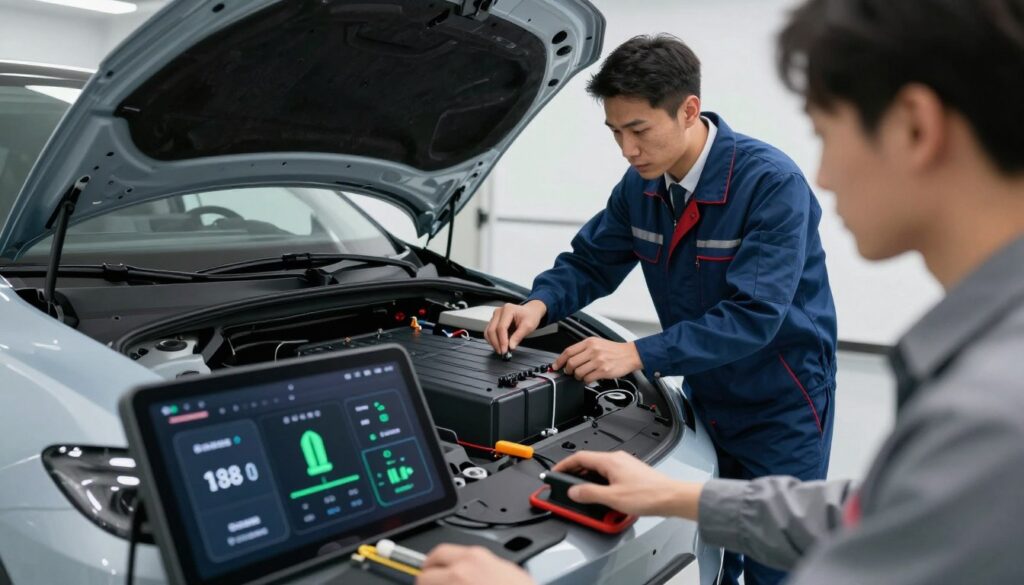
To find out the battery’s real condition, look for official reports. Tesla owners can check battery health through the car’s service menu or apps. Nissan Leaf owners can see health bars on the dashboard, but a professional scan gives more accurate data.
It’s best to have a certified technician do a full capacity test if you don’t have a recent report. This test shows how much energy the battery holds compared to new. Here’s a table to help understand what affects battery health over time.
| Factor | Impact on Battery | Mitigation Strategy |
|---|---|---|
| High Heat | Accelerates chemical aging | Park in shaded areas |
| Fast Charging | Increases internal stress | Use Level 2 charging mostly |
| Deep Discharge | Reduces cycle life | Keep charge between 20-80% |
| Long-term Storage | Risk of voltage drop | Maintain moderate charge level |
Range Considerations
When looking at a used electric vehicle, knowing its real-world range is key. Official estimates are just a starting point. Your actual mileage will change based on where you live, how you drive, and the battery’s condition. Understanding these variables helps ensure the car fits your daily needs.
Driving fast or in extreme weather can cut down your range. If you plan to travel, check out the longest-range EVs and best electric cars for long trips. This way, you can see how different models perform under various conditions.
Expected Range for Tesla Models
Tesla cars are known for their industry-leading efficiency and advanced cooling systems. Most used Teslas, like the Model 3 and Model S, keep a strong range even after years. But, check the trim level, as some models focus more on power than range.
The Model 3 Long Range is great for daily use and longer trips. Make sure to check the car’s software version, as Tesla updates can improve efficiency. Always check the battery capacity on the car’s diagnostic screen.
Expected Range for Nissan Leaf Models
The Nissan Leaf has grown a lot over time, with different battery sizes for different needs. Early models with 24kWh batteries are good for city driving. But, newer models with 40kWh or 62kWh batteries offer more range. It’s important to note that older Leafs cool the battery passively, which can be a problem in hot weather.
When looking at a used Leaf, check the “health bars” on the dashboard. These bars show how much battery life is left compared to new. Picking the right battery size for your lifestyle ensures you’ll be happy with your purchase for a long time.
| Vehicle Model | Battery Capacity | Estimated Real-World Range |
|---|---|---|
| Tesla Model 3 Long Range | 75 kWh | 300 – 330 miles |
| Nissan Leaf (Standard) | 40 kWh | 130 – 150 miles |
| Nissan Leaf (e+) | 62 kWh | 200 – 225 miles |
| Tesla Model S (Used) | 85 – 100 kWh | 250 – 350 miles |
Inspection Checklist for Used Electric Cars
Inspecting a used vehicle carefully can save you from unexpected costs. When buying used electric cars, it’s important to check more than just the surface. Our detailed checklist for used electric cars helps you examine every key part before you buy.
External Condition
First, walk around the car in the daylight. Look for any uneven gaps or mismatched paint, which might mean it’s been fixed before. Checking the bodywork is key because damage can affect how well the car moves and uses energy.
Also, check the charging port door. Make sure it opens and closes well and doesn’t show any rust or damage inside. A bad port can cause big problems with charging later.
Interior and Electronics
Inside, test all the digital features to see if they work right. For a Nissan Leaf inspection, check the screen for any dead pixels or flickering. Also, test the climate control to make sure it works well without using too much battery.
“The bitterness of poor quality remains long after the sweetness of low price is forgotten.”
Tire Condition and Maintenance Records
Electric cars are heavier because of their batteries, which can wear out tires faster. Check the tread depth on all tires to see if they’re worn evenly. Uneven wear might mean there’s a problem with the car’s alignment or suspension.
Always ask for the car’s full service history to see if the previous owner kept up with maintenance. Use the table below to keep track of what you find during the inspection.
| Component | What to Inspect | Status |
|---|---|---|
| Exterior | Panel gaps and paint | Pass/Fail |
| Electronics | Screen and climate | Pass/Fail |
| Tires | Tread depth and wear | Pass/Fail |
By following this structured evaluation, you can feel sure about your purchase. Taking the time to check these details helps make your switch to electric driving smooth and stress-free.
Software and Firmware Updates
When you buy a used electric car, the software is as important as the car itself. Electric cars are like computers on wheels. So, checking the software is key for a good driving experience.

Importance of Software Updates
Keeping your car’s software up to date is a must. These updates often fix battery issues and add safety features. They can also make your car charge faster and go further.
Not updating your car’s software can cause problems. It might not work with new charging stations or lose cool features. Keeping it updated keeps your car running smoothly.
How to Check for Updates in Tesla and Nissan Leaf
Tesla cars make it easy to update their software. Just go to the “Software” tab on the screen. If there’s an update, it will tell you to download it when parked.
Nissan Leaf owners need to check their car differently. Use NissanConnect or visit a dealer to see if your car is up to date. Checking these Things to Verify in a Used Tesla or Nissan Leaf before buying can save you money.
| Feature | Tesla Update Method | Nissan Leaf Update Method |
|---|---|---|
| Primary Delivery | Over-the-Air (Wi-Fi) | Dealer or NissanConnect |
| User Interface | Central Touchscreen | Infotainment Menu |
| Frequency | Frequent/Automatic | Periodic/Manual |
| Criticality | High (Performance) | Moderate (System Stability) |
Make sure your car has the latest updates to keep your warranty valid. Always check the software when looking at a used electric car.
Warranty and Coverage
When you buy a used electric vehicle, knowing about the warranty is key. Many people just look at the price, but the warranty can save you a lot. Make sure the warranty can be transferred to the next owner before you buy.
Buying a used EV needs careful thought. For more tips, check out these guidelines to make a smart choice. Taking these steps early can prevent costly surprises later.

Understanding Tesla’s Warranty Policy
Tesla’s warranty is strong and follows the car, not the owner. This is a big plus for buying a used Tesla. Most Teslas have a warranty on the battery and drive unit for eight years, no matter the mileage.
But, there are conditions for when Tesla will replace these parts. They usually cover the battery if it drops below 70% of its original capacity. Remember these points when looking at a used Tesla:
- Transferability: The warranty usually transfers to the new owner automatically.
- Coverage Scope: The warranty covers the battery and drive unit, the most expensive parts to replace.
- Documentation: Always ask for the original purchase date to know how much warranty time is left.
Nissan Leaf’s Warranty Insights
The Nissan Leaf has its own warranty policy. Nissan guarantees the lithium-ion battery against defects for a certain period. This warranty is meant to ensure the battery’s long-term reliability.
When checking a used Nissan Leaf, look closely at the battery warranty. Nissan covers the battery if it loses capacity below nine bars out of twelve. Keep these points in mind for your coverage:
- Timeframe: The battery warranty is limited to a certain number of years or miles, whichever comes first.
- Verification: Use an OBD-II scanner to check the battery’s health if you’re unsure about the dashboard readings.
- Owner Requirements: Make sure the previous owner followed the manufacturer’s maintenance schedule to keep the warranty valid.
Charging Options and Compatibility
We think a good charging plan is key to loving your used electric car. Before picking a model, check the charging options in your area. Knowing how power works helps your car stay reliable, not a hassle.
When buying a used electric vehicle, make sure it fits your charging setup. Planning ahead can prevent slow charging or plug issues.
Types of Charging Stations
Public charging spots differ in speed and plug types. Most cars use standards like CCS or NACS, used by Tesla.
- Level 1 Charging: Uses a standard outlet; it’s slow but easy to set up.
- Level 2 Charging: Common at public spots and workplaces, charges faster.
- DC Fast Charging: Best for long trips, adds lots of range in under an hour.
“The convenience of public charging is getting better, but checking local options is key for buyers.”
Home Charging Solutions
Charging at home is the ultimate convenience. A Level 2 wall box lets you start your day with a full battery. This makes public charging less necessary.
Before buying home charging gear, check your home’s electrical setup with a pro. You might need a 240-volt outlet for faster charging. Getting the right home equipment makes owning your car better and keeps your battery healthy.
Test Driving a Used Electric Car
Test driving a pre-owned electric vehicle is the best way to check it out. Looking at the car is good, but driving it is better. It lets you see if the car works well in real life.
What to Look for During a Test Drive
Pay attention to how the car speeds up and brakes. Check the regenerative braking system too. It should catch energy well when you take your foot off the pedal.
Listen for any odd sounds from the suspension or electric motor. Our checklist for used electric cars says to test the car at different speeds. If it feels slow or doesn’t respond right, there might be a problem.
| Feature to Test | What to Observe | Ideal Result |
|---|---|---|
| Regenerative Braking | Energy recovery levels | Consistent deceleration |
| Acceleration | Throttle response | Smooth, instant power |
| Suspension | Road noise and bumps | Quiet, stable ride |
| Electronics | Screen responsiveness | No lag or flickering |
Questions to Ask the Seller
After driving, talk to the seller in detail. Ask the right questions to find out more about the car’s history. Transparency is key when buying a used car.
Ask about the owner’s charging habits. Find out if they used fast chargers or home outlets. Also, ask about any repairs or battery service. This checklist for used electric cars helps you make a good choice.
Make sure the car has all the latest software updates. Knowing the car’s maintenance history gives you confidence. Choose sellers who are honest about the car’s past.
Finalizing Your Purchase
Buying an electric car is a big step that needs careful thought. We think buyers do best when they know what they’re getting into. This knowledge helps them feel sure and confident when they make their final choice.
Strategies for Price Negotiation
When looking at used Teslas or other electric cars, the battery health report is key. It shows how much life is left in the battery. This can help you ask for a better price because the battery isn’t as good as it seems.
Our top tips for buying used electric cars include checking the price against what similar cars are selling for. Mentioning any needed repairs or upcoming tire changes can also help you get a fair deal. This way, the car’s real value is reflected in the price.
Managing Essential Documentation
Make sure the title is clear and there are no liens before you pay. The seller should give you a full service history. This shows the car was well taken care of.
Also, check that all software licenses are transferred to you right away. Taking care of these details protects your investment. It also means you can enjoy your electric car from the start.
FAQ
What is the most critical factor to evaluate when buying used Tesla or Nissan Leaf models?
The State of Health (SOH) of the battery is key. It can be up to 50% of the car’s value. Checking the battery’s charge is essential, unlike checking the engine in traditional cars.
Why should we consider pre-owned electric vehicles instead of new ones?
Used electric cars are cheaper. They offer the same benefits as new ones, like lower costs and less maintenance. Plus, you can get a high-tech car like the Tesla Model 3 at a lower price.
What should be included in a comprehensive checklist for used electric cars?
Check the charging port for damage and test all electronics. Inspect the tires, as they wear faster on EVs. Also, verify the firmware version and check for safety recalls or battery warnings.
Are there specific tips for purchasing second-hand electric cars regarding charging compatibility?
Yes, check the charging standard. Tesla cars use Tesla Superchargers, while Nissan Leafs use CHAdeMO for fast charging. Make sure these are available in your area before buying.
What makes a Nissan Leaf inspection different from other EV inspections?
Nissan Leafs have air-cooled batteries, which degrade faster in hot climates. Use tools like LeafSpy to check the battery’s health and ensure it meets your needs.
How do we verify if a used Tesla or Nissan Leaf is stil under warranty?
Contact Tesla or Nissan with the VIN to check the warranty. Most EVs have an 8-year or 100,000-mile battery and drivetrain warranty. Make sure this warranty is transferable to you.
How does the range of a used Tesla Model 3 compare to a Nissan Leaf in real-world conditions?
Tesla Model 3s have better range and efficiency at high speeds. Nissan Leafs are great for city driving. Both lose range over time, but at different rates.
What questions should we ask the seller during a test drive of used electric cars?
Ask about charging habits and any high-voltage repairs. Check the regenerative braking system’s performance. This helps understand the car’s maintenance history.

Hi! I’m Moheen Iftikhar, the person behind «CarCruisei». I’m deeply interested in the automotive world, from new car trends and advanced vehicle technology to useful driving advice. On this platform, I publish informative car reviews, expert insights, and practical tips to keep every car enthusiast informed and inspired.