

How to Jumpstart a Car: Safest Way to Jumpstart a Dead Car Battery
Being stuck with a car that won’t start is really frustrating. It could be because you left the headlights on or the cold weather drained the battery. Knowing the safest way to jumpstart a dead car battery is key for every driver. We focus on safe methods that protect your car’s electronics.
Before you start, make sure it’s just a dead battery and not a bigger problem. Sometimes, the issue is with the charging system, not the battery itself. You can find out more about symptoms of a bad alternator vs bad battery to fix the right problem. Our guide will teach you how to jumpstart a car safely, without harming your car or yourself.
Key Takeaways
- Always check your owner’s manual before trying to jumpstart to find the right spots.
- Look for any damage on the battery, like cracks or leaks, before you start.
- Make sure both cars are off and not touching to avoid electrical problems.
- Connect the positive cables first, then the negative ones, to keep the circuit safe.
- If the car doesn’t start after trying a few times, get help from a pro to avoid more damage.
Understanding Car Batteries
We often overlook our car batteries until they fail to start the engine. Learning about your car’s electrical system is key to being self-reliant. Knowing how to jumpstart a car lets you handle roadside emergencies with confidence.
What Causes a Battery to Die?
Many things can cause a battery to lose power. A parasitic drain is a common issue. This happens when lights, door sensors, or faulty relays use energy when the engine is off.
Extreme temperatures also harm batteries. Over time, they can’t hold a charge as well. This aging process can make a battery dead, needing a jump or replacement.
Signs of a Dead Battery
Spotting warning signs early can prevent being stranded. If you see these signs, your battery might be failing:
- The engine cranks slowly or sounds sluggish when you turn the key.
- Your headlights or interior lights appear dimmer than usual.
- The battery warning light illuminates on your dashboard.
- You detect a faint smell of rotten eggs, which may indicate a leaking battery.
Importance of Regular Maintenance
Regular care is vital for your battery’s long life. One of the best practices for jumpstarting a car is to keep terminals clean. Corrosion can block electricity flow, making starting hard.
Check your battery connections every few months. Make sure cables are tight and the battery looks good. This way, your car will always be ready to go.
Preparing for the Jumpstart
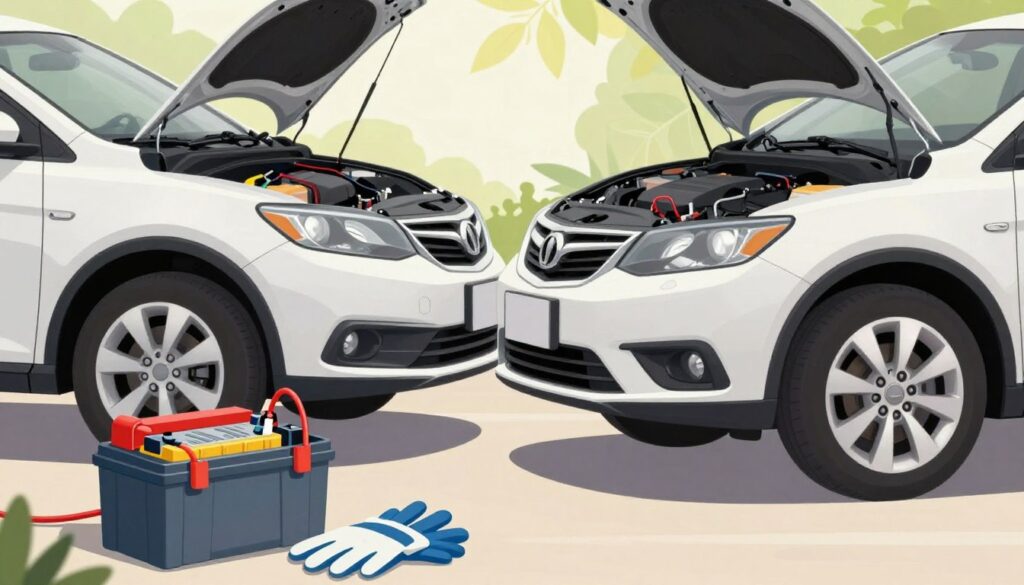
Jumpstarting a car needs more than just cables. It requires a careful approach to safety and preparation. Make sure your workspace is safe and your tools are ready. These precautions for jumpstarting a car help avoid mistakes and protect your car’s electrical system.
Safety First: Essential Gear
Wear protective gloves and safety glasses when handling battery components. These protect against sparks or battery acid. Always prioritize your personal safety when working with high-voltage systems to prevent injury.
If you see warning lights on your dashboard after jumpstarting, you might need to clear the check engine light when your car is running. Having the right gear makes the process smoother and more reliable.
Finding the Right Vehicle
Choose a donor vehicle with the same voltage as yours, usually 12 volts for most cars. Using a different voltage can damage your car’s electronics. Place the donor vehicle close enough for the cables to reach, but don’t let the cars touch.
Ensure both vehicles are turned off and the parking brakes are engaged. This is a key car battery jumpstart safety tip. It prevents the cars from moving while you work under the hood.
Checking the Jumper Cables
Before attaching clamps, check your jumper cables for wear or damage. Look for frayed wires, cracked insulation, or corroded clamps. Never use cables that appear compromised, as they can be a fire risk during the jumpstart.
Make sure the clamps are clean and free of debris for a solid connection. A good connection is essential for efficiently transferring power to start your engine.
Step-by-Step Guide to Jumpstarting
When your engine won’t start, knowing how to jumpstart safely is key. It’s all about precision. By following these tips, you protect your car’s electronics and the other car.
Connecting the Cables Correctly
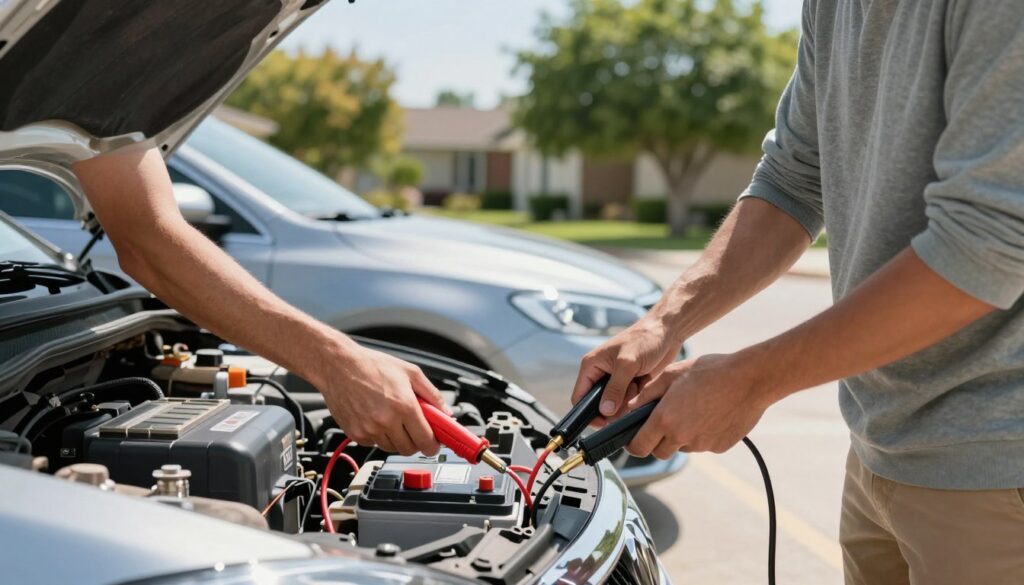
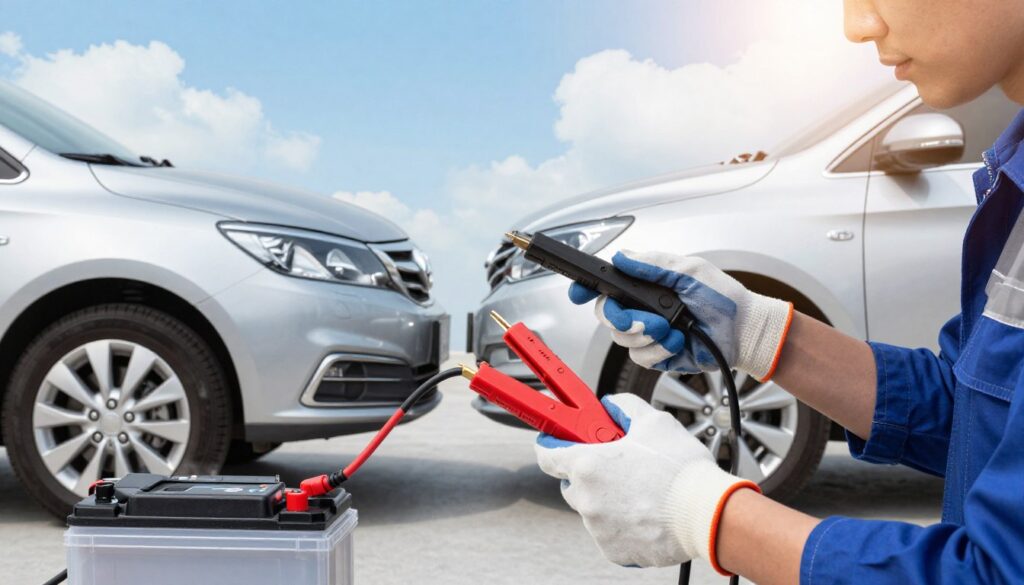
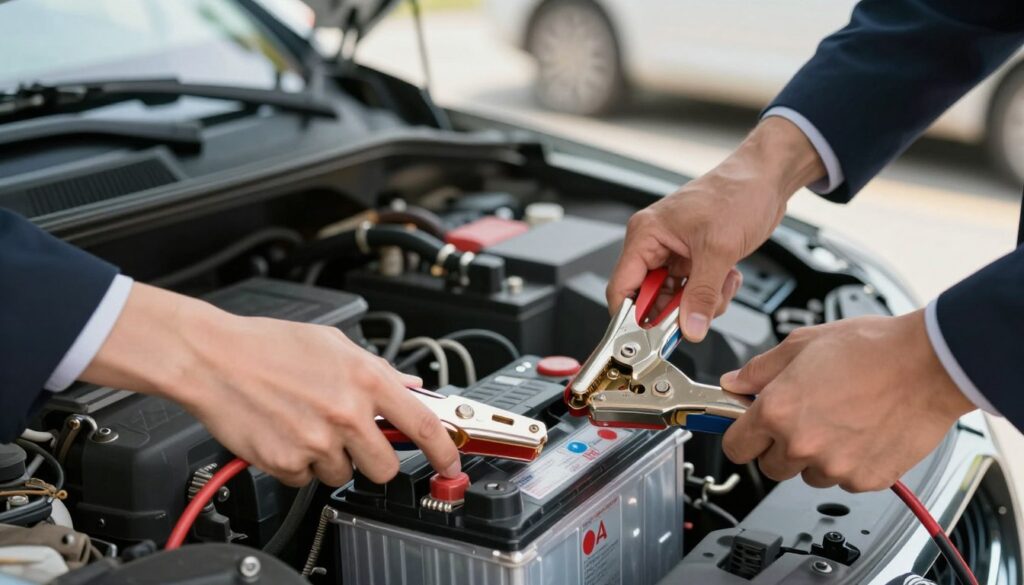
The proper car battery jumpstart procedure starts with the right connections. First, connect the red positive cable to the dead battery’s positive terminal. Then, link the other red end to the positive terminal of the donor battery.
Next, attach the black negative cable to the donor battery’s negative terminal. Lastly, connect the black clamp to an unpainted metal part on the dead car’s engine block. This grounding step is critical to avoid electrical arcs.
Starting the Donor Vehicle
With all cables in place, start the donor vehicle’s engine. Let it run for a few minutes at a steady speed. This lets the donor battery charge the dead one.
Don’t rev the engine too high. A steady power flow is better for reviving the battery. Patience here can lead to a successful start of your car.
Starting Your Car
After a few minutes, try to start your car. If it doesn’t start right away, wait a minute and try again. Once it starts, keep both cars connected for a bit to stabilize the electrical system.
When ready to disconnect, do so in reverse order. Start with the black negative clamp from the metal surface. Make sure the clamps don’t touch each other while connected to power.
| Step | Cable Color | Connection Point |
|---|---|---|
| 1 | Red | Dead Battery Positive (+) |
| 2 | Red | Donor Battery Positive (+) |
| 3 | Black | Donor Battery Negative (-) |
| 4 | Black | Engine Ground (Dead Car) |
Post-Jumpstart Actions
Starting your car is just the beginning. After the engine starts, you need to follow best practices for jumpstarting a car. This ensures your electrical system stabilizes right. Many think the job is done when the engine starts, but the battery needs time to recover.
Letting Your Car Run
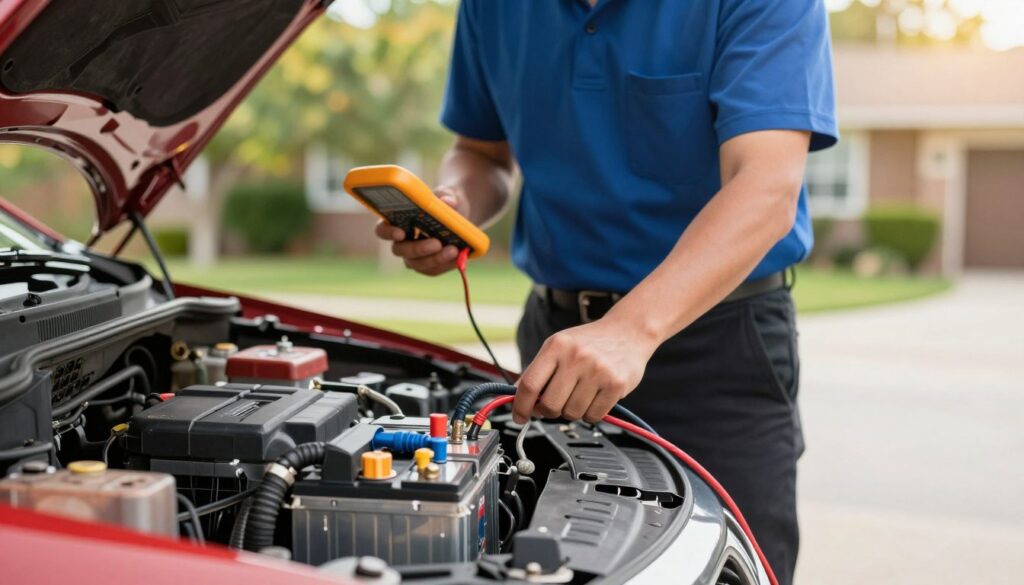
Don’t turn off your engine right away after a jump. Let it idle for 15 to 20 minutes. Or, take it for a drive. Driving helps the alternator recharge the battery more efficiently.
As winter approaches, knowing how your car handles power is key. Learn about the best electric crossover for winter driving. Keeping the engine running is essential to avoid damaging the battery.
Checking Battery Health
After driving, watch for warning lights on your dashboard. A battery icon or check engine light means the charging system might not be working. Also, listen for unusual engine bay sounds, which could mean a loose connection or a failing alternator.
When to Replace Your Battery
If your car won’t start again after turning it off, the battery is probably dead. A battery older than three to five years needs to be replaced. If you’re jumpstarting your car often, it’s time for a professional check. Replacing a weak battery now prevents future breakdowns and protects your car’s electronics.
Troubleshooting Common Issues
When your car won’t start, stay calm. You need to jumpstart a car without damaging the battery. Even if you follow the proper car battery jumpstart procedure, sometimes it won’t work. It’s key to stop and think before trying again.
Car Won’t Start After Jump
If your car is silent or makes a faint click, it might not be just the battery. A bad alternator can stop the battery from charging. This means your car will die again soon after you take off the cables. Or, a failing starter motor might be the problem, as it can’t start the engine even with a boost.
Unusual Noises or Smells
Listen and smell carefully during the jumpstart. A burning plastic smell means there’s an electrical short or a wire is too hot. This needs quick help from a pro. If you hear fast, clicking sounds, it’s likely the starter solenoid is struggling because of low voltage.
Dealing with Corroded Terminals
Corrosion on the terminals can be the real issue. Corrosion looks like white or blue powder and stops electricity flow. Clean the terminals with a wire brush and baking soda and water to fix this. This ensures good contact between metal parts.
| Symptom | Potential Cause | Recommended Action |
|---|---|---|
| Rapid Clicking | Weak Starter/Low Voltage | Check cable connections |
| Burning Odor | Electrical Short | Disconnect immediately |
| No Sound at All | Dead Starter/Ignition Switch | Consult a mechanic |
| Powdery Terminals | Heavy Corrosion | Clean with wire brush |
Spotting these signs early helps keep your car safe. Always be careful when jumpstarting a car without damaging the battery. If your car won’t start after trying a few times, it’s time to call a pro.
Jumpstarting with a Portable Charger
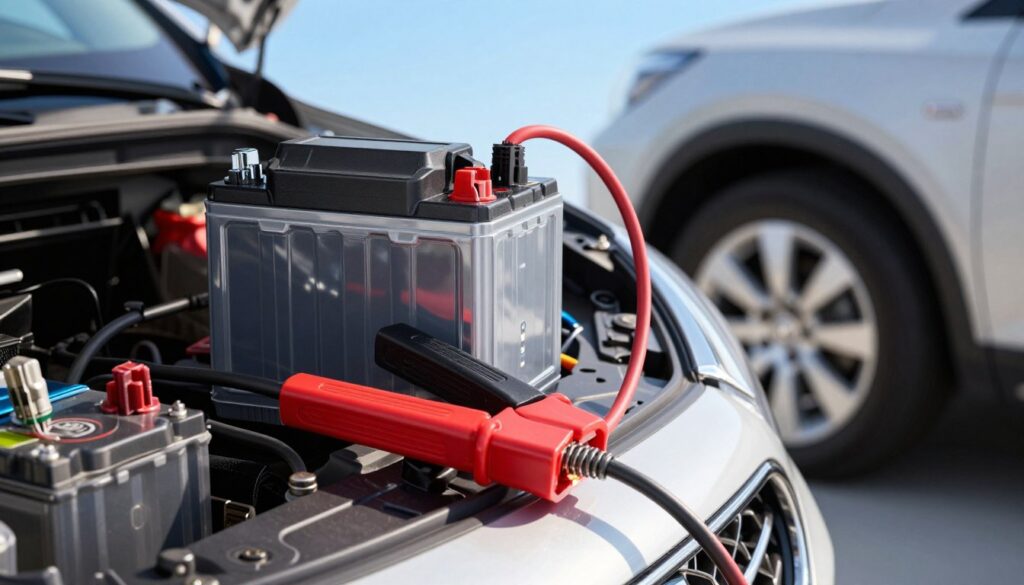
Using a portable jump starter is often the safest way to revive a dead car battery. It’s great when you’re alone or in a remote area. These small devices offer a reliable solution without needing another driver’s help.
Benefits of a Portable Jump Starter
The main benefit is total independence. You don’t have to worry about finding another car or dealing with messy cables.
These devices are easy to use and small enough to fit in your glove box or trunk. By using a safest way to revive a dead car, you can handle power failures on your own.
How to Use a Portable Charger
First, check your device’s manual for specific instructions. Most models connect the red clamp to the positive terminal and the black to the negative or a metal surface.
After connecting, turn on the power pack and try to start your engine. If it doesn’t start right away, wait a bit before trying again.
Safety Tips for Portable Chargers
To keep your device ready for emergencies, regularly check its charge level. It’s a good idea to check the battery indicator every few months to avoid a dead battery.
Before using, always check the cables for damage. Proper maintenance ensures your device works when you need it most.
Alternative Methods for Starting Your Car
At times, jumpstarting a car isn’t possible. This is when you need to know other ways to get your vehicle running again. If you’re stuck without another car, learning these methods can be a big help. It’s key to think about your situation first to pick the safest way to revive a dead car battery.
Push Starting a Manual Transmission
If your car has a manual transmission, you might be able to start it by pushing it. This method, called “bump starting,” works best on a slight incline or with a few people pushing. Make sure the car is in second gear, hold the clutch, and then release it fast when it starts moving.
Timing is everything in this process. Once the engine starts, press the clutch again right away to keep it running. This trick only works for manual cars and is not safe for automatics.
Using a Battery Booster Pack
Keeping a portable battery booster pack in your car is a smart move. These small devices give your car the power it needs to start without another car around. They’re easy to use and come with safety features to avoid short circuits.
To use one, just connect the clamps to your battery as the maker says. Most have lights that show if it’s connected right before you try to start the car. Always charge your booster pack fully before you go on a long trip.
Calling for Professional Help
At times, the best choice is to call for roadside help or a mechanic. If you’re not sure about your car’s electrical needs or see serious battery damage, don’t risk more damage. Pros have the tools to find and fix the problem right.
Getting help from experts is often the safest way to revive a dead car when you’re unsure. Putting your safety and your car’s electronics first saves you time and money later. If you’re not sure, let the pros handle it.
Preventing Future Battery Issues
We think the best way to deal with battery problems is to stop them before they start. Knowing how to safely jumpstart a car is important, but regular care is even more key. A little time spent on your car can keep it running well and make your battery last longer.
Regular Battery Inspections
Check your battery every few months. Look for swelling, cracks, or loose brackets. Watching closely helps catch small problems before they get big.
Use a multimeter to check the voltage. A good battery should read about 12.6 volts when off. Low readings mean it’s time to see a pro, so you don’t have to jumpstart your car in an emergency.
Keeping Connections Clean
Corrosion can stop your battery from working right. A white or blue powder on terminals is a sign of this. Clean it with baking soda and water and a wire brush.
“An ounce of prevention is worth a pound of cure when it comes to automotive electrical systems.”
Make sure the cable clamps are tight. Loose ones cause resistance, making your alternator work too hard. Keeping connections clean is key to safely jumpstarting a car if needed.
Tips for Extreme Weather
Extreme weather is bad for batteries. Heat in summer causes corrosion and fluid loss. Cold in winter makes starting harder.
- Park in a garage: Keep your car out of direct sunlight or cold winds.
- Limit short trips: Short drives don’t let the alternator fully charge the battery.
- Use a battery tender: A trickle charger keeps the battery charged if your car is parked for a long time.
By following these tips, you keep your car running well and avoid battery trouble. Regular care is the best way to keep your vehicle in top shape.
Eco-Friendly Jumpstarting Options
We think it’s important to take care of your car battery. It’s not just about getting back on the road fast. We also need to think about how our car care affects the environment. Taking the right precautions for jumpstarting a car can make your battery last longer. This means you won’t need to replace it as often, which helps reduce waste.
Reducing Battery Waste
To cut down on waste, make sure your battery lasts as long as it can. Regular checks and clean terminals can stop it from failing early. Consistent maintenance is key to keeping your car green.
When jumpstarting, do it right to avoid harming the battery. Wrong connections can cause damage and shorten its life. Taking good care of your equipment helps keep harmful materials out of landfills.
Recycling Old Batteries
When your battery wears out, dispose of it properly. Lead-acid batteries have toxic chemicals that harm our environment if not recycled. Most auto parts stores in the U.S. offer free recycling programs for old batteries.
Don’t throw away your old battery with regular trash. Take it to a certified recycling center instead. They safely remove lead and plastic for reuse in new products. This is a big step in keeping our environment safe while taking care of your car.
Alternatives to Traditional Batteries
New car tech offers greener options like lithium-ion jump starters. These are more efficient and better for the planet. When jumpstarting, think about switching to a more eco-friendly battery type. This could be one that’s easier to recycle or lasts longer.
| Battery Type | Lifespan | Recyclability | Environmental Impact |
|---|---|---|---|
| Lead-Acid | 3-5 Years | High | Moderate (Toxic) |
| Lithium-Ion | 5-8 Years | Moderate | Low (Efficient) |
| AGM Batteries | 4-6 Years | High | Low (Durable) |
Final Thoughts and Safety Reminders
Learning the basics of car care keeps you ready for sudden power losses. Make sure to check out the safest way to jumpstart a dead car. This will keep you and your car safe. Always look at your car’s manual for the right steps for your car’s electrical system.
Core Safety Principles
Following set rules is key for safe car use. Using cables right and grounding correctly stops sparks and explosions. Keep your tools in good shape for safe jumpstarts in emergencies.
Accessing Further Support
Experts are great for tricky electrical issues or battery damage. Call roadside help if you see freezing, leaks, or rust. Getting help from pros is always the best choice when you’re unsure.
FAQ
What is the safest way to jumpstart a dead car battery when I am alone?
The safest way to revive a dead car battery when you lack a donor vehicle is to use a portable lithium-ion jump starter, such as a NOCO Boost. These devices are designed with internal safety sensors to prevent sparks and reverse polarity, making them a reliable independent solution.
What are the primary precautions for jumpstarting a car that we should follow?
We must always wear protective gloves and eye gear, ensure both vehicles are turned off before connecting cables, and never let the metal clamps touch each other. Also, ensure the donor battery has the same voltage (usually 12V) as the dead one to avoid blowing fuses or damaging the ECU.
Can we perform a car battery jumpstart procedure on a hybrid or electric vehicle?
While many hybrids have a standard 12V battery that can be jumped to start the computer systems, you should never attempt to jumpstart the high-voltage drivetrain battery. Always refer to your Tesla or Toyota Prius owner’s manual, as many manufacturers provide specific “jump points” under the hood.
How can we ensure we are jumpstarting a car without damaging the battery or the car’s computer?
To achieve jumpstarting a car without damaging the battery, we must connect the negative cable to a grounded metal surface on the car frame. This prevents a surge of electricity from hitting the battery directly and protects the vehicle’s sensitive electronic modules.
What are the best practices for jumpstarting a car in terms of cable sequence?
We follow the “Red to Dead, Red to Donor, Black to Donor, Black to Metal” rule. This proper car battery jumpstart procedure ensures the circuit is completed safely and reduces the risk of hydrogen gas ignition by keeping the final, spark-prone connection away from the battery.
What should we do if the car battery jumpstart safety tips don’t result in the engine starting?
If the vehicle fails to start after following the steps for safely jumpstarting a car, it may indicate a failed alternator, a bad starter, or a completely “dead cell” in the battery. At this point, we recommend calling a professional service like AAA for a diagnostic test.

Hi! I’m Moheen Iftikhar, the person behind «CarCruisei». I’m deeply interested in the automotive world, from new car trends and advanced vehicle technology to useful driving advice. On this platform, I publish informative car reviews, expert insights, and practical tips to keep every car enthusiast informed and inspired.